
introduction
Email marketing agency services can help businesses increase customer engagement, generate more sales, and build long-term relationships through targeted email campaigns. However, with so many agencies offering similar services, choosing the right one can be challenging.
In this guide, we’ll compare the best email marketing agencies based on their services, industry expertise, supported platforms, pricing, client results, customer reviews, and overall value. By the end of this article, you’ll have the information you need to confidently choose an email marketing agency that fits your business goals and budget.
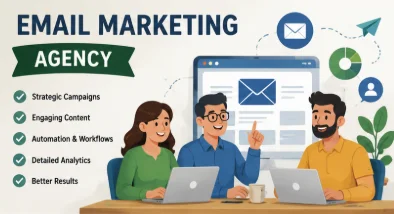
Table of Contents
What Is an Email Marketing Agency?
Email remains one of the most powerful digital marketing channels available today. While social media algorithms change overnight and paid advertising costs continue to rise, email gives businesses something incredibly valuable: a direct line of communication with their audience. But sending a few newsletters every month isn’t enough to stay competitive. Successful email marketing demands strategy, creativity, technical expertise, and continuous optimization.
That’s where an email marketing agency comes in.
An email marketing agency is a specialized marketing partner dedicated to helping businesses maximize the value of their email campaigns. Rather than treating email as an afterthought, these agencies build data-driven strategies designed to attract new customers, strengthen existing relationships, increase conversions, and generate consistent revenue over time.
Instead of relying on an internal team to manage every aspect of email marketing, businesses outsource the work to professionals who live and breathe email. The result? Better-performing campaigns, stronger customer engagement, and a healthier return on marketing investment.
A full-service email marketing agency typically handles every stage of the process, including:
- Developing a tailored email marketing strategy
- Planning, creating, and managing campaigns
- Building automated customer journeys
- Segmenting audiences for personalized messaging
- Writing persuasive email copy
- Designing responsive, branded email templates
- Conducting A/B tests to improve performance
- Monitoring deliverability and inbox placement
- Tracking analytics, conversions, and ROI
Unlike broader digital marketing firms that divide their attention across SEO, PPC, social media, and web development, email marketing agencies focus exclusively—or primarily—on one channel. That specialization matters. It allows them to stay ahead of industry trends, understand platform updates, and apply proven techniques that improve open rates, click-through rates, customer retention, and overall campaign performance.
Most experienced agencies also work across today’s leading email marketing platforms, including Klaviyo, Mailchimp, HubSpot, ActiveCampaign, Salesforce Marketing Cloud, Brevo, Omnisend, and Constant Contact. Whether you’re launching your first email program, migrating from another platform, or refining an existing strategy, they can configure the software, integrate it with your CRM or ecommerce store, build sophisticated automation workflows, and continually optimize campaigns using real performance data.
For growing businesses, partnering with an email marketing agency often proves far more cost-effective than assembling an in-house team. Ecommerce brands use agencies to recover abandoned carts and increase repeat purchases. SaaS companies rely on them to onboard users, nurture leads, and reduce churn. B2B organizations leverage sophisticated automation to guide prospects through lengthy sales cycles, while nonprofits, healthcare providers, and financial institutions benefit from targeted communication strategies tailored to their unique audiences.
The biggest advantage, however, goes beyond simply sending better emails.
A skilled agency transforms email into a reliable revenue engine. Through strategic automation, customer segmentation, compelling storytelling, and ongoing optimization, every campaign becomes an opportunity to deepen customer relationships and drive measurable business growth.
In a marketplace where customer attention is increasingly difficult to earn, that expertise can make all the difference.
How We Chose the Best Email Marketing Agencies
With hundreds of agencies promising exceptional results, finding the right email marketing partner can quickly become overwhelming. Nearly every company claims to boost open rates, increase conversions, and generate more revenue—but not all agencies have the experience or expertise to deliver on those promises.
To separate genuine specialists from general marketing providers, we evaluated every agency using a consistent and transparent set of criteria. Rather than focusing on flashy claims or marketing hype, we prioritized measurable performance, proven expertise, and long-term client success.
Below are the key factors that shaped our recommendations.

Expertise and Industry Experience
Experience matters—especially in email marketing, where consumer behavior, platform capabilities, and privacy regulations evolve constantly.
We looked for agencies with a demonstrated history of delivering successful email campaigns across multiple industries. Those with experienced strategists, certified specialists, and a portfolio of measurable results earned higher rankings than agencies offering email as just another add-on service.
Years in business alone weren’t enough. We also considered the quality of their work, their ability to solve complex marketing challenges, and their success in adapting strategies to different business models.
Breadth of Services
Effective email marketing extends far beyond designing newsletters.
The strongest agencies provide comprehensive solutions that cover every stage of the customer journey—from strategy and campaign planning to automation, testing, reporting, and long-term optimization.
Our evaluation favored agencies offering services such as:
- Email marketing strategy
- Campaign planning and execution
- Marketing automation
- Audience segmentation
- Personalized email experiences
- Professional copywriting
- Responsive email design
- A/B testing
- Deliverability optimization
- Performance analytics and reporting
Businesses benefit most when every component works together as part of a unified strategy rather than as isolated marketing activities.
Industry Specialization
Every industry communicates differently.
An ecommerce brand has different priorities than a SaaS company. A healthcare provider faces compliance challenges that don’t affect a retail business. B2B organizations often nurture prospects over several months, while nonprofits focus on building lasting donor relationships.
Because of these differences, we gave additional weight to agencies with deep expertise in specific industries. Agencies that already understand a market’s buying behavior, customer expectations, and common challenges can often deliver meaningful results much faster than generalists.
Platform Expertise
Even the most creative strategy can fall short if it isn’t supported by the right technology.
We evaluated each agency based on its experience with leading email marketing platforms, including Klaviyo, Mailchimp, HubSpot, ActiveCampaign, Salesforce Marketing Cloud, Brevo, Omnisend, and Constant Contact.
Agencies familiar with multiple platforms scored more highly because they can recommend solutions based on a client’s actual needs—not simply the software they’re accustomed to using.
This flexibility is particularly valuable for businesses planning to scale or migrate to a more advanced platform in the future.
Proven Client Results
Marketing promises are easy to make. Demonstrating consistent results is far more difficult.
That’s why measurable outcomes played a central role in our evaluation.
Whenever possible, we reviewed case studies, client success stories, and documented performance metrics that showcased tangible business growth. Examples included:
- Increased email-generated revenue
- Higher open and click-through rates
- Improved conversion rates
- Greater customer retention
- More repeat purchases
- Stronger return on investment (ROI)
Agencies with transparent reporting and clearly documented achievements ranked significantly higher than those relying on vague testimonials or unsupported claims.
Customer Reputation
A strong reputation is earned over time.
We examined verified customer reviews, independent ratings, testimonials, and long-term client relationships to better understand each agency’s reliability and overall client experience.
Beyond star ratings, we paid close attention to recurring themes in customer feedback, including:
- Communication quality
- Responsiveness
- Strategic guidance
- Technical expertise
- Project management
- Overall satisfaction
Consistently positive feedback across multiple sources provided greater confidence in an agency’s ability to deliver dependable service.
Pricing and Overall Value
Cost is important, but value matters even more.
The least expensive agency isn’t always the smartest investment, nor is the most expensive necessarily the best.
Instead of comparing pricing alone, we considered what businesses actually receive for their investment. Agencies earned higher marks when they offered transparent pricing, clearly defined deliverables, flexible engagement options, and services capable of producing measurable business outcomes.
An agency that consistently generates additional revenue often delivers far greater value than one with a lower monthly fee but limited strategic support.
Communication and Ongoing Support
Successful email marketing isn’t a one-time project—it’s an ongoing partnership.
For that reason, we also evaluated how agencies communicate with their clients throughout the relationship.
Our assessment included:
- Onboarding experience
- Project management processes
- Response times
- Strategic consultations
- Performance reporting
- Availability of ongoing support
The strongest agencies operate as an extension of their clients’ marketing teams, offering proactive recommendations rather than simply executing assigned tasks.
Why These Criteria Matter
No two businesses share identical goals.
A fast-growing ecommerce brand may prioritize automation and customer retention, while a B2B company may focus on lead nurturing and sales enablement. Budget, industry, technical requirements, and growth objectives all influence which agency is the best fit.
By evaluating every provider against the same comprehensive criteria, we’ve created a framework that makes comparisons easier and more meaningful.
Rather than relying on bold marketing claims, you can focus on what truly predicts long-term success: expertise, transparency, measurable performance, and the ability to help your business grow through smarter email marketing.
Best Email Marketing Agencies Compared: Which One Is Right for Your Business?
Choosing the right email marketing agency can help your business generate leads, increase sales, and build stronger customer relationships. But agencies differ in their specialties, services, and approach.
In this Best Email Marketing Agencies Compared guide, we compare several established agencies to help you find the right fit.

Best Email Marketing Agencies Compared
| Agency | Best For | Main Strength |
|---|---|---|
| WebFX | Full-service marketing | Email strategy and digital marketing |
| Ignite Visibility | Integrated marketing | Email, SEO, paid media, and content |
| NP Digital | Data-driven marketing | Personalization and automation |
| SmartSites | Ecommerce and lead generation | Email and SMS campaigns |
Image suggestion: Add a simple comparison graphic showing each agency’s main strength.
1. WebFX — Best for Full-Service Marketing
WebFX is a good option for businesses that want email marketing alongside SEO, PPC, web design, and analytics.
Its services include strategy, segmentation, copywriting, design, testing, campaign management, and reporting.
Best for: Businesses wanting managed email marketing and broader digital marketing support.
Potential drawback: Companies looking for a highly specialized email-only agency may prefer a niche provider.
2. Ignite Visibility — Best for Integrated Marketing
Ignite Visibility combines email marketing with other digital channels. Its services include segmentation, personalization, testing, campaign management, and performance analysis.
This approach can work well for businesses with complex customer journeys and multiple marketing channels.
Best for: Established businesses that want email connected with SEO, paid media, content, SMS, and other channels.
Potential drawback: It may be more than a small business needs if email is its only priority.
3. NP Digital — Best for Data-Driven Strategies
NP Digital focuses on using customer data to improve email performance. Its services include segmentation, personalization, automation, A/B testing, and send-time optimization.
Best for: Businesses with established customer databases and a strong focus on measurable growth.
Potential drawback: Smaller businesses with simple email needs may not require this level of optimization.
4. SmartSites — Best for Ecommerce and SMS
SmartSites focuses on email and SMS marketing, with services aimed at generating leads, sales, and customer relationships. Its ecommerce work also includes Shopify and Klaviyo strategies.
Best for: Ecommerce brands, lead-generation companies, and businesses interested in email and SMS together.
Potential drawback: Businesses seeking highly specialized retention or lifecycle marketing may want to compare other providers.
Image suggestion: Add an ecommerce customer journey graphic showing email, SMS, abandoned carts, and post-purchase messages.
How to Choose the Right Email Marketing Agency
The best agency depends on your business goals. Before choosing one, consider:
- Specialization: Does the agency understand your industry?
- Services: Are strategy, copywriting, design, automation, and reporting included?
- Technology: Can it work with your current email platform and CRM?
- Results: Does it measure revenue, conversions, retention, and lead quality?
- Experience: Does it have relevant case studies and client reviews?
Do not compare agencies on price alone. A cheaper package may exclude important services that you later have to pay for separately.
Image suggestion: Add a checklist graphic titled “What to Check Before Hiring an Email Marketing Agency.”
Final Verdict
The Best Email Marketing Agencies Compared here each have different strengths.
WebFX is a strong choice for full-service marketing. Ignite Visibility suits businesses that want integrated digital campaigns. NP Digital is a good fit for data-driven personalization and automation. SmartSites is worth considering for ecommerce and email-plus-SMS campaigns.
Before making your decision, compare at least three proposals and ask each agency how it would improve your current email strategy. The right partner should focus on meaningful business results—not simply sending more emails.
Services Offered by an Email Marketing Agency
Not all email marketing agencies offer the same level of service. Some focus solely on designing newsletters or writing email copy, while others manage every aspect of your email marketing—from strategy and automation to analytics and long-term optimization.
The best agencies don’t simply send emails. They build systems that nurture leads, strengthen customer relationships, and turn subscribers into loyal buyers.
If you’re considering outsourcing your email marketing, here’s what you should expect from a full-service agency.
Email Marketing Strategy
Every successful campaign starts with a plan.
Before writing a single subject line or designing a template, experienced agencies take time to understand your business, your audience, and your goals. They examine your sales funnel, customer journey, competitors, and existing marketing efforts to identify opportunities for growth.
Rather than relying on generic templates or one-size-fits-all campaigns, they create a customized strategy tailored to your brand. This strategic foundation ensures every email has a clear purpose—whether that’s generating leads, increasing sales, improving retention, or encouraging repeat purchases.
Campaign Planning and Management
Running a successful email campaign involves far more than pressing the “Send” button.
A professional agency manages the entire process, from concept to execution. They create campaign calendars, write compelling content, design visually appealing layouts, schedule sends at optimal times, and monitor performance after each launch.
Campaigns commonly include:
- Promotional offers
- Product launches
- Company newsletters
- Seasonal and holiday campaigns
- Event invitations
- Customer announcements
- Educational email series
By handling every moving part, agencies ensure campaigns remain consistent, timely, and aligned with your broader marketing objectives.
Marketing Automation
Automation is where email marketing truly begins to scale.
Instead of manually sending every message, agencies build intelligent workflows that respond to customer behavior automatically. These automated journeys deliver the right message at precisely the right moment, creating a more personalized experience without increasing your team’s workload.
Popular automation sequences include:
- Welcome email series
- Abandoned cart recovery
- Browse abandonment reminders
- Post-purchase follow-ups
- Lead nurturing campaigns
- Customer win-back sequences
- Birthday and anniversary emails
- Product replenishment reminders
- Review request emails
Once these workflows are in place, they continue working around the clock—driving engagement, nurturing relationships, and generating revenue long after they’ve been launched.
Audience Segmentation and Personalization
Sending identical emails to every subscriber rarely produces exceptional results.
Modern email marketing revolves around relevance.
Instead of treating your audience as one large list, agencies divide subscribers into meaningful segments based on characteristics such as:
- Purchase history
- Browsing behavior
- Geographic location
- Customer lifecycle stage
- Interests and preferences
- Engagement history
- Demographics
- Average order value
This segmentation allows businesses to deliver highly personalized content that feels timely and relevant, increasing both engagement and conversion rates.
When subscribers receive emails that genuinely match their interests, they’re far more likely to open, click, and buy.
Professional Email Copywriting
Even the most beautiful email will fail if the message doesn’t resonate.
That’s why experienced agencies employ skilled copywriters who understand how to capture attention, spark curiosity, and encourage action.
From crafting irresistible subject lines to writing persuasive body copy and compelling calls to action, every word serves a purpose.
Good copy informs.
Great copy motivates.
The difference often determines whether an email is ignored—or becomes one of your highest-performing marketing assets.
Responsive Email Design
Design shapes first impressions.
Professional agencies create clean, visually engaging email templates that reflect your brand while remaining easy to read across every device.
Whether someone opens your email on a desktop computer during work or scrolls through it on their smartphone while commuting, the experience should feel seamless.
Strong email design emphasizes:
- Mobile responsiveness
- Clear visual hierarchy
- Consistent branding
- Readable typography
- Accessible layouts
- Strategic placement of calls to action
Beautiful design isn’t about decoration. It’s about making your message easier to consume and your desired action easier to take.
A/B Testing and Continuous Optimization
No campaign is perfect the first time.
The most successful agencies embrace continuous testing to uncover what resonates with your audience.
Rather than relying on assumptions, they experiment with variables such as:
- Subject lines
- Preview text
- Email layouts
- Headlines
- Images
- Button colors and placement
- Calls to action
- Send times
- Personalization strategies
Each test provides valuable insights that guide future campaigns.
Over time, these incremental improvements compound into significant gains in engagement, conversions, and revenue.
Deliverability Optimization
An outstanding email has little value if it never reaches the inbox.
Deliverability is one of the most overlooked aspects of email marketing, yet it can dramatically affect campaign performance.
Agencies actively monitor your sender reputation and implement technical best practices designed to maximize inbox placement.
Their responsibilities often include:
- Domain authentication
- Email authentication protocols
- Subscriber list hygiene
- Spam complaint reduction
- Bounce management
- Removal of inactive contacts
- Compliance with email regulations
These efforts help protect your brand’s reputation while increasing the likelihood that every campaign reaches its intended audience.
Analytics and Performance Reporting
Data tells the story behind every campaign.
Professional agencies don’t rely on guesswork. They analyze performance metrics, identify trends, and translate numbers into actionable insights that drive smarter marketing decisions.
Common KPIs include:
- Open rate
- Click-through rate (CTR)
- Click-to-open rate (CTOR)
- Conversion rate
- Revenue generated
- Bounce rate
- Unsubscribe rate
- Customer lifetime value (CLV)
Instead of overwhelming clients with spreadsheets, experienced agencies explain what the data means, what worked, what didn’t, and how future campaigns can perform even better.
Platform Setup and Integrations
Email marketing doesn’t exist in isolation.
To unlock its full potential, your email platform must connect seamlessly with the rest of your marketing ecosystem.
Many agencies handle the technical implementation, integrating your email software with ecommerce platforms, CRM systems, payment processors, customer databases, and analytics tools.
These integrations create a unified flow of customer data, enabling more advanced automation, deeper personalization, and smarter marketing decisions.
Why Full-Service Support Makes a Difference
Working with multiple freelancers or separate vendors can quickly become complicated.
One team handles copy. Another designs templates. Someone else manages automation. Before long, communication breaks down and campaigns lose consistency.
A full-service email marketing agency eliminates that complexity.
Everything—from strategy and creative execution to technical optimization and performance reporting—is managed under one roof. The result is a more cohesive customer experience, faster execution, stronger collaboration, and campaigns that consistently improve over time.
Ultimately, the goal isn’t just to send more emails.
It’s to send smarter ones—emails that build trust, strengthen relationships, and generate measurable business growth month after month.
Industry Expertise
Not every email marketing agency is built the same—and that’s a good thing.
Some agencies thrive in ecommerce, where success depends on recovering abandoned carts and driving repeat purchases. Others specialize in helping SaaS companies reduce churn, nurture trial users, or convert qualified leads. The point is simple: industry knowledge matters.
An agency that already understands your market doesn’t have to spend months learning the basics of your audience. They know how customers behave, what motivates them to act, and which messaging strategies consistently deliver results. That head start can translate into faster implementation, stronger engagement, and a higher return on your investment.
Below are some of the industries where specialized email marketing expertise makes the biggest difference.
Ecommerce
For online retailers, email is often one of the highest-performing revenue channels.
An experienced ecommerce email marketing agency creates automated customer journeys that encourage shoppers to return, spend more, and remain loyal over time. Instead of relying solely on promotional blasts, they build personalized experiences that generate sales around the clock.
Common ecommerce campaigns include:
- Welcome email sequences
- Abandoned cart recovery
- Browse abandonment reminders
- Post-purchase follow-ups
- Product recommendation emails
- Back-in-stock notifications
- VIP customer campaigns
- Win-back sequences for inactive shoppers
Seasonal promotions, flash sales, Black Friday campaigns, and holiday marketing are also carefully planned to maximize revenue during peak shopping periods.
SaaS
Software companies face a unique challenge: converting users isn’t enough. They also need to keep them engaged.
Email plays a critical role throughout the customer lifecycle, from onboarding new users to encouraging upgrades and reducing churn.
A SaaS-focused agency understands how to guide users toward success by delivering timely, educational, and personalized communication.
Typical campaigns include:
- Trial onboarding sequences
- Product education emails
- Feature announcements
- Usage-based automation
- Upgrade campaigns
- Renewal reminders
- Customer success content
- Re-engagement workflows
The objective isn’t simply selling software. It’s helping users experience its value quickly, increasing retention and long-term customer lifetime value.
B2B
Business-to-business marketing rarely produces instant sales.
Decision-makers often research solutions for weeks—or even months—before making a purchase. Multiple stakeholders may be involved, budgets require approval, and trust must be earned before any contract is signed.
Because of these longer buying cycles, B2B email marketing focuses heavily on nurturing relationships.
Specialized agencies develop campaigns such as:
- Educational newsletters
- Thought leadership content
- Webinar invitations
- Case study promotions
- Lead nurturing workflows
- Sales enablement campaigns
- Account-based email strategies
Rather than pushing immediate conversions, these campaigns gradually move prospects closer to becoming qualified customers.
Healthcare
Healthcare organizations operate within a highly regulated environment where accuracy, privacy, and trust are essential.
An agency with healthcare experience understands how to communicate effectively while respecting applicable compliance requirements and patient expectations.
Typical healthcare campaigns include:
- Appointment reminders
- Patient education series
- Preventive care notifications
- Wellness newsletters
- Healthcare updates
- Vaccination reminders
- Follow-up care communications
Every email is designed to provide value while maintaining professionalism, confidentiality, and clarity.
Financial Services
Trust is everything in the financial sector.
Banks, investment firms, insurance providers, fintech companies, and wealth management businesses must communicate with precision while building confidence among customers.
Email marketing agencies serving this industry often create:
- Client onboarding campaigns
- Educational financial content
- Product announcements
- Policy updates
- Investment newsletters
- Security awareness communications
- Customer retention campaigns
Clear messaging, professional design, and consistent branding help strengthen credibility in an industry where reputation carries enormous weight.
Real Estate
Real estate is relationship-driven.
Whether someone is buying their first home, selling a property, or investing in commercial real estate, maintaining regular communication keeps agents top of mind throughout the decision-making process.
Email marketing agencies help real estate professionals stay connected through campaigns such as:
- Property alerts
- Market updates
- Neighborhood guides
- Open house invitations
- Buyer education series
- Seller nurturing campaigns
- Investment newsletters
These campaigns help generate qualified leads while keeping prospects engaged throughout what is often a lengthy purchasing journey.
Education
Educational institutions and online learning providers rely on email to build meaningful relationships with students before, during, and after enrollment.
Agencies serving this sector commonly develop:
- Enrollment reminders
- Course recommendations
- Student onboarding sequences
- Campus event invitations
- Alumni newsletters
- Certification updates
- Learning progress communications
Thoughtful email marketing helps increase engagement, improve retention, and strengthen long-term relationships with students and graduates alike.
Nonprofit Organizations
For nonprofits, every email represents an opportunity to inspire action.
Whether the goal is raising donations, recruiting volunteers, or sharing the impact of a recent campaign, effective storytelling plays a central role.
Experienced nonprofit agencies often manage:
- Fundraising campaigns
- Donation appeals
- Volunteer recruitment
- Event invitations
- Impact reports
- Advocacy campaigns
- Donor appreciation emails
- Monthly newsletters
By combining emotional storytelling with strategic segmentation, these campaigns encourage supporters to remain actively involved in the organization’s mission.
Why Industry Experience Gives You an Advantage
Email marketing isn’t just about sending messages—it’s about understanding people.
Every industry has its own customer expectations, purchasing behaviors, regulatory considerations, and communication style. What works exceptionally well for an online fashion retailer may perform poorly for a healthcare provider or B2B software company.
Choosing an agency with relevant industry experience means you’re working with professionals who already understand those nuances. They know which automation workflows generate results, which content resonates with your audience, and how to avoid common mistakes that can slow growth.
Instead of starting from square one, they apply proven strategies refined through years of real-world experience.
That expertise shortens the learning curve, accelerates performance, and helps your email marketing generate meaningful business results far sooner than a generalist approach ever could.
Email Marketing Platforms Supported
The platform behind your email marketing can have a major impact on how effectively you connect with customers. It influences everything from automation and personalization to reporting and scalability.
Fortunately, there isn’t a single “best” platform for every business. A growing ecommerce store has very different needs than a B2B software company or a nonprofit organization. That’s why experienced email marketing agencies work across multiple platforms instead of forcing every client into the same ecosystem.
Whether you’re launching your first campaigns or looking to upgrade your existing setup, a knowledgeable agency can recommend the right solution, configure it correctly, and help you unlock its full potential.
Below are some of the most widely used email marketing platforms—and why agencies choose them.
Klaviyo
When it comes to ecommerce email marketing, Klaviyo is often the first platform that comes to mind.
Built specifically for online retailers, it offers advanced customer segmentation, behavioral tracking, robust automation, and detailed revenue reporting. Every interaction—from browsing a product to completing a purchase—can trigger highly personalized email sequences.
Experienced agencies use Klaviyo to create campaigns such as:
- Welcome series
- Abandoned cart recovery
- Browse abandonment emails
- Product recommendations
- Customer win-back campaigns
- VIP loyalty journeys
Its seamless integrations with Shopify, WooCommerce, BigCommerce, and other ecommerce platforms make it a favorite among brands focused on increasing customer lifetime value.
Mailchimp
Mailchimp has long been one of the most recognizable names in email marketing, particularly among startups and small businesses.
Its intuitive interface makes it easy to build newsletters, manage subscriber lists, and launch automated campaigns without requiring extensive technical knowledge.
While many businesses begin with Mailchimp because of its simplicity, experienced agencies help clients move beyond basic newsletters by implementing smarter segmentation, stronger automation, and data-driven optimization strategies.
For growing businesses, that transformation can dramatically improve campaign performance.
Find out everything about Mailchimp visit here Mailchimp Revew
HubSpot
HubSpot goes beyond traditional email marketing.
By combining CRM, marketing automation, customer service, and sales tools within a single platform, it creates a unified view of every customer interaction.
This integration allows agencies to build highly personalized campaigns based on real customer behavior rather than isolated email activity.
Typical HubSpot workflows include:
- Lead nurturing
- Sales follow-ups
- Customer onboarding
- Product education
- Lifecycle marketing
- Re-engagement campaigns
For businesses looking to align marketing and sales, HubSpot often becomes the foundation of a comprehensive growth strategy.
Find out everything about HubSpot visit here HubSpot Review
ActiveCampaign
Automation is where ActiveCampaign truly shines.
The platform enables businesses to create sophisticated customer journeys that respond dynamically to subscriber behavior, preferences, and engagement patterns.
Instead of relying on simple autoresponders, agencies can design complex workflows that adapt in real time.
For example, a customer who clicks one product category can automatically receive different recommendations than someone interested in another.
This level of personalization helps businesses deliver more relevant communication while improving conversions and long-term retention.
Find out everything about ActiveCampaign visit here ActiveCampaign Review
Salesforce Marketing Cloud
Large organizations require more than standard email marketing software.
Salesforce Marketing Cloud is built for enterprises managing vast amounts of customer data across multiple channels. It combines advanced personalization, AI-powered insights, predictive analytics, and omnichannel marketing into a single platform.
Agencies specializing in Salesforce Marketing Cloud help businesses create sophisticated customer journeys that integrate email with SMS, mobile apps, advertising, and customer support.
For enterprise organizations, that unified approach creates a far more consistent customer experience.
Constant Contact
Constant Contact has earned a loyal following among small businesses, local organizations, and nonprofits thanks to its straightforward interface and reliable feature set.
It’s particularly well suited for organizations that prioritize simplicity over complexity.
Common use cases include:
- Community newsletters
- Event promotions
- Fundraising campaigns
- Business announcements
- Customer updates
Although easy to use, the platform becomes significantly more powerful when managed by an experienced agency that can optimize templates, improve automation, and refine campaign performance.
Find out everything about Constant Contact visit here Constant Contact Review
Brevo
Previously known as Sendinblue, Brevo has evolved into a versatile marketing platform that combines email marketing, SMS messaging, CRM functionality, and automation in one affordable solution.
For businesses seeking an all-in-one platform without enterprise-level costs, Brevo offers impressive flexibility.
Email marketing agencies often use Brevo to build automated customer journeys that span multiple communication channels, creating more cohesive and personalized customer experiences.
Find out everything about Brevo visit here Brevo Review.
Omnisend
Omnisend was designed with ecommerce growth in mind.
Unlike traditional email platforms, it embraces an omnichannel approach by combining email, SMS, push notifications, and automation within a single workflow.
This allows online retailers to communicate with customers wherever they’re most likely to engage.
Agencies frequently leverage Omnisend for:
- Abandoned cart recovery
- Product launch campaigns
- Cross-sell and upsell automation
- Customer retention programs
- Repeat purchase campaigns
For ecommerce brands looking to increase repeat revenue, Omnisend provides a powerful toolkit.
How Agencies Help You Choose the Right Platform
Selecting an email marketing platform isn’t simply a technical decision—it’s a strategic one.
The ideal solution depends on several factors, including:
- Your business model
- Industry
- Marketing goals
- Budget
- Subscriber list size
- Automation requirements
- CRM integrations
- Ecommerce needs
- Internal resources
An experienced agency evaluates each of these variables before recommending a platform. Instead of choosing the most popular option, they focus on finding the one that best supports your long-term growth.
Already Using an Email Platform?
If you’ve already invested in an email marketing platform, switching isn’t always necessary.
Many businesses assume migration is the only path to better performance, but that’s rarely the case.
Experienced agencies can often improve results by optimizing your existing account—cleaning subscriber lists, refining automation workflows, improving segmentation, redesigning templates, and strengthening reporting.
These improvements frequently deliver significant gains without the cost, disruption, or learning curve associated with changing platforms.
The Bottom Line
Technology alone doesn’t guarantee successful email marketing.
Even the most advanced platform will underperform without a thoughtful strategy, compelling content, intelligent automation, and ongoing optimization.
That’s where an experienced email marketing agency adds real value.
By pairing the right platform with the right strategy, agencies help businesses create smarter campaigns, deliver more personalized customer experiences, and build sustainable growth over the long term.
Pricing & Value for Money
One of the first questions businesses ask when considering an email marketing agency is, “How much is this going to cost?” It’s a fair question—but it’s not the only one that matters.
A better question is: What value will the agency deliver for the investment?
The cheapest agency may save money upfront, but if campaigns underperform, emails land in spam folders, or automation opportunities are missed, those initial savings can quickly disappear. On the other hand, a higher-priced agency that consistently increases revenue, improves customer retention, and optimizes every stage of the email funnel can pay for itself many times over.
Understanding how agencies price their services—and what influences those costs—will help you make a smarter, more informed decision.
Monthly Retainer
The most common pricing model is the monthly retainer.
Under this arrangement, businesses pay a recurring fee in exchange for ongoing support and campaign management. It’s an ideal option for companies that view email marketing as a long-term growth channel rather than a one-time project.
A monthly retainer often includes:
- Strategic planning
- Campaign creation and scheduling
- Marketing automation management
- Email copywriting and design
- Audience segmentation
- A/B testing
- Performance monitoring
- Monthly reporting
- Continuous optimization
Because the agency is involved on an ongoing basis, they can analyze results, refine strategies, and steadily improve campaign performance over time.
Project-Based Pricing
Not every business needs a long-term partnership.
Some companies simply require expert assistance with a specific initiative, making project-based pricing a practical alternative.
Common one-off projects include:
- Email platform migrations
- Automation setup
- Template redesigns
- Welcome series creation
- Deliverability audits
- Email strategy development
- Subscriber list cleanup
This pricing model works particularly well for organizations with an in-house marketing team that only needs specialized expertise for occasional projects.
Performance-Based Pricing
Some agencies offer pricing structures tied directly to results.
Instead of charging solely for their time or services, part of their compensation depends on achieving agreed-upon performance goals. These goals might include increased revenue, higher conversion rates, lead generation targets, or improvements in other key performance indicators (KPIs).
At first glance, this model sounds appealing—and in many cases, it can be.
However, success depends on clearly defining expectations from the outset. Businesses should establish measurable goals, reporting methods, and timelines before entering into a performance-based agreement to avoid misunderstandings later.
Custom Pricing
No two businesses have identical email marketing needs.
A startup with 2,000 subscribers requires a very different level of support than a global ecommerce brand managing millions of customer records.
Because of these differences, many agencies provide customized pricing based on factors such as:
- Business size
- Subscriber count
- Campaign frequency
- Automation complexity
- Number of templates required
- Platform integrations
- CRM connectivity
- Reporting requirements
- Strategic consulting needs
Custom pricing ensures businesses pay for the services they actually need rather than a generic package filled with unnecessary features.
What Influences the Cost?
Several variables determine how much you’ll pay for an email marketing agency.
Among the most significant are:
- The agency’s experience and reputation
- Scope of services provided
- Industry specialization
- Size and quality of your email list
- Number of campaigns sent each month
- Complexity of automation workflows
- Email marketing platform used
- Design and copywriting requirements
- CRM or ecommerce integrations
- Level of ongoing strategy and consulting
Naturally, more sophisticated campaigns require greater expertise and more time to execute.
While this often increases costs, it can also produce significantly stronger results.
Looking Beyond the Price Tag
It’s tempting to compare agencies based solely on their monthly fee.
Resist that temptation.
Price tells you what you’ll spend.
Value tells you what you’ll gain.
When evaluating an agency, consider questions such as:
- Do they have proven case studies?
- Can they demonstrate measurable results?
- Are their services comprehensive?
- Do they understand your industry?
- Will they proactively optimize campaigns?
- Is reporting clear and transparent?
- Are they focused on long-term growth rather than quick wins?
The answers to these questions often reveal far more than a pricing sheet ever could.
Calculating Return on Investment
Email marketing consistently ranks among the highest-ROI digital marketing channels.
That means even modest improvements can produce substantial financial returns.
Imagine an agency increases your email-generated revenue by 25% through better automation, stronger segmentation, and more compelling campaigns.
In that scenario, the monthly management fee may represent only a fraction of the additional revenue generated.
Viewed through that lens, hiring an agency shifts from being an expense to becoming an investment in sustainable business growth.
Transparency Matters
Pricing should never feel like a mystery.
A reputable email marketing agency will clearly explain:
- What’s included in the service
- Which deliverables you’ll receive
- How reporting works
- Whether additional fees apply
- How performance will be measured
- What level of support is provided
Transparent communication builds trust and prevents unpleasant surprises after the contract is signed.
If pricing feels vague or important details are missing, consider it a reason to ask more questions before moving forward.
Choosing the Best Value
The right agency isn’t necessarily the least expensive—or the most expensive.
It’s the one that delivers the strongest balance of expertise, communication, strategic thinking, and measurable results.
When comparing your options, focus on long-term value rather than short-term savings. An agency with a proven track record of improving engagement, increasing conversions, and driving recurring revenue will almost always outperform a lower-cost provider that offers little strategic guidance.
In the end, successful email marketing isn’t measured by how little you spend.
It’s measured by how much your investment helps your business grow.
Client Results & Case Studies
Every email marketing agency can make bold promises.
The best ones don’t have to.
Instead of relying on polished sales pitches or generic testimonials, top-performing agencies let their results speak for themselves. They back up their expertise with real numbers, detailed case studies, and measurable business outcomes that demonstrate exactly how their strategies have helped clients grow.
Before partnering with any agency, spend time reviewing its track record. A strong portfolio reveals far more than a persuasive website ever could.
Why Case Studies Matter
Case studies offer a behind-the-scenes look at how an agency solves real business challenges.
Rather than telling you what they can do, they show you what they’ve already accomplished.
A well-written case study typically explains:
- Who the client was
- The industry they operate in
- The challenges they faced
- The strategy implemented
- The services provided
- The timeline involved
- The measurable results achieved
This context makes it much easier to determine whether the agency has experience solving problems similar to your own.
Revenue Growth
For most businesses, revenue is the metric that matters most.
Whether the objective is increasing online sales, generating more qualified leads, or improving customer lifetime value, a capable email marketing agency should be able to demonstrate how its campaigns contributed to meaningful financial growth.
Look for case studies that highlight improvements such as:
- Higher email-generated revenue
- Increased average order value (AOV)
- More repeat purchases
- Improved customer lifetime value (CLV)
- Better return on investment (ROI)
The strongest examples don’t rely on vague statements like “sales improved.” Instead, they provide concrete before-and-after figures that clearly illustrate the impact of the agency’s work.
Engagement Metrics
Revenue rarely improves without stronger engagement first.
If subscribers aren’t opening your emails or clicking through to your website, conversions become much harder to achieve.
Experienced agencies continuously monitor engagement metrics and refine campaigns through testing and optimization.
Important indicators include:
- Open rate
- Click-through rate (CTR)
- Click-to-open rate (CTOR)
- Reply rate (for B2B campaigns)
- Subscriber engagement over time
Steady improvements in these metrics often signal that the agency understands how to create content that resonates with its audience.
Conversion Performance
High open rates are encouraging—but they’re only part of the story.
Ultimately, successful email marketing motivates people to take action.
Depending on your business, that action might include:
- Completing a purchase
- Booking a consultation
- Scheduling a product demo
- Registering for an event
- Downloading a guide
- Requesting a quote
- Starting a free trial
An effective agency focuses on optimizing every step of the customer journey, ensuring emails not only attract attention but also inspire meaningful action.
Marketing Automation Success
Automation is often where businesses see their greatest long-term gains.
Instead of depending on manually scheduled campaigns, agencies build automated workflows that continue generating engagement and revenue around the clock.
Look for case studies featuring automations such as:
- Welcome email sequences
- Abandoned cart recovery
- Lead nurturing workflows
- Customer onboarding
- Post-purchase follow-ups
- Re-engagement campaigns
- Subscription renewal reminders
Strong automation doesn’t just save time—it creates personalized experiences that consistently outperform one-size-fits-all campaigns.
Industry-Specific Results
Context matters.
An agency that has delivered exceptional results for companies within your industry already understands many of the challenges you’ll face.
For example:
An ecommerce retailer may value an agency that increased repeat purchases through abandoned cart automation and personalized product recommendations.
A SaaS company, meanwhile, might prioritize an agency with a proven history of improving free-trial conversions and reducing customer churn.
B2B organizations may look for evidence of stronger lead nurturing, while nonprofits often focus on fundraising performance and donor engagement.
Relevant experience reduces the learning curve and increases confidence that the agency can deliver meaningful results.
Client Testimonials
While numbers tell an important story, client feedback adds another layer of insight.
Testimonials reveal what it’s actually like to work with an agency on a day-to-day basis.
Pay attention to recurring comments about:
- Communication
- Responsiveness
- Strategic thinking
- Creativity
- Technical expertise
- Reliability
- Project management
Testimonials become significantly more valuable when they describe specific outcomes instead of offering broad praise.
A statement like “They increased our email revenue by 38% in six months” carries far more weight than simply saying “They were great to work with.”
What Makes a Great Case Study?
Not every case study deserves equal attention.
The most informative examples answer the questions potential clients actually care about.
They explain:
- What problem needed solving
- Why previous efforts weren’t working
- Which strategies were implemented
- How success was measured
- What results were achieved
- How long it took to achieve them
This level of transparency demonstrates confidence, experience, and accountability.
If important details are missing, it’s often difficult to evaluate the true effectiveness of the agency’s work.
Looking Beyond Big Numbers
Large percentage increases can certainly grab attention.
However, numbers without context can be misleading.
For example, a campaign boasting a 300% increase in conversions may sound impressive—but if conversions only increased from one sale to four, the business impact may be relatively small.
Instead of focusing on headline figures alone, consider the broader picture.
Did the agency improve profitability?
Did customer retention increase?
Did automation reduce manual workload?
Were the results sustainable over time?
Meaningful business growth always extends beyond a single statistic.
Why Proven Results Should Influence Your Decision
Anyone can claim to be an email marketing expert.
Demonstrating consistent success across multiple clients, industries, and campaigns is far more difficult.
An agency with a portfolio of transparent case studies, verified testimonials, and measurable business outcomes provides valuable reassurance that its strategies work in the real world—not just in marketing materials.
While no reputable agency can promise identical results for every client, a consistent history of helping businesses grow is one of the strongest indicators of future success.
When evaluating your options, let evidence—not promises—guide your decision.
The agencies worth partnering with won’t simply tell you they’re effective.
They’ll have the results to prove it.
Pros and Cons of Hiring an Email Marketing Agency
Partnering with an email marketing agency can transform the way your business communicates with customers. From building sophisticated automation to improving campaign performance, the right agency brings expertise that many in-house teams simply don’t have.
That said, outsourcing isn’t the perfect solution for every business.
Like any investment, there are clear advantages, a few trade-offs, and several factors worth considering before signing a contract. Understanding both sides of the equation will help you decide whether an agency is the right fit for your goals, budget, and internal resources.
The Benefits of Hiring an Email Marketing Agency
Access to Specialized Expertise
Email marketing has become far more sophisticated than sending occasional newsletters.
Today’s successful campaigns rely on customer segmentation, behavioral automation, persuasive copywriting, responsive design, deliverability optimization, analytics, and continuous testing. Mastering every one of these disciplines requires significant experience.
A professional agency brings together specialists in each area, allowing your business to benefit from skills that would otherwise require hiring multiple employees.
Instead of learning through trial and error, you gain access to proven strategies that have already delivered results across numerous campaigns and industries.
More Time to Focus on Your Business
Creating successful email campaigns is surprisingly time-consuming.
Planning content, designing templates, writing copy, scheduling campaigns, monitoring analytics, running A/B tests, and refining automation workflows quickly become a full-time responsibility.
Outsourcing these tasks allows your internal team to concentrate on other priorities, whether that’s product development, customer service, sales, or overall business growth.
Rather than stretching your staff across too many responsibilities, everyone can focus on what they do best.
Better Campaign Performance
Experience often produces better outcomes.
Professional agencies continually analyze campaign data, identify opportunities for improvement, and make informed adjustments based on performance rather than assumptions.
Small improvements—slightly stronger subject lines, smarter segmentation, improved send times, or more compelling calls to action—can compound into significant increases in engagement and revenue over time.
The result isn’t simply more emails.
It’s more effective emails.
Advanced Marketing Automation
Automation is one of the biggest advantages agencies bring to the table.
Instead of relying solely on manually scheduled campaigns, agencies develop intelligent workflows that respond automatically to customer behavior.
These automations may include:
- Welcome sequences
- Abandoned cart recovery
- Lead nurturing campaigns
- Customer onboarding
- Product recommendations
- Re-engagement workflows
- Renewal reminders
- Post-purchase follow-ups
Once implemented, these systems continue working around the clock, delivering personalized communication with minimal manual intervention.
Improved Deliverability
Even exceptional email campaigns are worthless if subscribers never receive them.
Experienced agencies understand the technical factors that influence inbox placement.
They monitor sender reputation, authenticate domains, maintain healthy subscriber lists, reduce spam complaints, and ensure campaigns follow industry best practices.
These behind-the-scenes optimizations increase the likelihood that your emails reach the inbox instead of disappearing into spam folders.
Access to Premium Tools and Technology
Many agencies invest in advanced software that would be expensive or unnecessary for individual businesses to purchase independently.
Depending on the agency, clients may benefit from access to:
- Premium analytics platforms
- Deliverability monitoring tools
- Testing software
- Advanced reporting dashboards
- Design resources
- Automation platforms
Combined with expert knowledge, these tools help agencies identify opportunities that might otherwise go unnoticed.
Scalability
As businesses grow, their email marketing becomes more complex.
Subscriber lists expand. Customer journeys become longer. Automation grows increasingly sophisticated. Campaign volume rises.
A capable agency scales alongside your business.
Whether you’re adding new product lines, entering international markets, or supporting thousands of additional subscribers, an experienced partner can adapt your email strategy without requiring you to build a larger internal marketing department.
Potential Drawbacks
While the advantages are compelling, outsourcing email marketing isn’t without its challenges.
Recognizing these potential drawbacks allows businesses to prepare for them—and often minimize their impact.
Additional Cost
Hiring an agency represents an ongoing investment.
For startups or businesses with limited marketing budgets, monthly retainers can seem significant compared to managing campaigns internally.
However, the true comparison isn’t agency cost versus no cost.
It’s agency cost versus the potential revenue, efficiency, and growth that professional management can generate.
When evaluated through that lens, many businesses find the investment worthwhile.
Less Day-to-Day Control
Some companies enjoy overseeing every detail of their marketing.
When working with an external agency, certain responsibilities shift outside the organization.
Campaign creation, scheduling, and optimization become collaborative rather than entirely internal processes.
Fortunately, this concern is usually resolved through clear approval workflows, regular meetings, and transparent communication.
The best agencies work closely with clients—not independently of them.
An Initial Learning Curve
No agency understands your business on day one.
Before producing exceptional work, they need time to learn your brand voice, products, customers, competitors, and long-term objectives.
This onboarding phase may involve strategy sessions, technical setup, audience analysis, and platform configuration.
Although it requires patience, investing time upfront often leads to stronger results later.
Results Require Patience
Email marketing is rarely an overnight success story.
While certain improvements—such as better design or increased deliverability—can produce relatively quick wins, larger gains typically emerge over several months.
Building automation, refining segmentation, testing campaigns, and gathering meaningful performance data all take time.
Businesses expecting immediate transformation may become discouraged too quickly.
Those committed to continuous optimization usually experience far greater long-term success.
Not Every Agency Delivers the Same Quality
Perhaps the biggest risk is choosing the wrong partner.
Some agencies specialize exclusively in email marketing, while others treat it as a secondary service alongside dozens of unrelated offerings.
Capabilities, communication styles, reporting standards, and strategic expertise can vary dramatically.
That’s why reviewing case studies, customer testimonials, certifications, and industry experience is so important before making a final decision.
A little research today can prevent considerable frustration tomorrow.
Is Hiring an Email Marketing Agency Worth It?
For many businesses, the answer is yes.
Companies without dedicated email marketing specialists often achieve stronger results by partnering with experienced professionals. Even organizations with in-house marketing teams frequently hire agencies to provide strategic guidance, advanced automation, or technical expertise that complements existing resources.
The key lies in choosing the right partner.
An agency that understands your industry, communicates transparently, measures performance carefully, and continually optimizes campaigns can become an extension of your own team rather than an outside vendor.
Ultimately, email marketing isn’t just about sending messages.
It’s about building relationships.
When managed effectively, those relationships translate into higher customer loyalty, increased revenue, stronger brand recognition, and sustainable business growth.
If your organization is ready to treat email as a long-term growth channel rather than an occasional marketing task, partnering with the right email marketing agency can be one of the smartest investments you make.
Customer Reviews & Reputation
An agency can build a beautiful website, publish polished case studies, and make ambitious promises—but none of those guarantee a great client experience.
The real story often comes from the businesses that have already worked with them.
Customer reviews, independent ratings, and long-term client relationships offer valuable insight into how an agency performs when the contract is signed and the real work begins. They reveal whether deadlines are met, communication is consistent, and campaigns deliver meaningful results—not just impressive sales pitches.
Before choosing an email marketing agency, take the time to evaluate its reputation from multiple angles.
Why Reviews Matter
Every agency highlights its strengths.
Reviews, on the other hand, reveal how those strengths hold up in real-world situations.
They can answer questions that marketing materials rarely address:
- Does the agency communicate effectively?
- Are deadlines consistently met?
- How responsive is the team?
- Do they provide strategic guidance or simply execute requests?
- How do they handle challenges when campaigns don’t perform as expected?
Patterns in customer feedback often tell you far more than a single glowing testimonial.
Look for Verified Reviews
Not every online review deserves equal weight.
Verified customer reviews—particularly those hosted on reputable third-party platforms—tend to provide a more balanced and trustworthy picture of an agency’s performance.
When reading reviews, pay close attention to recurring comments about:
- Campaign quality
- Communication
- Responsiveness
- Technical expertise
- Creativity
- Project management
- Transparency
- Overall client satisfaction
One negative review isn’t necessarily a red flag.
Repeated complaints about the same issue, however, usually deserve closer attention.
Check Independent Review Platforms
An agency’s website naturally showcases its happiest clients.
Independent review platforms provide a broader perspective by collecting feedback from businesses with different experiences and expectations.
When comparing agencies, consider factors such as:
- Overall rating
- Number of verified reviews
- Consistency of positive feedback
- Recent client experiences
- Quality and detail of written reviews
A large number of detailed, recent reviews generally provides greater confidence than a handful of anonymous five-star ratings.
Read Beyond the Star Rating
A perfect score doesn’t always tell the whole story.
Take time to actually read the reviews.
Look for comments that explain:
- The client’s original challenge
- How the agency approached the project
- Whether communication remained strong throughout
- What measurable results were achieved
- Whether the client would hire the agency again
Specific experiences are far more valuable than short comments like “Great company!” or “Highly recommended.”
The details often reveal how the agency operates on a day-to-day basis.
Evaluate Case Studies Alongside Reviews
Reviews explain how clients felt about working with an agency.
Case studies demonstrate what the agency accomplished.
Together, they provide a much more complete picture.
An excellent case study should outline:
- The client’s business
- The problem they faced
- The strategy implemented
- The services provided
- The timeline involved
- The measurable outcomes
When reviews consistently reinforce the success described in published case studies, confidence in the agency naturally increases.
Industry Recognition
Awards shouldn’t be the deciding factor—but they can add credibility.
Many respected email marketing agencies earn recognition through:
- Platform certifications
- Marketing awards
- Strategic partnerships
- Conference speaking engagements
- Published research
- Industry thought leadership
While awards alone don’t guarantee outstanding service, they often indicate that an agency is respected by peers within the industry.
Combined with strong client feedback, they become another positive signal.
Long-Term Client Relationships
One of the strongest indicators of a successful agency isn’t how many clients it wins.
It’s how many it keeps.
Long-term partnerships suggest that businesses continue seeing value long after the onboarding process ends.
They often reflect:
- Consistent campaign performance
- Reliable communication
- Strategic guidance
- Adaptability
- Ongoing optimization
- Trust built over time
An agency that retains clients for several years is usually doing something right.
Warning Signs to Watch For
Positive marketing doesn’t always equal positive service.
As you research potential agencies, keep an eye out for warning signs such as:
- Very few customer reviews
- Repeated complaints about communication
- Vague or unverifiable case studies
- Unrealistic guarantees
- Hidden pricing
- Poor transparency
- High staff turnover
- Difficulty providing client references
One concern may not be enough to eliminate an agency from consideration.
Several together, however, deserve serious attention.
Ask for References
If you’re considering a significant investment, don’t hesitate to ask for client references.
Speaking directly with current or former clients can provide valuable insight into questions that online reviews can’t answer.
For example:
- How responsive is the agency?
- Did they meet expectations?
- Were reports easy to understand?
- How quickly did results appear?
- Would they hire the agency again?
Most reputable agencies are happy to connect prospective clients with satisfied customers when appropriate.
Reputation Is Built Over Time
Trust isn’t created through advertising alone.
It’s earned through consistent delivery, honest communication, measurable results, and positive client experiences over months—or even years.
The most respected email marketing agencies don’t rely solely on polished branding to attract new business.
They grow because existing clients continue recommending them.
That kind of reputation can’t be manufactured.
It’s built campaign by campaign, relationship by relationship.
The Bottom Line
Choosing an email marketing agency is ultimately about choosing a long-term partner.
Technical expertise certainly matters, but so do reliability, transparency, responsiveness, and professionalism.
By combining independent reviews, detailed case studies, industry recognition, and client references, you’ll gain a much clearer understanding of which agencies consistently deliver—and which simply market themselves well.
A strong reputation isn’t just reassuring.
It’s often one of the best predictors of future success.
Which Email Marketing Agency Is Right for You?
Choosing an email marketing agency isn’t simply about finding the company with the biggest client list or the lowest monthly fee. It’s about finding a partner that understands your business, complements your team, and has the expertise to help you achieve meaningful, long-term growth.
The right agency won’t just send emails on your behalf. It will help you build stronger customer relationships, uncover new revenue opportunities, and create a scalable email marketing strategy that continues to perform as your business evolves.
So, how do you separate the right agency from the rest?
Start by evaluating the factors that matter most.
Define Your Goals First
Before comparing agencies, take a step back and clarify what you actually want to achieve.
Without clearly defined objectives, it’s difficult to know whether an agency is truly the right fit.
Ask yourself questions like:
- Are you trying to increase online sales?
- Do you want to generate more qualified leads?
- Is customer retention your biggest priority?
- Are you looking to automate repetitive marketing tasks?
- Do you need help improving engagement or deliverability?
Your answers will shape every decision that follows.
For example, an ecommerce business focused on recovering abandoned carts should prioritize agencies with strong automation experience. A B2B company, meanwhile, may benefit more from an agency that excels at lead nurturing and long sales cycles.
The clearer your goals, the easier it becomes to identify the right partner.
Consider Industry Experience
Experience within your industry can dramatically shorten the learning curve.
An agency that’s already worked with businesses like yours understands your audience, common challenges, purchasing behavior, and competitive landscape.
That familiarity allows them to develop effective campaigns faster and avoid many of the mistakes that generalist agencies often make.
For example:
- Ecommerce brands typically benefit from abandoned cart automation, product recommendations, and loyalty campaigns.
- SaaS companies often require onboarding sequences, feature announcements, and customer retention workflows.
- B2B organizations usually focus on lead nurturing, educational content, and sales enablement.
- Nonprofits rely on donor engagement, fundraising campaigns, and volunteer communication.
Choosing an agency with relevant industry expertise often leads to better results in less time.
Match the Services to Your Needs
Not every business requires the same level of support.
Some companies simply need professionally designed email templates, while others require end-to-end campaign management, advanced automation, strategic consulting, and ongoing optimization.
Think carefully about which services are essential.
You may need:
- Email marketing strategy
- Campaign planning and management
- Marketing automation
- Audience segmentation
- Copywriting
- Email design
- Deliverability optimization
- Analytics and reporting
- Platform migration or integration
Selecting an agency that offers both your current requirements and room to grow ensures you won’t outgrow the partnership in the near future.
Evaluate Platform Expertise
Technology plays a major role in email marketing success.
If your business already uses a platform like Klaviyo, HubSpot, Mailchimp, ActiveCampaign, or Salesforce Marketing Cloud, make sure the agency has substantial experience with it.
Familiarity with your existing platform allows the agency to begin improving campaigns immediately rather than spending valuable time learning unfamiliar software.
If you’re still deciding which platform to use, choose an agency that evaluates your business objectively and recommends a solution based on your goals—not simply the platform they happen to know best.
Compare Value, Not Just Price
It’s easy to focus on monthly fees.
It’s much smarter to focus on long-term value.
An agency charging slightly more may deliver significantly better results through stronger strategy, more effective automation, improved segmentation, and continuous optimization.
When reviewing proposals, ask questions such as:
- What’s included in the monthly fee?
- Are there additional setup costs?
- How often will reports be delivered?
- Will you have a dedicated account manager?
- What level of strategic support is included?
- How is campaign success measured?
Transparent answers often reveal whether an agency is focused on building partnerships—or simply closing sales.
Review Their Track Record
Past performance doesn’t guarantee future success.
It does, however, provide valuable evidence.
Take time to examine the agency’s portfolio, case studies, testimonials, and customer reviews.
Look for measurable improvements such as:
- Increased revenue
- Higher open rates
- Better click-through rates
- Improved conversions
- Successful automation projects
- Strong client retention
The strongest agencies don’t rely on vague promises.
They demonstrate their expertise with real examples backed by meaningful data.
Ask the Right Questions
Your initial consultation is more than a sales meeting.
It’s an opportunity to evaluate how the agency thinks, communicates, and approaches problem-solving.
Consider asking questions like:
- How long have you specialized in email marketing?
- Which industries do you work with most often?
- Which email platforms do you recommend and why?
- Can you share recent case studies?
- How do you measure campaign success?
- Who will manage our account?
- How does your onboarding process work?
- How frequently will we review campaign performance?
Their answers should feel thoughtful, transparent, and tailored to your business—not scripted or overly generic.
Think Beyond the First Campaign
Hiring an email marketing agency isn’t about solving one immediate problem.
It’s about building a relationship that continues to deliver value over time.
The best agencies don’t disappear after launching a campaign. They monitor performance, test new ideas, refine automation, analyze customer behavior, and adapt strategies as your business grows.
In other words, they become an extension of your marketing team.
That kind of partnership is difficult to measure on a pricing sheet—but incredibly valuable over the long run.
Signs You’ve Found the Right Agency
As you compare your options, look for agencies that consistently demonstrate qualities such as:
- Clear communication
- Transparent pricing
- Industry expertise
- Strategic thinking
- Proven results
- Technical proficiency
- Reliable reporting
- A collaborative approach
- Commitment to continuous improvement
When these characteristics come together, you’re far more likely to build a productive partnership that supports sustainable growth.
Final Thoughts
There is no universal “best” email marketing agency.
The best agency is the one that aligns with your business goals, understands your audience, communicates openly, and has a proven ability to produce measurable results.
Take your time. Compare carefully. Ask thoughtful questions.
A little extra research today can save months of frustration—and help you find a partner capable of transforming email into one of your most profitable marketing channels.
When you make the right choice, you’re not simply outsourcing a marketing task.
You’re investing in a long-term growth strategy that can continue generating value for years to come.
Frequently Asked Questions
Choosing an email marketing agency often raises plenty of questions—and understandably so. Whether you’re outsourcing email marketing for the first time or replacing your current provider, having clear answers can make the decision much easier.
Below are some of the most frequently asked questions businesses have before hiring an email marketing agency.
What does an email marketing agency do?
An email marketing agency helps businesses plan, create, manage, and optimize email campaigns that drive engagement and revenue.
Depending on the agency, services may include:
- Email marketing strategy
- Campaign planning and execution
- Marketing automation
- Audience segmentation
- Email copywriting
- Responsive email design
- A/B testing
- Deliverability optimization
- Analytics and performance reporting
Many agencies also manage platform setup, CRM integrations, and customer journey automation, allowing businesses to build more personalized experiences throughout the customer lifecycle.
Rather than simply sending promotional emails, a skilled agency develops a long-term strategy designed to strengthen customer relationships and maximize return on investment (ROI).
How much does it cost to hire an email marketing agency?
There isn’t a single answer because pricing varies based on several factors.
The total cost often depends on:
- The agency’s experience
- Scope of services
- Size of your subscriber list
- Campaign frequency
- Automation complexity
- Platform requirements
- Integration needs
Some agencies charge a monthly retainer for ongoing management, while others offer project-based or custom pricing for specific initiatives.
Instead of choosing solely based on price, evaluate the overall value the agency provides. A partner that consistently increases revenue and improves campaign performance may generate returns that far exceed its monthly fee.
Is hiring an email marketing agency worth it?
For many businesses, absolutely.
Managing email marketing effectively requires expertise in strategy, automation, copywriting, design, analytics, and deliverability. Hiring specialists allows your internal team to focus on other priorities while experienced professionals handle the technical and creative aspects of your campaigns.
Businesses often choose an agency because they want to:
- Increase revenue
- Improve customer retention
- Save time
- Build sophisticated automation
- Improve deliverability
- Scale faster
While results don’t happen overnight, a well-executed email strategy can become one of the most profitable components of your marketing mix.
How do I choose the best email marketing agency?
Start by defining your business objectives.
Once your goals are clear, compare agencies based on factors such as:
- Industry experience
- Services offered
- Platform expertise
- Client case studies
- Customer reviews
- Pricing transparency
- Communication style
- Reporting process
Don’t hesitate to schedule consultations with several agencies before making your decision.
The right partner should understand your business, explain its strategy clearly, and demonstrate a history of delivering measurable results.
Which businesses benefit most from an email marketing agency?
Almost any organization that communicates with customers through email can benefit from professional support.
Industries that commonly work with email marketing agencies include:
- Ecommerce
- SaaS
- B2B
- Healthcare
- Financial services
- Real estate
- Education
- Nonprofit organizations
- Hospitality
- Professional services
Whether your goal is generating more sales, nurturing leads, or improving customer loyalty, an experienced agency can tailor its strategy to your specific audience and industry.
Which email marketing platforms do agencies support?
Most established agencies work with several leading email marketing platforms rather than limiting themselves to just one.
Popular platforms include:
- Klaviyo
- Mailchimp
- HubSpot
- ActiveCampaign
- Salesforce Marketing Cloud
- Brevo
- Constant Contact
- Omnisend
The best platform depends on your business model, budget, subscriber list, automation needs, and long-term marketing goals.
A knowledgeable agency will recommend the platform that fits your business—not simply the one they’re most familiar with.
How long does it take to see results?
That depends on your starting point.
Some improvements, such as better email design, stronger deliverability, or cleaner subscriber lists, may produce noticeable gains within a few weeks.
More advanced initiatives—including lifecycle automation, customer segmentation, and conversion optimization—typically require several months of testing, analysis, and refinement before reaching their full potential.
Email marketing is a long-term strategy, and the strongest results usually come from continuous optimization rather than one-time campaigns.
Can an email marketing agency improve deliverability?
Yes.
Deliverability is one of the most valuable services an experienced agency provides.
To improve inbox placement, agencies typically:
- Authenticate your sending domain
- Monitor sender reputation
- Maintain healthy subscriber lists
- Remove inactive contacts
- Reduce spam complaints
- Follow email compliance best practices
These technical improvements help ensure your campaigns reach subscribers’ inboxes instead of being filtered into spam folders.
Do I need to switch email marketing platforms?
Not necessarily.
If your current platform already supports your business needs, an agency can often improve performance without migrating to a new system.
Optimization may include:
- Better automation
- Improved segmentation
- Template redesigns
- Enhanced reporting
- Subscriber list cleanup
- More effective customer journeys
However, if your existing platform limits scalability or lacks important features, the agency may recommend migrating to a more suitable solution.
The decision should always be based on business needs—not unnecessary software changes.
What questions should I ask before hiring an agency?
The interview process is your opportunity to determine whether an agency is the right long-term partner.
Some helpful questions include:
- How many years have you specialized in email marketing?
- Which industries do you serve most often?
- Which email platforms do you recommend?
- Can you share recent case studies?
- How do you measure campaign success?
- How frequently will performance reports be provided?
- Who will manage my account?
- What does onboarding involve?
- How do you communicate with clients?
- What happens during the first 90 days?
Their answers should demonstrate transparency, expertise, and a genuine understanding of your business objectives.
Can an email marketing agency work with my in-house marketing team?
Absolutely.
Many agencies don’t replace internal marketing teams—they strengthen them.
An agency may handle technical implementation, automation, campaign optimization, or strategy while your internal team focuses on branding, content creation, product launches, or broader marketing initiatives.
When communication is strong, this collaborative approach often produces better results than either team could achieve independently.
What results should I realistically expect?
Every business is different, so no ethical agency can guarantee exact outcomes.
However, after implementing a well-planned strategy, many businesses experience improvements in areas such as:
- Email engagement
- Customer retention
- Conversion rates
- Repeat purchases
- Marketing efficiency
- Revenue generated through email
The pace of improvement depends on your industry, audience, existing email program, and willingness to invest in ongoing optimization.
Successful email marketing is rarely built through one perfect campaign.
It’s built through continuous testing, learning, and refinement over time.
Final Thoughts
Email marketing has evolved into far more than a channel for sending newsletters or announcing promotions. When approached strategically, it becomes one of the most effective ways to build customer relationships, increase lifetime value, and generate predictable, long-term revenue.
That’s precisely why choosing the right email marketing agency matters.
The best agencies don’t simply create attractive emails or schedule campaigns. They take the time to understand your business, your customers, and your growth objectives. They combine strategy with creativity, data with experience, and automation with personalization to create campaigns that consistently deliver measurable results.
Throughout this guide, we’ve explored the qualities that separate exceptional agencies from average ones. From industry expertise and platform knowledge to transparent pricing, customer reviews, and proven case studies, every factor plays a role in determining whether an agency will become a valuable long-term partner—or simply another vendor.
One of the biggest mistakes businesses make is focusing exclusively on cost. While budget is always an important consideration, the true value of an email marketing agency lies in the results it can generate. A partner that improves customer retention, increases conversions, and consistently grows email-driven revenue often delivers returns that far outweigh its monthly fee.
Likewise, remember that successful email marketing isn’t built overnight.
The strongest campaigns are the result of continuous refinement. Subject lines are tested. Automation workflows evolve. Customer segments become more sophisticated. Performance data uncovers new opportunities. Month after month, these incremental improvements compound into significant business growth.
That’s why the most successful agency relationships are built on collaboration rather than transactions.
A great agency becomes an extension of your team. It celebrates your wins, adapts to your changing goals, and proactively identifies opportunities to improve performance before problems arise. Instead of simply executing tasks, it provides strategic guidance that helps your business stay ahead of competitors and changing customer expectations.
If you’re evaluating multiple agencies, take your time. Review case studies carefully. Read independent customer reviews. Ask thoughtful questions during consultations. Pay attention not only to what an agency promises, but also to how transparently it communicates and whether it can demonstrate a consistent record of success.
Finding the right partner requires effort—but it’s an investment that can pay dividends for years to come.
Conclusion
Selecting an email marketing agency is one of the most important marketing decisions a growing business can make.
The right agency won’t just help you send more emails—it will help you send smarter ones.
From developing a comprehensive strategy and building sophisticated automation to improving deliverability, increasing engagement, and optimizing conversions, an experienced agency can transform email into one of your highest-performing marketing channels.
As you compare your options, focus on the qualities that matter most:
- Proven experience and measurable results
- Industry-specific expertise
- Comprehensive service offerings
- Strong platform knowledge
- Transparent pricing
- Clear communication
- Positive client reviews
- A commitment to continuous optimization
These characteristics are far more reliable indicators of long-term success than flashy marketing claims or unusually low pricing.
Whether you’re a startup launching your first email campaigns, an ecommerce brand looking to increase repeat purchases, a SaaS company focused on customer retention, or an established enterprise ready to scale, the right agency can provide the strategic direction and technical expertise needed to accelerate your growth.
Email marketing continues to deliver one of the highest returns on investment of any digital marketing channel—but only when it’s executed with purpose, consistency, and expertise.
Choose your agency carefully.
The right partnership won’t simply improve your email campaigns.
It can strengthen customer relationships, increase revenue, and become a lasting competitive advantage for your business.
Visit here amiinmarketer.com