
Picking the right marketing platform isn’t just about sending emails anymore. It’s about choosing the foundation your business will rely on to attract prospects, convert leads, nurture customers, and fuel long-term growth.
That is precisely why comparing Constant Contact and HubSpot deserves more than a quick glance at feature lists.
Although both platforms are recognised leaders in email marketing, they approach business growth from completely different directions. Constant Contact focuses on making email marketing approachable, affordable, and fast to launch. HubSpot, on the other hand, is designed as an all-in-one customer platform where marketing, sales, customer service, and CRM operate together as a single ecosystem.
If your business plans to grow over the next several years, understanding this distinction matters far more than comparing templates or automation workflows.
This in-depth comparison examines everything from ease of use and CRM functionality to AI capabilities, reporting, pricing, and scalability, helping you decide which platform delivers the strongest long-term value.
Table of Contents
Constant Contact vs HubSpot: Quick Comparison
| Feature | Constant Contact | HubSpot |
|---|
| Best For | Small businesses, nonprofits, local organisations | Growing companies, SaaS, B2B, enterprise |
| CRM | Basic contact management | Full-featured CRM platform |
| Email Marketing | Excellent | Excellent |
| Marketing Automation | Good | Outstanding |
| Landing Pages | Basic | Advanced |
| Sales Tools | Limited | Comprehensive |
| Analytics | Good | Excellent |
| AI Features | Available | Extensive |
| Reporting | Standard | Highly customisable |
| Ease of Use | Very easy | Moderate learning curve |
| Scalability | Moderate | Excellent |
The Biggest Difference Most Comparisons Miss
Most reviews compare Constant Contact and HubSpot as though they’re simply two email marketing platforms.
They’re not.
Constant Contact is, first and foremost, an email marketing solution that includes a handful of supporting tools to help businesses communicate with customers.
HubSpot takes an entirely different approach. Email marketing is only one piece of a much larger platform built around customer relationships. Every interaction—whether it’s a website visit, a sales call, a support ticket, or a marketing email—feeds into one central CRM, giving every department access to the same customer data.
That architectural difference shapes almost every aspect of using the software, from automation and reporting to collaboration and scalability.
Ease of Use: Which Platform Gets You Up and Running Faster?
Constant Contact
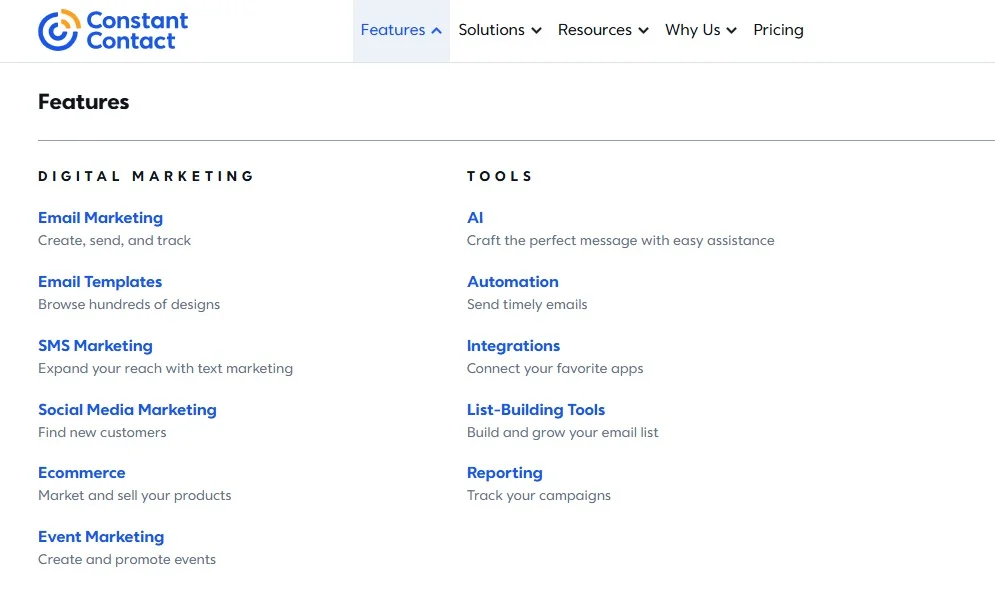
If simplicity is your priority, Constant Contact is difficult to beat.
The platform was built with small business owners in mind, not professional marketers or developers. Most users can import contacts, choose a template, customise a newsletter, and schedule their first campaign within a single session.
Navigation is refreshingly uncomplicated. Nearly every feature revolves around creating and managing email campaigns, which keeps the interface clean and unintimidating.
Its biggest strengths include:
- Minimal learning curve
- Intuitive navigation
- Fast onboarding
- Well-organised templates
- Straightforward audience management
For local businesses, restaurants, schools, charities, real estate agencies, churches, and community organisations, this simplicity can be a major advantage.
For a detailed review of Constant Contact, click here. Constant contact Review
HubSpot
HubSpot asks more from new users.
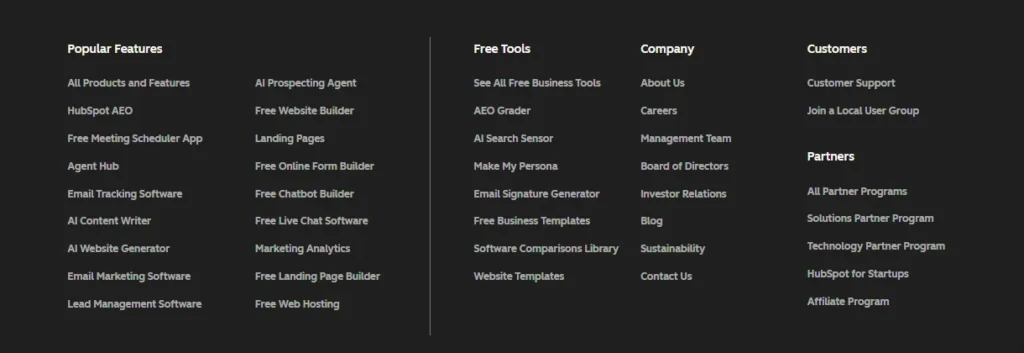
That’s hardly surprising. Rather than offering one standalone application, it combines several interconnected hubs covering marketing, sales, customer service, content management, operations, and CRM.
At first, the platform can feel overwhelming.
But once your team becomes familiar with the ecosystem, everything starts working together. Marketing sees sales activity. Sales can track marketing engagement. Customer support gains full visibility into every interaction.
The learning curve is steeper, yet the operational benefits become increasingly valuable as businesses expand.
For a detailed review of Constant Contact, click here HubSpot Review
Winner
If you need software that works almost immediately, Constant Contact comes out ahead.
If you’re investing in long-term efficiency across multiple departments, HubSpot wins comfortably.
Email Builder Comparison
Both platforms feature modern drag-and-drop editors, but they cater to different audiences.
Constant Contact
The editor is designed for speed.
You’ll find hundreds of professionally designed templates, responsive layouts, brand customisation options, built-in image editing, event promotion blocks, surveys, and polls.
Rather than overwhelming users with advanced design controls, Constant Contact keeps everything streamlined, making it ideal for businesses that simply want attractive emails without a lengthy design process.
HubSpot
HubSpot offers considerably more flexibility.
Marketing teams can build highly personalised campaigns using modular layouts, reusable content sections, smart content, CRM-powered personalisation, conditional elements, HTML editing, responsive templates, and AI-assisted copy generation.
The result is an email builder that adapts to sophisticated marketing strategies instead of just producing newsletters.
Winner
For beginners, Constant Contact provides the smoother experience.
For marketing professionals managing multiple campaigns and customer segments, HubSpot delivers substantially greater creative control.
CRM Capabilities
This is where the two platforms begin to separate dramatically.
Constant Contact
Its CRM features are intentionally lightweight.
Businesses can organise contacts with lists and tags, store basic customer details, and create simple audience segments. For companies focused primarily on email communication, that’s often enough.
HubSpot
HubSpot’s CRM is one of the strongest available on the market.
Instead of storing simple contact information, it builds complete customer profiles that include companies, deals, quotes, tasks, support tickets, sales activities, lifecycle stages, lead scores, forecasting data, and a detailed interaction history.
Every conversation, website visit, form submission, email open, and sales call becomes part of one unified customer record.
That level of visibility transforms how organisations approach sales, marketing, and customer support.
Winner
HubSpot by a considerable margin.
Marketing Automation
Automation often determines whether marketing scales—or stalls.
Constant Contact
The platform includes practical automation tools for everyday campaigns.
Businesses can automate welcome sequences, birthday emails, anniversary messages, click-triggered follow-ups, drip campaigns, and list-based workflows.
For many small organisations, these capabilities are perfectly sufficient.
HubSpot
HubSpot takes automation several levels further.
Its workflow builder can coordinate marketing, sales, and customer success simultaneously.
Workflows might:
- Nurture leads across multiple stages
- Notify sales representatives after pricing page visits
- Assign prospects by region
- Update lifecycle stages automatically
- Trigger onboarding tasks after purchases
- Route leads to different teams
- Launch multi-channel campaigns using branching logic
Because automation connects directly with CRM data, workflows become highly personalised instead of relying solely on email engagement.
Winner
HubSpot.
Contact Segmentation
Sending the right message to the right audience often matters more than sending more emails.
Constant Contact
Segmentation is built around practical filters such as:
- Lists
- Tags
- Demographics
- Interests
- Engagement metrics
This works well for newsletters and promotional campaigns.
HubSpot
HubSpot supports much deeper segmentation.
Businesses can build audiences using lead scores, lifecycle stages, CRM properties, purchase history, website activity, deal values, sales interactions, support tickets, marketing engagement, and form submissions.
Even better, dynamic lists update automatically as customer behaviour changes.
That level of precision enables highly personalised marketing at scale.
Winner
HubSpot.
Landing Pages
Constant Contact
Landing page creation is simple and effective.
Users can quickly publish lead generation pages, event registrations, and mobile-friendly forms without needing design expertise.
HubSpot
Landing pages become part of broader customer journeys.
Features include:
- Advanced templates
- Smart content
- Dynamic calls-to-action
- Built-in SEO recommendations
- CRM personalisation
- A/B testing
- Detailed conversion analytics
Rather than functioning as standalone pages, they integrate seamlessly with campaigns, automation, and reporting.
Winner
HubSpot.
AI Features
Artificial intelligence is no longer optional. It’s becoming a standard productivity tool.
Constant Contact
AI helps users draft emails, generate subject lines, and accelerate campaign creation.
These tools save time while reducing creative friction.
HubSpot
HubSpot extends AI across virtually the entire platform.
Users can generate marketing copy, build workflows, analyse reports, create lists, receive CRM recommendations, produce content ideas, and even support sales teams with AI-powered assistance.
Instead of improving one task, HubSpot enhances workflows across multiple departments.
Winner
HubSpot.
Reporting and Analytics
Good marketing relies on measurement.
Constant Contact
Reporting covers the essentials:
- Opens
- Click-through rates
- Bounce rates
- Unsubscribes
- Device performance
- Campaign engagement
For many small businesses, these metrics provide everything needed to improve future campaigns.
HubSpot
HubSpot goes far beyond email analytics.
Businesses gain access to revenue attribution, campaign ROI, customer acquisition costs, sales pipelines, marketing funnels, lifecycle reporting, lead sources, executive dashboards, and fully customisable reports.
Rather than asking whether an email performed well, HubSpot helps answer whether marketing generated revenue.
Winner
HubSpot.
Pricing
Comparing monthly subscription costs only tells part of the story.
Constant Contact offers a lower barrier to entry, predictable pricing, and excellent value for businesses focused primarily on newsletters and customer communication.
HubSpot provides a free CRM and a scalable platform that grows alongside your organisation. However, advanced marketing automation, reporting, and enterprise functionality become significantly more expensive as your requirements evolve.
Best Value
Choose Constant Contact if your primary goal is affordable email marketing.
Choose HubSpot if you’re investing in long-term business infrastructure.
Pros and Cons
Constant Contact
Advantages
- Extremely easy to learn
- Affordable pricing
- Excellent email templates
- Strong email deliverability
- Fast implementation
- Ideal for beginners
Disadvantages
- Basic CRM
- Limited automation
- Less advanced reporting
- Lower scalability
HubSpot
Advantages
- Industry-leading CRM
- Powerful automation
- Comprehensive reporting
- Advanced personalisation
- Unified customer platform
- Excellent scalability
Disadvantages
- Steeper learning curve
- Higher costs for premium features
- Requires more initial configuration
Who Should Choose Constant Contact?
Constant Contact is an excellent fit for organisations that:
- Primarily send newsletters
- Have relatively small contact databases
- Need straightforward marketing tools
- Have limited technical resources
- Operate with lean marketing teams
- Want to launch campaigns quickly
Typical users include local businesses, schools, charities, consultants, community groups, small retailers, and nonprofits.
Who Should Choose HubSpot?
HubSpot becomes increasingly valuable as businesses grow.
It’s particularly well suited to organisations that:
- Need a fully integrated CRM
- Employ dedicated sales teams
- Depend on marketing automation
- Generate inbound leads
- Monitor complete customer journeys
- Require advanced reporting
- Align marketing and sales operations
- Plan for rapid expansion
Common users include SaaS companies, B2B organisations, agencies, professional service firms, technology businesses, and high-growth enterprises.
Decision: Constant Contact vs HubSpot
Choosing between Constant Contact vs HubSpot depends on what your business needs today and where you want it to go in the future.
If you need a simple and affordable email marketing platform, Constant Contact is the better choice. It is easy to use, quick to set up, and includes all the essential tools for creating newsletters, promotions, and email campaigns. It is ideal for small businesses, nonprofits, and organisations that mainly focus on email marketing.
On the other hand, HubSpot is designed for businesses that want more than email marketing. It combines CRM, marketing automation, sales tools, reporting, and customer management in one platform. Although it takes more time to learn and costs more as your business grows, it offers greater flexibility and scalability.
In the Constant Contact vs HubSpot comparison, there is no one-size-fits-all winner. Constant Contact is the right option for businesses looking for simplicity and affordability, while HubSpot is the better investment for companies that want advanced features and long-term growth.
Final Verdict
Both Constant Contact and HubSpot are exceptional platforms. The better choice depends less on which software has the longest feature list and more on what your business is trying to accomplish.
If your priority is creating polished email campaigns quickly, without unnecessary complexity or a significant investment, Constant Contact remains one of the strongest options available. It’s approachable, dependable, and perfectly suited to small businesses, nonprofits, schools, and organisations where email marketing is the primary communication channel.
HubSpot, however, is built for businesses with broader ambitions. By combining CRM, marketing, sales, customer service, automation, and analytics into one connected platform, it provides the infrastructure needed to support sustainable growth. Although it demands more time to learn—and often a larger budget—the payoff comes through deeper customer insights, smarter automation, improved collaboration, and a system capable of scaling alongside your business.
For companies focused solely on email marketing, Constant Contact is an outstanding choice.
For businesses building a complete growth engine, HubSpot is the platform with the greater long-term potential.
Conclusion
Both Constant Contact and HubSpot are excellent platforms, but they serve different business needs. If you’re looking for an easy-to-use and cost-effective email marketing solution, Constant Contact offers everything you need to create, send, and manage professional campaigns with minimal effort.
However, if your business is focused on long-term growth, advanced automation, and building stronger customer relationships, HubSpot provides a more comprehensive platform. Its integrated CRM, powerful marketing tools, and detailed analytics make it a valuable investment for businesses ready to scale.
Ultimately, the Constant Contact vs HubSpot decision comes down to your goals. Consider your budget, team size, and future growth plans before making your choice. By selecting the platform that aligns with your business strategy, you’ll be better positioned to improve customer engagement, streamline marketing efforts, and achieve sustainable growth.
To learn more about marketing tools and discover detailed reviews, comparisons, and practical guides, visit AmiinMarketer.com.