
Email marketing news is evolving faster than ever as AI, privacy regulations, and email platform updates continue to reshape the industry. Staying informed helps businesses improve deliverability, increase engagement, and create more effective campaigns. In this guide, you’ll discover the latest trends, platform updates, best practices, and future insights to stay ahead of the competition.
Table of Contents
Latest Email Marketing News You Need to Know
Email marketing refuses to stand still.
What worked a year ago—or even a few months ago—may no longer deliver the same results. Inbox providers continue tightening security, artificial intelligence is reshaping campaign creation, and consumers have become far more selective about the emails they choose to open, read, and engage with. For businesses that depend on email as a primary marketing channel, staying informed isn’t simply helpful anymore—it’s a competitive necessity.
Today’s email marketing landscape revolves around three major forces: trust, personalization, and automation. Companies that understand how these trends intersect are far more likely to reach subscribers’ inboxes, strengthen customer relationships, and generate meaningful returns from every campaign.
Email Authentication Is More Important Than Ever
One of the most significant developments dominating email marketing news is the growing emphasis on sender authentication.
Major mailbox providers, including Gmail and Yahoo, have strengthened their requirements to reduce spam, phishing attacks, and email spoofing. As a result, businesses can no longer rely solely on compelling content or attractive designs. If the technical foundation behind an email isn’t properly configured, there’s a good chance that message will never reach its intended audience.
Protocols such as SPF, DKIM, and DMARC have become essential components of modern email marketing. Together, they verify that emails originate from legitimate domains, helping mailbox providers distinguish trusted senders from malicious actors.
Organizations that neglect these authentication standards often experience declining inbox placement, reduced engagement, and damage to their sender reputation. On the other hand, businesses that proactively implement these protocols place themselves in a much stronger position to maintain consistent deliverability and earn the trust of both subscribers and email providers.
Artificial Intelligence Is Transforming Email Marketing
Artificial intelligence has rapidly evolved from a helpful assistant into one of the driving forces behind modern email marketing.
Today’s leading email platforms use AI to streamline nearly every stage of campaign creation. Subject lines can be generated within seconds. Email copy can be drafted automatically. Audiences are segmented based on behavior rather than guesswork, while predictive algorithms recommend the optimal time to send each campaign for maximum engagement.
But automation is only part of the story.
AI is also enabling marketers to create experiences that feel remarkably personal. Instead of sending identical emails to thousands of subscribers, businesses can deliver content tailored to individual interests, browsing habits, purchasing behavior, and previous interactions.
The result? More relevant emails, stronger engagement, and higher conversion rates—all while dramatically reducing the time required to manage campaigns.
Of course, AI performs best when paired with human creativity. The most successful marketers treat it as a collaborative tool rather than a replacement, using technology to increase efficiency while ensuring every message still reflects the brand’s unique voice.
Privacy Is Reshaping Email Strategy
Consumer expectations around privacy have changed dramatically over the past few years.
People want greater control over how their personal information is collected, stored, and used. At the same time, privacy regulations continue expanding across different regions, forcing organizations to rethink how they build and manage subscriber lists.
The decline of third-party cookies has accelerated this transition.
Rather than relying on external data sources, marketers are increasingly investing in first-party data—information collected directly from customers through newsletter subscriptions, website registrations, surveys, purchase history, and preference centers.
This shift benefits everyone involved.
Subscribers receive more relevant communications because they’ve explicitly chosen to share their information, while businesses gain access to more reliable customer insights that support stronger personalization and long-term engagement.
Compliance with regulations such as GDPR and CCPA is no longer viewed as merely avoiding legal penalties. Increasingly, it’s becoming a visible sign that a company respects customer privacy and values transparency.
Interactive Emails Continue to Gain Momentum
Static newsletters are gradually giving way to richer, more engaging experiences.
Instead of directing subscribers to external landing pages for every interaction, brands are incorporating interactive elements directly into their emails. Polls, surveys, product carousels, image galleries, countdown timers, quizzes, and appointment booking tools are becoming increasingly common across industries.
These features do more than make emails visually appealing.
They encourage recipients to participate, explore products, and make decisions without ever leaving the inbox. Removing unnecessary steps often leads to higher engagement, increased click-through rates, and a smoother overall customer experience.
As support for interactive email technologies continues to expand across major email clients, marketers have even greater opportunities to create memorable campaigns that stand out in crowded inboxes.
Email Marketing Platforms Keep Raising the Bar
Competition among email marketing platforms has never been stronger.
Providers are continuously introducing new capabilities designed to simplify campaign management while delivering deeper customer insights. From smarter automation builders and predictive analytics to enhanced segmentation tools and AI-powered optimization, today’s platforms offer far more than basic email scheduling.
Advanced reporting dashboards now reveal not only open rates and clicks but also customer lifetime value, revenue attribution, conversion paths, and long-term engagement trends. These insights allow marketers to make informed decisions backed by real data instead of assumptions.
Frequent platform updates also mean businesses can automate increasingly complex customer journeys, integrate email with CRM systems and eCommerce platforms, and create personalized experiences across multiple marketing channels.
For organizations willing to embrace these innovations, the opportunities for improving efficiency and maximizing return on investment continue to grow.
Why Staying Current Matters
Email marketing isn’t changing once a year—it evolves continuously.
Security standards become stricter. AI capabilities grow more sophisticated. Privacy expectations shift. Consumer behavior changes. Email platforms release new features almost every month.
Businesses that stay informed are better equipped to adapt before these changes begin affecting campaign performance. They protect their sender reputation, maintain stronger inbox placement, comply with evolving regulations, and capitalize on emerging technologies before competitors have the chance.
Whether you’re running a local business newsletter, managing campaigns for multiple clients, or overseeing enterprise-level email operations, keeping up with the latest email marketing news isn’t simply about following trends.
It’s about making smarter decisions, delivering better customer experiences, and ensuring every email has the best possible opportunity to reach, engage, and convert its audience.
Top Email Marketing Trends Shaping the Industry
Email marketing has always evolved alongside technology, but the pace of change today is unlike anything we’ve seen before. Artificial intelligence, stricter privacy standards, shifting consumer expectations, and smarter automation are transforming the way brands communicate with their audiences.
Success is no longer determined by how many emails you send. Instead, it’s about delivering the right message, to the right person, at precisely the right moment.
Let’s explore the trends that are redefining modern email marketing.
AI-Powered Personalization Is Becoming the New Standard
Mass email campaigns are quickly becoming a thing of the past.
Subscribers expect brands to understand who they are, what they care about, and where they are in the customer journey. Generic newsletters that look identical for every recipient simply don’t perform as well as they once did.
Artificial intelligence is making true personalization possible at scale.
Rather than relying on basic demographic information, AI analyzes browsing behavior, previous purchases, email engagement, search history, and customer preferences to build detailed subscriber profiles. Using these insights, marketers can automatically tailor subject lines, product recommendations, promotional offers, and even the content displayed within individual emails.
Imagine two customers receiving the same campaign.
One recently purchased hiking boots, while the other has been browsing camping gear for weeks without completing a purchase. Instead of sending identical promotions, AI can present each subscriber with products that align with their unique interests, dramatically increasing the chances of engagement.
When emails feel relevant, people are far more likely to open them, click through, and convert.
Marketing Automation Is Growing Smarter
Automation has moved well beyond simple autoresponders.
Today’s email platforms allow businesses to build sophisticated workflows that react to customer behavior in real time. A single action—such as signing up for a newsletter, abandoning a shopping cart, downloading a guide, or completing a purchase—can instantly trigger a personalized sequence of emails designed to guide the subscriber toward the next step.
These automated journeys save countless hours while ensuring every customer receives timely, relevant communication.
A typical workflow might begin with a welcome email, followed by educational content, personalized recommendations, customer reviews, special offers, and post-purchase follow-ups. If the subscriber stops engaging, the system can automatically launch a re-engagement campaign or adjust the messaging based on previous interactions.
The result is a marketing strategy that feels personal without requiring constant manual management.
As automation becomes increasingly intelligent, businesses can focus more on strategy and creativity while software handles repetitive tasks behind the scenes.
Interactive Emails Create Better Experiences
Consumers don’t just want to read emails anymore.
They want to interact with them.
Interactive email design is rapidly becoming one of the most exciting developments in the industry. Rather than directing users to external web pages for every action, marketers are embedding engaging features directly inside the inbox.
Polls. Quizzes. Surveys. Product sliders. Countdown timers. Image galleries. Appointment booking tools.
These elements transform passive emails into active experiences.
For example, an online retailer can showcase multiple products in a swipeable carousel, allowing subscribers to browse featured items without leaving the email. A software company might include a quick satisfaction survey, while an event organizer could display a live countdown timer that builds anticipation before registration closes.
Reducing friction often leads to stronger engagement.
The fewer steps users must take to interact with your content, the greater the likelihood they’ll continue moving through the customer journey.
First-Party Data Is Replacing Third-Party Tracking
Privacy has become one of the defining themes of modern digital marketing.
With third-party cookies gradually disappearing and consumers demanding greater transparency, businesses are changing the way they collect and use customer information.
Instead of relying on external data sources, marketers are investing heavily in first-party data—information gathered directly from subscribers through newsletter sign-ups, purchase history, website activity, preference centers, surveys, and customer accounts.
This approach offers several important advantages.
First, the data is generally more accurate because it comes directly from the customer. Second, it strengthens trust by giving subscribers greater control over how their information is collected and used. Finally, it allows marketers to build richer customer profiles while remaining compliant with evolving privacy regulations.
Businesses that prioritize permission-based marketing are discovering that smaller, high-quality subscriber lists often outperform much larger databases filled with disengaged contacts.
Mobile Optimization Is No Longer Optional
Take a look around any coffee shop, airport, or waiting room.
People are checking email on their phones.
Since a significant percentage of marketing emails are opened on mobile devices, every campaign should be designed with smaller screens in mind. Responsive layouts, readable fonts, concise paragraphs, fast-loading images, and touch-friendly buttons all contribute to a better user experience.
Even minor design flaws can have a major impact.
Tiny text, oversized images, broken formatting, or buttons that are difficult to tap often lead subscribers to abandon an email within seconds.
Successful marketers now design for mobile first, ensuring campaigns perform beautifully on smartphones before optimizing for desktop displays.
The easier an email is to read and navigate, the more likely subscribers are to engage with it.
Advanced Audience Segmentation Delivers Better Results
Not every subscriber has the same needs.
Treating your entire email list as a single audience almost guarantees missed opportunities.
Modern segmentation goes far beyond age, gender, or geographic location. Businesses now organize subscribers according to purchasing behavior, browsing habits, engagement history, interests, average order value, customer lifecycle stage, and even predicted future behavior.
This level of precision allows marketers to create campaigns that feel individually crafted.
A first-time customer shouldn’t receive the same messaging as someone who has been buying from your brand for years. Likewise, inactive subscribers require a different approach than your most loyal advocates.
Highly targeted campaigns consistently outperform broad email blasts because they’re built around relevance rather than volume.
Accessibility Is Becoming a Core Marketing Priority
Great email design isn’t only about appearance.
It’s about ensuring every subscriber can access and understand your content, regardless of ability.
More organizations are embracing accessibility best practices by adding descriptive image alt text, improving color contrast, using readable typography, structuring headings logically, and designing layouts that work well with screen readers.
These improvements benefit everyone—not just users with disabilities.
Accessible emails are often cleaner, easier to scan, and more user-friendly across every device and email client. They also demonstrate a brand’s commitment to inclusivity, something consumers increasingly value when choosing where to spend their money.
Building accessible campaigns isn’t simply a compliance exercise.
It’s an opportunity to create better experiences for every subscriber who opens your emails.
Looking Ahead
Email marketing continues to evolve at an extraordinary pace.
Artificial intelligence is making personalization effortless. Automation is becoming increasingly sophisticated. Privacy regulations are reshaping data collection, while interactive design and accessibility are raising the standard for user experience.
Businesses that embrace these trends won’t just keep up with the competition—they’ll position themselves ahead of it.
The future belongs to marketers who combine technology with genuine customer understanding, creating campaigns that are timely, relevant, and built around the needs of real people. Those who adapt today will be the ones setting the benchmark tomorrow.
Major Email Service Provider Updates
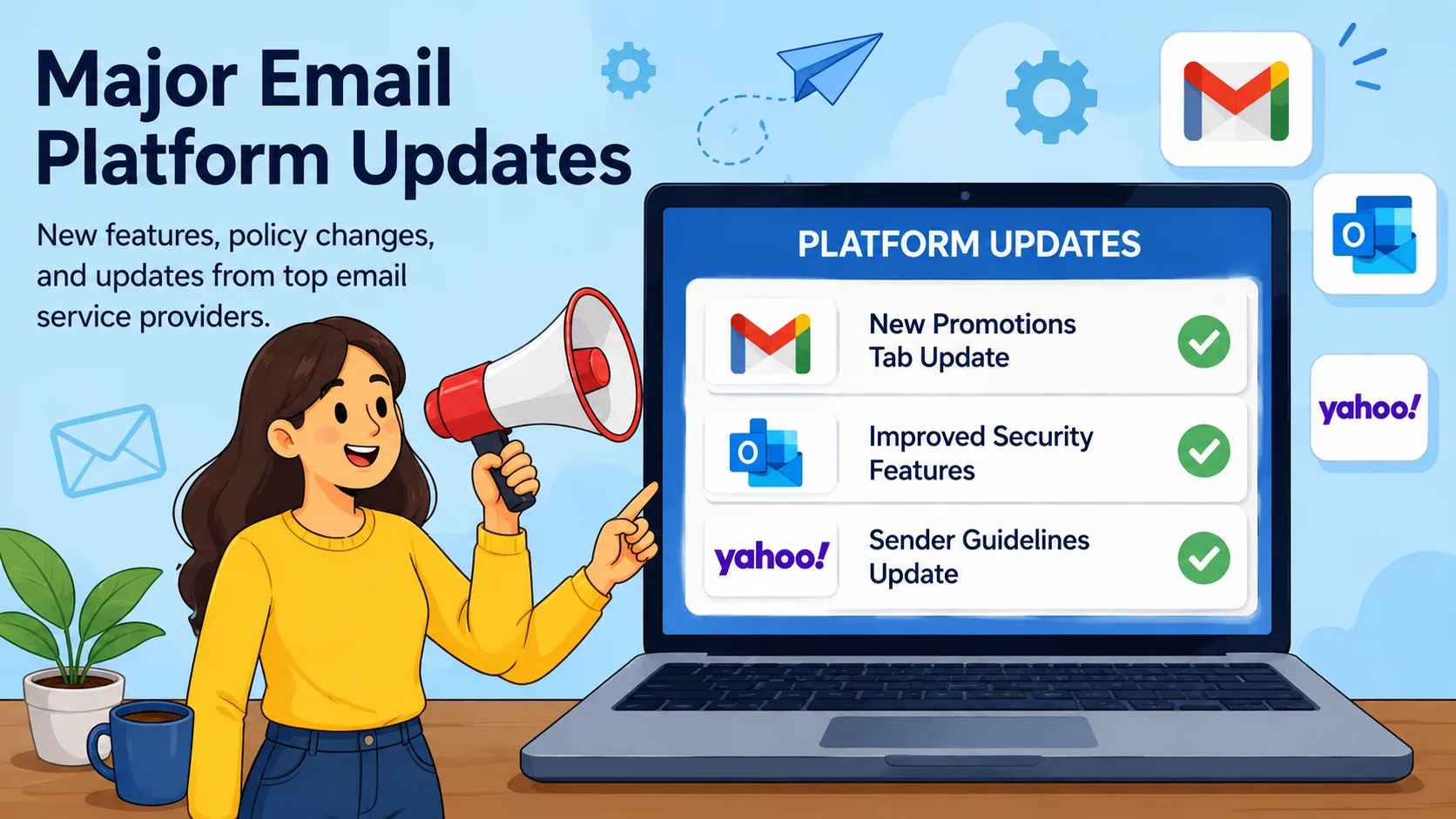
Email marketing platforms are evolving faster than ever.
What were once simple tools for sending newsletters have transformed into comprehensive marketing ecosystems capable of automating customer journeys, analyzing buying behavior, predicting engagement, and generating content with artificial intelligence. Every major email service provider (ESP) is racing to introduce smarter features, deeper integrations, and more advanced analytics—all with the goal of helping marketers create better campaigns with less manual effort.
For businesses, these continuous updates represent both an opportunity and a challenge. New capabilities can dramatically improve campaign performance, but only for marketers who stay informed and adapt their strategies accordingly.
Artificial Intelligence Is Becoming a Built-In Assistant
Artificial intelligence has moved from being a premium add-on to a core feature across most leading email platforms.
Rather than staring at a blank screen wondering how to begin, marketers can now generate complete email drafts, subject lines, preview text, calls to action, and product descriptions in seconds. AI also analyzes historical campaign performance to recommend improvements before an email is even sent.
Some platforms go even further.
Machine learning algorithms evaluate subscriber behavior to determine which recipients are most likely to engage, unsubscribe, or make a purchase. These predictions allow marketers to prioritize high-value audiences and adjust campaigns before performance begins to decline.
The technology isn’t replacing marketers—it’s removing repetitive work so teams can spend more time refining strategy, creativity, and customer experience.
Automation Has Reached a New Level of Sophistication
Automation is no longer limited to welcome emails and birthday greetings.
Modern email service providers allow businesses to design intelligent workflows that respond dynamically to customer actions. Every interaction—from visiting a product page to abandoning a shopping cart or completing a purchase—can automatically trigger personalized communication without human intervention.
Imagine a customer browsing winter jackets.
If they leave without making a purchase, the system might send a reminder email a few hours later. If there’s still no response, it could automatically follow up with customer reviews, a styling guide, or even a limited-time discount. Once the purchase is complete, the workflow seamlessly transitions into order updates, product care tips, cross-selling opportunities, and loyalty rewards.
Visual workflow builders have also become significantly more intuitive.
Instead of navigating complicated rule-based systems, marketers can map entire customer journeys using drag-and-drop interfaces, making sophisticated automation accessible even to smaller teams with limited technical expertise.
Smarter Audience Segmentation Delivers More Relevant Campaigns
One-size-fits-all email marketing is steadily disappearing.
Today’s email platforms provide remarkably detailed segmentation capabilities, allowing marketers to group subscribers based on virtually any measurable behavior.
Purchase frequency.
Browsing history.
Email engagement.
Geographic location.
Customer lifetime value.
Product interests.
Even predicted future behavior.
Rather than creating static lists, many ESPs now offer dynamic segments that update automatically whenever subscriber behavior changes. Someone who moves from “prospect” to “customer” instantly begins receiving a completely different communication journey without requiring manual intervention.
This continuous updating ensures subscribers always receive content that reflects where they are in the buying process.
The result is greater relevance, stronger engagement, and significantly higher conversion rates.
Analytics Are Moving Beyond Opens and Clicks
For years, marketers relied heavily on open rates and click-through rates to judge campaign success.
Those metrics still matter—but they’re no longer the full story.
Modern email platforms now provide comprehensive reporting dashboards that connect email activity directly to business outcomes. Instead of simply knowing how many people opened an email, marketers can see which campaigns generated revenue, influenced purchases, increased customer lifetime value, or contributed to long-term retention.
Many dashboards now include:
- Revenue attribution
- Conversion tracking
- Customer journey visualization
- Engagement trends
- Subscriber growth
- Retention analysis
- Predictive performance forecasting
These insights enable businesses to move beyond guesswork and make decisions based on measurable customer behavior rather than assumptions.
The emphasis has shifted from sending more emails to understanding which emails actually drive business growth.
Deliverability Tools Are Becoming More Advanced
Even the most compelling email won’t produce results if it never reaches the inbox.
Recognizing this, email service providers have invested heavily in deliverability tools designed to help businesses protect their sender reputation and maximize inbox placement.
Many platforms now include built-in authentication assistants that simplify the setup of SPF, DKIM, and DMARC records. Others actively monitor domain health, spam complaint rates, bounce rates, blacklist status, and sender reputation, notifying users before small issues become major deliverability problems.
Some providers even offer inbox preview tools that estimate where emails are likely to land across different mailbox providers.
These proactive features make it much easier for marketers to identify technical problems before campaigns are affected, reducing the risk of poor deliverability and protecting long-term sender credibility.
Integrations Continue to Expand
Email marketing no longer exists in isolation.
Today’s platforms are designed to integrate seamlessly with the broader marketing ecosystem, allowing customer information to flow between multiple business tools.
Most leading ESPs now connect with:
- Customer Relationship Management (CRM) systems
- eCommerce platforms
- Customer support software
- Payment processors
- Social media management tools
- Webinar platforms
- Landing page builders
- Analytics solutions
These integrations eliminate data silos and create a unified customer profile across every touchpoint.
For example, when a customer completes a purchase, updates their preferences, contacts customer support, or attends a webinar, that information can immediately influence future email campaigns without requiring manual updates.
The result is a more connected, personalized customer experience from beginning to end.
Competition Is Driving Rapid Innovation
The competition among email marketing providers has become incredibly intense.
Every platform is striving to differentiate itself through faster automation, smarter AI, improved analytics, enhanced personalization, stronger deliverability tools, and more intuitive user experiences.
For marketers, this competition is overwhelmingly positive.
New features are released at an unprecedented pace, giving businesses access to capabilities that were once reserved for enterprise-level organizations with massive marketing budgets.
Small businesses can now automate sophisticated customer journeys.
Growing brands can leverage predictive analytics.
Large enterprises can orchestrate highly personalized campaigns across multiple channels.
The playing field has never been more level.
Why These Platform Updates Matter
Choosing an email marketing platform isn’t a one-time decision.
The capabilities of your provider directly influence how effectively you can engage customers, automate communication, analyze performance, and scale your marketing efforts.
Businesses that regularly monitor platform updates gain a significant advantage. They can adopt new features early, improve campaign efficiency, strengthen personalization, and respond more quickly to changing customer expectations.
In a landscape where technology evolves almost monthly, staying informed isn’t simply about learning what’s new.
It’s about ensuring your marketing strategy evolves alongside the tools that power it.
The companies that embrace continuous innovation won’t just send better emails—they’ll build stronger customer relationships, make smarter decisions, and achieve better results with every campaign they launch.
Gmail, Outlook, and Apple Mail News
No matter how polished your email campaign looks, one question always comes first:
Will it actually reach your audience?
The answer depends largely on the companies that control the world’s biggest inboxes. Gmail, Outlook, and Apple Mail continue to shape the future of email marketing through new security policies, privacy enhancements, and user experience improvements. Even relatively small updates can influence inbox placement, campaign reporting, and subscriber engagement.
For marketers, keeping an eye on these providers isn’t optional—it’s essential. Understanding how each platform evolves allows businesses to adapt before changes begin affecting campaign performance.
Gmail Continues to Raise the Bar for Email Authentication
Gmail remains one of the world’s most widely used email services, which means its policies have a significant impact on the entire email marketing industry.
Over the past few years, Google has placed increasing emphasis on protecting users from spam, phishing attacks, and fraudulent emails. To achieve this, Gmail has introduced stricter requirements for bulk email senders, making proper authentication more important than ever.
Businesses are now expected to configure authentication standards such as SPF, DKIM, and DMARC to verify that emails originate from legitimate domains. These protocols help Gmail distinguish trusted organizations from malicious senders attempting to impersonate legitimate brands.
Authentication, however, is only part of the equation.
Google also evaluates sender reputation by monitoring factors such as spam complaints, bounce rates, subscriber engagement, and sending consistency. Even a technically perfect email can struggle to reach the inbox if recipients frequently ignore, delete, or report similar messages as spam.
Another important focus is user control.
Gmail encourages marketers to provide clear unsubscribe options and send only permission-based content. Making it easy for subscribers to opt out may seem counterintuitive, but it actually strengthens sender reputation by reducing spam complaints and improving long-term engagement.
Businesses that follow these best practices are far more likely to maintain consistent inbox placement and build lasting trust with both subscribers and mailbox providers.
Outlook Continues to Strengthen Email Security
Microsoft Outlook has also made significant investments in email security.
As cyber threats become increasingly sophisticated, Outlook continues enhancing its spam filters, phishing detection systems, and domain verification processes. These improvements help protect users, but they also raise the standards marketers must meet.
Sender reputation plays a critical role.
Outlook evaluates multiple signals when deciding whether an email belongs in the inbox or the junk folder. High bounce rates, inconsistent sending patterns, poor authentication, and low subscriber engagement can all reduce deliverability.
For businesses, consistency matters.
Maintaining a healthy email list, authenticating sending domains, and delivering relevant content on a predictable schedule all contribute to stronger inbox performance.
Beyond security, Outlook remains one of the more challenging email clients from a design perspective.
Its rendering engine can display HTML emails differently from other platforms, meaning layouts that appear flawless in one inbox may break in Outlook. Images, spacing, fonts, and call-to-action buttons should always be tested carefully across desktop and mobile versions before launching a campaign.
Investing a little extra time in compatibility testing can prevent frustrating user experiences and protect conversion rates.
Apple Mail Continues to Prioritize User Privacy
Apple has arguably had the greatest influence on email marketing analytics in recent years.
Its introduction of Mail Privacy Protection (MPP) fundamentally changed how marketers interpret campaign performance. Traditionally, open rates served as one of the primary indicators of engagement. MPP disrupted that approach by automatically preloading email content, making many opens appear as though they were initiated by subscribers—even when they weren’t.
As a result, open rates have become far less reliable as a standalone performance metric.
This shift has encouraged marketers to focus on more meaningful indicators of success, including:
- Click-through rates
- Website visits
- Conversions
- Revenue generated
- Customer retention
- Subscriber engagement over time
In many ways, Apple has accelerated a broader industry movement toward measuring genuine customer actions instead of superficial metrics.
Privacy extends beyond tracking.
Apple continues giving users greater control over how their personal information is shared, reinforcing a growing expectation that businesses should collect data transparently and use it responsibly.
For marketers, this means building stronger relationships through permission-based communication rather than relying heavily on behavioral tracking.
Why These Provider Updates Matter
It’s easy to think of Gmail, Outlook, and Apple Mail as simply places where emails are received.
In reality, they’re active participants in determining whether campaigns succeed.
Each provider uses its own algorithms, security standards, privacy features, and filtering systems to evaluate incoming messages. While their approaches differ, they share a common objective: delivering relevant emails while protecting users from spam and malicious content.
For marketers, this creates an environment where technical configuration, subscriber engagement, and content quality all work together.
Ignoring authentication standards may hurt deliverability.
Neglecting privacy expectations can weaken customer trust.
Poor design may reduce engagement on certain devices or email clients.
No single factor determines success. Instead, it’s the combination of technical excellence, valuable content, and positive subscriber experiences that consistently earns a place in the inbox.
Adapting to a Constantly Changing Landscape
Mailbox providers will continue evolving.
New authentication requirements will emerge. Spam filters will become more intelligent. Privacy protections will likely expand, and user expectations will continue shifting toward greater transparency and control.
Businesses that monitor these changes—and adapt early—will enjoy a significant advantage.
They’ll experience stronger inbox placement, more accurate performance analysis, healthier sender reputations, and better long-term engagement with their audiences.
Ultimately, successful email marketing isn’t just about creating compelling messages.
It’s about understanding the ecosystem those messages travel through.
The brands that respect inbox providers, prioritize subscriber experience, and embrace evolving best practices won’t simply survive future changes—they’ll thrive because of them.
Email Deliverability and Inbox Placement Updates
You can craft the perfect subject line.
Write persuasive copy. Design a beautiful email. Build an irresistible offer.
None of it matters if your message never reaches the inbox.
Deliverability remains one of the most critical—and often overlooked—aspects of email marketing. Every campaign competes for a place in a subscriber’s inbox, and mailbox providers use increasingly sophisticated algorithms to decide which emails deserve that privilege.
Today’s email marketing success isn’t determined solely by content quality. Technical configuration, sender reputation, subscriber engagement, and responsible sending practices all play equally important roles.
Understanding these factors can make the difference between a thriving email program and one that quietly disappears into the spam folder.
Authentication Has Become the Foundation of Deliverability
Mailbox providers have one primary objective: protect their users.
To achieve that goal, they scrutinize every incoming message before deciding where it belongs. One of the first checks involves verifying that the sender is who they claim to be.
This is where email authentication comes in.
Protocols such as SPF (Sender Policy Framework), DKIM (DomainKeys Identified Mail), and DMARC (Domain-based Message Authentication, Reporting, and Conformance) work together to establish trust between your domain and mailbox providers.
Think of them as digital credentials.
SPF specifies which servers are authorized to send emails on behalf of your domain. DKIM adds a cryptographic signature that confirms the message hasn’t been altered during transit. DMARC builds on both technologies, telling receiving servers how to handle emails that fail authentication while providing valuable reporting data.
Without these safeguards, even legitimate marketing emails can appear suspicious.
Proper authentication doesn’t guarantee inbox placement, but lacking it significantly reduces your chances of reaching subscribers consistently.
Your Sender Reputation Speaks Before Your Email Does
Every email you send contributes to your sender reputation.
Over time, mailbox providers build a profile of your domain and sending behavior, using that history to determine how much they trust future campaigns.
A healthy reputation is earned—not assumed.
Several factors influence it, including:
- Spam complaint rates
- Hard and soft bounces
- Subscriber engagement
- Sending consistency
- Authentication status
- Unsubscribe rates
- Overall email quality
Positive engagement sends encouraging signals.
When recipients open emails, click links, reply to messages, or move emails into their primary inbox, providers interpret those actions as evidence that your content is valuable.
Negative signals tell a different story.
If subscribers frequently ignore your emails, delete them without reading, or mark them as spam, inbox providers become increasingly cautious about delivering future campaigns.
Building a strong sender reputation requires patience, consistency, and a genuine commitment to delivering value—not simply increasing email volume.
One-Click Unsubscribe Is More Than a Convenience
Many marketers worry that making it easier for people to unsubscribe will shrink their audience.
In reality, the opposite is often true.
When subscribers can quickly opt out of emails they no longer wish to receive, they’re far less likely to click the “Report Spam” button. That distinction matters because spam complaints damage sender reputation far more than unsubscribes.
Recognizing this, major mailbox providers increasingly expect commercial emails to include clear, accessible unsubscribe options—ideally requiring only a single click.
This simple feature benefits everyone.
Subscribers maintain control over their inboxes, businesses preserve healthier sender reputations, and overall email quality improves across the ecosystem.
A smaller list filled with engaged readers almost always outperforms a larger list full of inactive contacts.
Engagement Signals Are Becoming Increasingly Influential
Deliverability doesn’t end after an email reaches the inbox.
Mailbox providers continue monitoring how recipients interact with every message.
Do they open it?
Click a link?
Reply?
Forward it to a colleague?
Archive it for later?
Or do they ignore it entirely?
These behaviors collectively shape future inbox placement.
Although privacy features have reduced the reliability of open rates—particularly after Apple’s Mail Privacy Protection—the broader concept of engagement remains incredibly important.
Clicks, conversions, replies, website visits, and ongoing subscriber activity now provide more meaningful insights into campaign performance.
Businesses that consistently publish relevant, useful, and timely content naturally generate stronger engagement signals, reinforcing their credibility with mailbox providers over time.
Deliverability is no longer purely technical.
It’s deeply connected to the quality of your relationship with subscribers.
List Hygiene Is Essential for Long-Term Success
An email list isn’t meant to grow forever.
It needs regular maintenance.
People change jobs. Abandon old email addresses. Lose interest. Switch providers. Some accounts become inactive, while others simply stop engaging altogether.
Continuing to email these contacts can gradually weaken campaign performance.
Routine list cleaning helps maintain strong engagement rates while reducing bounce rates and spam complaints. Removing invalid addresses, identifying inactive subscribers, and running occasional re-engagement campaigns all contribute to healthier deliverability.
Many businesses also choose to implement double opt-in, requiring new subscribers to confirm their email address before joining the list.
Although this extra step may slightly reduce subscription numbers, it dramatically improves list quality by ensuring every contact genuinely wants to receive future communications.
Quality consistently outweighs quantity.
A smaller, engaged audience delivers better results than a massive list filled with uninterested recipients.
Consistency Matters More Than Volume
One of the quickest ways to damage deliverability is by sending emails inconsistently.
Imagine remaining silent for six months before suddenly sending hundreds of thousands of emails in a single day.
Mailbox providers notice these patterns.
Large spikes in sending volume can resemble spam activity, especially if accompanied by low engagement or high complaint rates.
Successful email programs establish predictable sending schedules.
Whether you publish weekly newsletters, monthly updates, or behavior-based automated campaigns, consistency builds familiarity with both subscribers and mailbox providers.
It also helps audiences know when to expect communication, increasing the likelihood they’ll recognize and engage with your emails.
Trust is built through repetition.
Deliverability Is an Ongoing Process
Many marketers think of deliverability as a technical setup completed once during account configuration.
In reality, it’s an ongoing discipline.
Successful organizations regularly monitor authentication records, sender reputation, bounce rates, engagement metrics, unsubscribe trends, spam complaints, and inbox placement reports.
When issues arise, they investigate quickly.
They refine segmentation, improve content relevance, clean subscriber lists, and adjust sending practices before small problems become major obstacles.
Deliverability isn’t something you achieve once.
It’s something you maintain.
Why Inbox Placement Deserves Continuous Attention
Every email campaign represents an opportunity.
An opportunity to educate.
To build trust.
To strengthen customer relationships.
To generate revenue.
But those opportunities exist only if your messages are actually seen.
As mailbox providers continue strengthening their filtering systems and security requirements, businesses that prioritize authentication, maintain healthy subscriber lists, respect user preferences, and consistently deliver valuable content will enjoy a clear competitive advantage.
Great email marketing starts long before someone reads your message.
It starts by earning the right to appear in their inbox.
The brands that understand this principle—and build their strategies around it—will continue achieving stronger engagement, better deliverability, and more sustainable long-term growth.
AI Innovations in Email Marketing
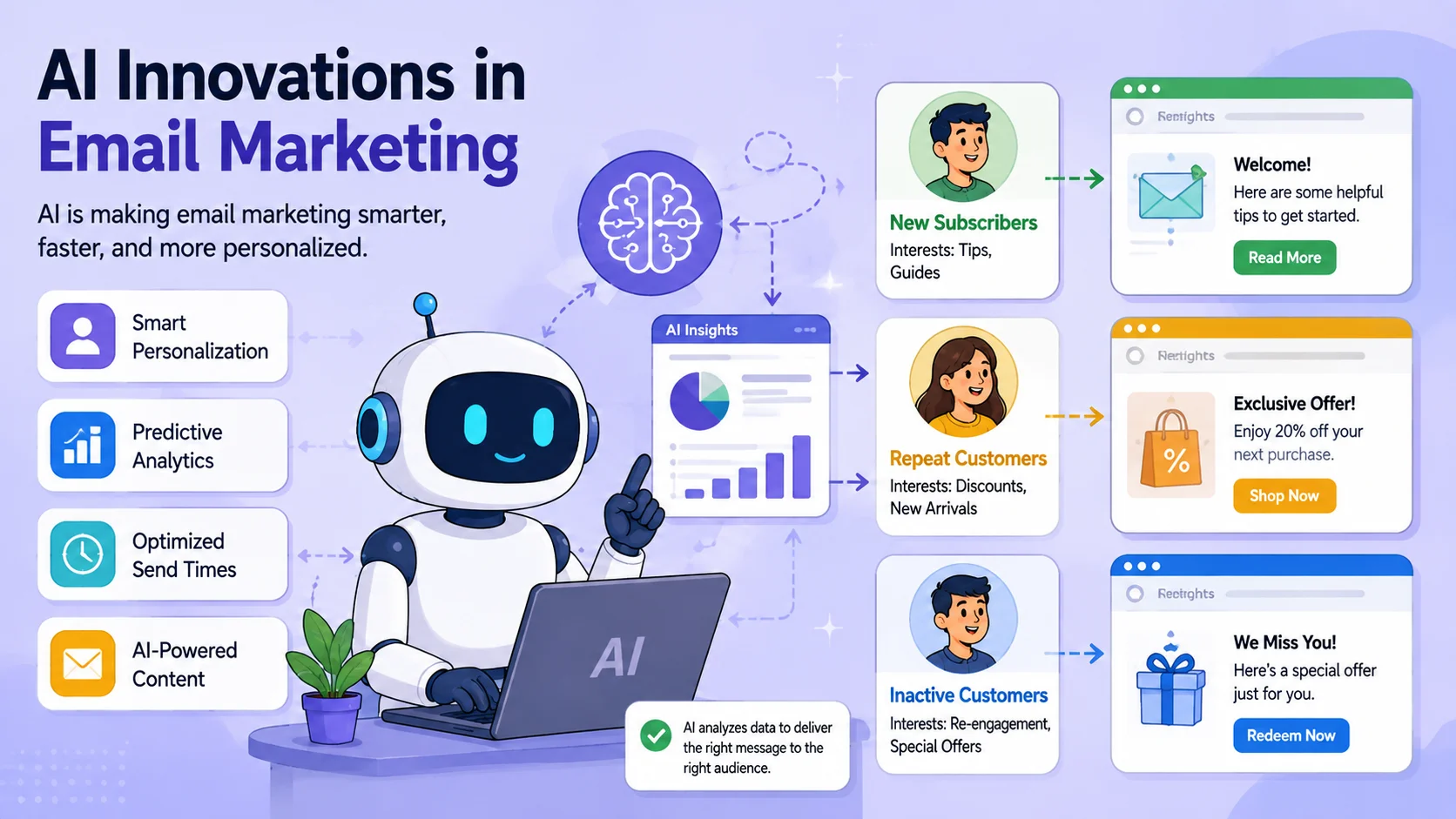
Artificial intelligence is no longer a futuristic concept in email marketing—it has become an everyday tool.
What once required hours of planning, manual analysis, and repetitive work can now be accomplished in minutes with the help of AI-powered platforms. From writing compelling subject lines to predicting customer behavior, artificial intelligence is transforming nearly every stage of the email marketing process.
Yet the real value of AI isn’t simply speed.
It’s the ability to make email marketing smarter, more relevant, and increasingly personalized at a scale that would be nearly impossible for human teams to achieve alone.
Businesses that embrace these technologies are discovering new ways to improve efficiency without sacrificing the authentic customer experiences that drive long-term loyalty.
AI Is Revolutionizing Content Creation
Creating engaging email campaigns has traditionally been one of the most time-consuming parts of email marketing.
Marketers brainstorm subject lines, draft multiple versions of copy, refine calls to action, and edit content repeatedly before finally pressing “Send.”
Artificial intelligence has dramatically shortened that process.
Modern email platforms can generate subject lines, preview text, promotional copy, product descriptions, headlines, and even complete campaign drafts within seconds. These systems analyze successful email patterns, language trends, and user prompts to produce content that’s both relevant and engaging.
But speed isn’t the only advantage.
AI also serves as a creative partner.
Struggling to write a compelling opening? Need five alternative subject lines? Looking for fresh wording for a product launch?
AI can generate multiple variations almost instantly, giving marketers a strong starting point rather than forcing them to begin with a blank page.
Even so, human oversight remains essential.
The strongest campaigns combine AI’s efficiency with human creativity, ensuring every email reflects the brand’s personality, values, and unique voice.
Personalization Has Reached an Entirely New Level
Using a subscriber’s first name in the greeting once counted as personalization.
Today, that’s just the beginning.
Artificial intelligence enables businesses to understand customers on a much deeper level by analyzing purchasing habits, browsing history, engagement patterns, product interests, and previous interactions.
Instead of sending identical emails to an entire mailing list, marketers can automatically customize each campaign for individual recipients.
One subscriber might receive recommendations based on recent purchases.
Another sees products they recently viewed but didn’t buy.
Someone else receives educational content related to their interests instead of promotional offers.
Every version feels intentionally crafted—even though AI handles the personalization behind the scenes.
This level of relevance creates better customer experiences while increasing click-through rates, conversions, and long-term engagement.
Subscribers are far more likely to respond when content feels genuinely useful rather than broadly promotional.
Predictive Analytics Helps Marketers Stay Ahead
One of AI’s greatest strengths is its ability to identify patterns that humans might overlook.
Predictive analytics examines historical customer data to estimate future behavior, giving marketers valuable insights before important decisions are made.
Instead of reacting after subscribers lose interest, businesses can anticipate changes and respond proactively.
For example, AI can identify customers who are:
- Most likely to make another purchase
- At risk of unsubscribing
- Becoming inactive
- Ready for an upsell
- Likely to respond to a limited-time promotion
Armed with these predictions, marketers can create highly targeted campaigns that address customer needs before opportunities disappear.
Rather than relying on assumptions, decisions become increasingly data-driven.
The result is more efficient marketing and stronger customer relationships.
AI Determines the Best Time to Send Every Email
Timing has always influenced campaign performance.
An excellent email sent at the wrong moment can easily be overlooked.
Artificial intelligence eliminates much of the guesswork.
Instead of scheduling every campaign for the same hour, AI-powered send-time optimization studies each subscriber’s behavior individually. It analyzes when recipients typically open emails, click links, browse products, or make purchases.
The platform then delivers messages when each person is statistically most likely to engage.
One subscriber might receive an email during their morning commute.
Another opens it during lunch.
Someone else sees it late in the evening.
Every delivery time is personalized.
This seemingly small adjustment often produces measurable improvements in engagement because emails arrive when subscribers are actually paying attention.
Smarter Segmentation Creates Better Conversations
Traditional segmentation organizes subscribers into broad groups.
Artificial intelligence creates living audiences.
Rather than relying solely on demographics like age or location, AI continuously analyzes customer behavior to build dynamic segments that evolve automatically.
Subscribers move between groups based on their actions.
Someone browsing premium products enters a high-value segment.
A previously active customer who hasn’t opened recent emails becomes part of a re-engagement audience.
A loyal customer making frequent purchases might automatically receive exclusive rewards or early product access.
These segments update continuously without manual intervention.
The result is more relevant communication because customers receive messages that reflect what they’re doing now—not what they did months ago.
Customer Journeys Are Becoming Truly Intelligent
Marketing automation has existed for years.
Artificial intelligence is making it significantly more adaptive.
Traditional workflows follow predetermined paths.
AI-powered journeys respond dynamically to customer behavior as it happens.
Imagine someone joining your newsletter.
If they engage with educational content, the workflow automatically delivers additional resources.
If they browse products but don’t purchase, AI introduces product comparisons or customer testimonials.
Once they complete an order, the journey shifts toward onboarding, cross-selling, and loyalty-building instead of continuing promotional messaging.
Every decision is influenced by real-time behavior rather than fixed rules.
This flexibility creates customer experiences that feel remarkably natural while reducing the need for constant manual optimization.
AI Improves Campaign Optimization
Artificial intelligence doesn’t stop working after an email is sent.
It continues analyzing campaign performance, searching for opportunities to improve future results.
Modern AI tools evaluate factors such as:
- Subject line effectiveness
- Click-through behavior
- Conversion trends
- Audience engagement
- Device usage
- Sending frequency
- Content preferences
Rather than simply reporting what happened, AI increasingly explains why it happened and recommends specific improvements.
For example, it might suggest shortening subject lines, adjusting email frequency, changing call-to-action placement, or targeting a different audience segment.
These ongoing recommendations allow marketers to refine campaigns continuously instead of relying solely on periodic reviews.
Optimization becomes an ongoing process rather than an occasional task.
The Future of AI in Email Marketing
Artificial intelligence is still evolving.
The capabilities available today are impressive, but they’re only the beginning.
Future developments are expected to deliver even deeper personalization, more accurate predictive models, real-time content generation, autonomous campaign optimization, and increasingly sophisticated customer journey management.
As these technologies mature, marketers will spend less time on repetitive operational tasks and more time focusing on strategy, creativity, and relationship building.
That balance is important.
Despite AI’s remarkable capabilities, successful email marketing will always depend on understanding people.
Technology can analyze data, automate workflows, and generate content.
Only humans can provide empathy, authenticity, and the emotional intelligence that turns subscribers into loyal customers.
Businesses that combine the analytical power of AI with thoughtful human oversight will be best positioned to thrive in the next generation of email marketing.
Artificial intelligence isn’t replacing marketers.
It’s giving great marketers the tools to become even better.
Latest Email Marketing Statistics and Benchmarks
Numbers tell stories.
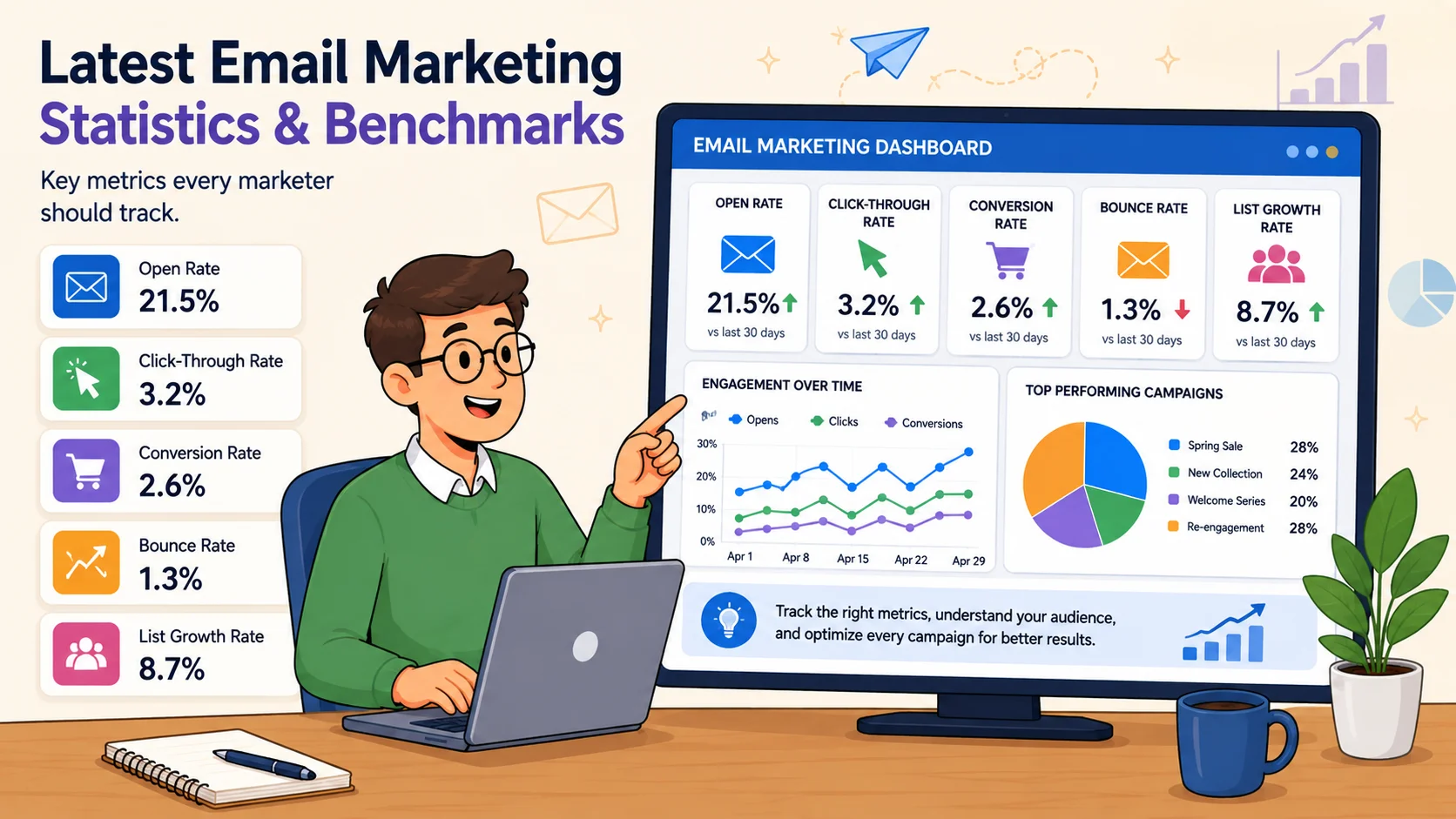
In email marketing, they reveal what’s working, what’s underperforming, and where your next opportunity lies. While trends and best practices provide valuable direction, performance metrics offer something even more important—evidence.
The most successful marketers don’t rely on instinct alone. They measure, compare, test, and refine their campaigns using real data.
Benchmarks serve as reference points rather than rigid goals. They help businesses understand how their campaigns compare with industry standards while highlighting areas that deserve closer attention. More importantly, they allow marketers to track progress over time instead of judging success based on a single campaign.
Let’s explore the metrics that matter most—and why they deserve your attention.
Open Rates Still Matter—But They No Longer Tell the Whole Story
For years, open rate was the headline metric of every email campaign.
It answered a simple question:
How many people opened the email?
Today, the answer isn’t quite as straightforward.
Privacy features—most notably Apple’s Mail Privacy Protection—have reduced the reliability of traditional open tracking by automatically loading email content before recipients actively engage with it. As a result, reported open rates can appear higher than actual human interaction.
That doesn’t mean the metric has become useless.
Open rates still provide valuable directional insights, particularly when comparing your own campaigns over time. A sudden drop may indicate deliverability issues, weak subject lines, or declining subscriber interest.
The key is perspective.
Rather than treating open rate as the ultimate measure of success, use it alongside other engagement metrics to build a more complete picture of campaign performance.
Click-Through Rate Reveals Genuine Interest
If opens indicate curiosity, clicks demonstrate intent.
Click-through rate (CTR) measures the percentage of recipients who clicked at least one link within an email. Unlike open rates, clicks represent an active decision by the subscriber to engage with your content.
That makes CTR one of the most meaningful indicators of campaign effectiveness.
Strong click-through rates often suggest that several elements are working together:
- A compelling subject line.
- Valuable content.
- Clear calls to action.
- Relevant offers.
- An intuitive email design.
When click rates remain consistently low, it’s worth examining whether the message truly aligns with subscriber expectations.
Sometimes a small adjustment—rewriting a headline, simplifying the layout, or making the primary button more prominent—is enough to produce noticeable improvements.
Every click represents a customer taking the next step.
Conversion Rate Measures Real Business Impact
An email doesn’t achieve its purpose simply because someone clicks.
The real objective is what happens next.
Conversion rate measures the percentage of subscribers who complete a desired action after interacting with your email. Depending on your goals, that action might include:
- Purchasing a product.
- Registering for a webinar.
- Downloading a guide.
- Booking a consultation.
- Completing a contact form.
- Starting a free trial.
Unlike engagement metrics, conversions directly connect email marketing to business outcomes.
A campaign with modest open rates but exceptional conversions may actually outperform one that generated widespread curiosity but little action.
This is why experienced marketers increasingly focus on revenue, customer acquisition, and long-term value rather than vanity metrics alone.
Bounce Rate Helps Protect Deliverability
Not every email successfully reaches its destination.
Bounce rate measures the percentage of emails that cannot be delivered, providing valuable insight into the health of your subscriber list.
There are two primary types of bounces.
Hard bounces occur when an email address is permanently invalid—perhaps because it no longer exists or was entered incorrectly.
Soft bounces are temporary issues, such as a full inbox, server outage, or message size limitation.
Monitoring bounce rates is more important than many businesses realize.
High bounce rates can damage sender reputation, reducing the likelihood that future campaigns reach subscribers’ inboxes.
Regular list maintenance, confirmation emails, and removing inactive addresses all contribute to healthier deliverability over time.
Unsubscribe and Spam Complaint Rates Provide Honest Feedback
Every unsubscribe tells a story.
Sometimes subscribers simply no longer need your content.
Other times, the frequency is too high, the messaging lacks relevance, or expectations established during signup no longer match reality.
While unsubscribes may feel discouraging, they’re actually a healthy part of responsible email marketing.
A subscriber who leaves voluntarily is far less damaging than one who marks your email as spam.
Spam complaints carry significantly more weight because mailbox providers interpret them as indicators of unwanted or low-quality communication.
Monitoring both metrics together helps marketers identify trends before they become serious deliverability issues.
If complaint rates begin rising, it’s worth reviewing email frequency, audience segmentation, and overall content strategy.
Listening to subscriber behavior is often more valuable than relying solely on survey responses.
Return on Investment Remains Email Marketing’s Greatest Strength
Few digital marketing channels consistently deliver the return on investment that email marketing can achieve.
Compared with paid advertising, direct mail, or many forms of outbound marketing, email remains remarkably cost-effective.
A single campaign can generate substantial revenue while requiring relatively modest financial investment.
But calculating ROI involves more than simply comparing revenue against software costs.
Comprehensive analysis should consider:
- Campaign production time.
- Design and copywriting resources.
- Platform expenses.
- Automation investments.
- Revenue generated.
- Customer lifetime value.
- Repeat purchases influenced by email.
Looking at the broader picture allows businesses to understand not only which campaigns perform well, but why they succeed.
Those insights become invaluable when planning future strategies.
Benchmarking Should Inspire Improvement—Not Comparison
Industry averages are useful.
They’re not absolute targets.
Every business operates under different circumstances, with unique audiences, products, sales cycles, and customer expectations. Comparing your performance against industry benchmarks can reveal valuable opportunities, but comparing yourself too rigidly with competitors can become misleading.
The most meaningful benchmark is often your own historical performance.
Did this campaign outperform the last one?
Has engagement improved over the past six months?
Are conversions increasing after introducing better segmentation or automation?
Continuous improvement consistently delivers greater long-term value than chasing arbitrary numbers.
Data Should Drive Decisions
Successful email marketing isn’t built on assumptions.
It’s built on evidence.
Every campaign generates valuable information about subscriber preferences, customer behavior, and purchasing patterns. Businesses that regularly analyze these insights make smarter decisions regarding content, timing, personalization, segmentation, and automation.
Testing becomes more effective.
Optimization becomes more precise.
Marketing becomes more predictable.
Rather than guessing what subscribers want, marketers begin understanding what they actually respond to.
That’s a powerful advantage.
Why Benchmarks Matter
Statistics are more than numbers on a dashboard.
They’re signals.
They reveal opportunities to improve customer experiences, strengthen relationships, increase conversions, and protect long-term deliverability.
Businesses that monitor key performance indicators consistently are far better equipped to identify trends before problems emerge, adapt to changing subscriber behavior, and refine future campaigns with confidence.
The goal isn’t perfection.
It’s progress.
By measuring the metrics that truly matter—and acting on the insights they provide—organizations can transform email marketing from a routine communication channel into one of their most reliable drivers of sustainable business growth.
Email Privacy and Compliance News
Trust has become one of the most valuable currencies in digital marketing.
Subscribers are more aware than ever of how their personal information is collected, stored, and used. At the same time, governments and technology companies continue introducing stricter privacy standards designed to give individuals greater control over their data.
For email marketers, privacy is no longer just a legal obligation.
It’s a competitive advantage.
Businesses that communicate transparently, respect subscriber preferences, and handle personal information responsibly are far more likely to build lasting relationships than those focused solely on growing their mailing lists.
As email marketing continues to evolve, understanding privacy and compliance is just as important as mastering automation or personalization.
Privacy Regulations Continue to Shape Email Marketing
Over the past decade, data protection laws have fundamentally changed how organizations approach email marketing.
Regulations such as the General Data Protection Regulation (GDPR) in the European Union and the California Consumer Privacy Act (CCPA) in the United States have established clear expectations for how businesses collect, process, and manage personal information.
Although the specific legal requirements vary by region, the underlying principles remain remarkably consistent.
Subscribers should understand:
- What information is being collected.
- Why it’s being collected.
- How it will be used.
- Who has access to it.
- How they can withdraw consent.
These regulations encourage organizations to become more transparent rather than more restrictive.
Businesses that embrace openness often discover that customer confidence grows alongside compliance.
Instead of treating privacy as an administrative burden, forward-thinking companies increasingly view it as an opportunity to strengthen credibility.
Permission-Based Marketing Builds Better Relationships
The healthiest email lists aren’t always the largest.
They’re the ones filled with subscribers who genuinely want to hear from you.
Permission-based marketing has become the cornerstone of responsible email communication. Rather than purchasing contact databases or adding people without their knowledge, successful businesses encourage voluntary subscriptions through newsletters, downloadable resources, exclusive offers, webinars, and educational content.
Every subscriber begins the relationship by making a conscious choice.
That decision changes everything.
People who willingly join your mailing list are naturally more engaged, more receptive to future communication, and significantly less likely to report emails as spam.
Many organizations strengthen this process further through double opt-in.
Instead of immediately activating a subscription, new contacts receive a confirmation email asking them to verify their request. This additional step helps eliminate invalid addresses, reduces accidental sign-ups, and ensures every subscriber has intentionally joined the list.
The result is higher-quality data, stronger engagement, and healthier long-term deliverability.
Privacy Features Are Changing Performance Measurement
Privacy isn’t only influencing how marketers collect data.
It’s also changing how they measure success.
Email providers have introduced new privacy features that limit traditional tracking methods, encouraging marketers to rethink which metrics truly matter.
Open rates, once considered the primary measure of campaign performance, have become less reliable due to automated image loading and privacy protections implemented by some email clients.
This shift has encouraged marketers to adopt a broader perspective.
Instead of asking:
“Did someone open the email?”
Businesses increasingly ask:
“Did the email create meaningful engagement?”
Clicks.
Purchases.
Replies.
Website visits.
Customer retention.
These actions provide far more meaningful insights into campaign effectiveness than opens alone ever could.
In many ways, privacy updates have pushed the industry toward measuring outcomes that genuinely reflect customer interest.
Responsible Data Management Strengthens Customer Confidence
Collecting subscriber information is only the beginning.
Protecting it is equally important.
Customers expect organizations to safeguard their personal information using secure systems, limited internal access, and responsible data management practices. Every piece of information collected carries a responsibility to handle it carefully.
The best approach is often the simplest.
Collect only the information you genuinely need.
If an email address is sufficient, don’t request unnecessary personal details. Reducing the amount of stored data not only simplifies compliance but also minimizes potential security risks.
Organizations should also review stored customer information regularly, remove outdated records, and establish clear internal policies governing who can access subscriber data.
Responsible data management isn’t merely about avoiding breaches.
It’s about demonstrating respect.
Subscribers notice when businesses prioritize security and transparency, and that trust often translates into stronger long-term loyalty.
Giving Subscribers Control Creates Better Experiences
Modern consumers expect flexibility.
They want the ability to decide what information they receive, how frequently they hear from brands, and whether their personal data continues to be stored.
Preference centers have become an increasingly valuable tool for meeting these expectations.
Rather than offering only a simple unsubscribe option, businesses can allow subscribers to:
- Update personal information.
- Change communication frequency.
- Select preferred content categories.
- Choose specific product interests.
- Pause email delivery temporarily.
Providing these options benefits both parties.
Subscribers enjoy greater control over their experience, while businesses retain valuable relationships that might otherwise be lost through complete unsubscribes.
Respecting customer preferences isn’t simply courteous.
It’s good marketing.
Compliance Extends Beyond Consent
Obtaining permission to send marketing emails is only one part of compliance.
Every campaign should also follow broader best practices that promote honesty and transparency.
This includes:
- Using accurate sender information.
- Writing truthful subject lines.
- Clearly identifying promotional content when appropriate.
- Including an easy-to-find unsubscribe link.
- Honoring opt-out requests promptly.
- Maintaining records of subscriber consent.
These practices may appear straightforward, but together they create an environment where subscribers feel confident interacting with your brand.
Trust is rarely built through one grand gesture.
More often, it’s earned through countless small demonstrations of integrity.
Preparing for the Future of Privacy
Privacy expectations aren’t standing still.
Governments continue introducing new regulations.
Technology companies are developing stronger user protections.
Consumers are becoming increasingly selective about which organizations they trust with their personal information.
Businesses that prepare today will adapt more easily tomorrow.
That preparation includes reviewing consent practices, improving data governance, strengthening security procedures, and remaining informed about emerging legal requirements.
Organizations that treat compliance as an ongoing process rather than a one-time project are better positioned to respond quickly as regulations continue evolving.
Why Privacy and Compliance Matter
Effective email marketing has always depended on relationships.
Privacy simply reinforces that reality.
Subscribers who believe their information is respected are more likely to engage with future campaigns, remain loyal over time, and recommend brands they trust to others.
Compliance protects organizations from legal risk, but its greatest value extends much further.
It strengthens reputation.
It builds credibility.
It creates confidence.
In an increasingly privacy-conscious world, businesses that prioritize transparency, responsible data management, and permission-based communication won’t simply satisfy regulatory requirements—they’ll cultivate stronger customer relationships that continue delivering value long after the first email is sent.
Ultimately, successful email marketing isn’t just about reaching inboxes.
It’s about earning trust every time you do.
Expert Insights and Best Practices
Keeping up with the latest email marketing news is important.
Putting that knowledge into practice is what separates average campaigns from exceptional ones.
Technology will continue to evolve. Privacy regulations will change. AI will become more sophisticated, and mailbox providers will introduce new requirements. Yet despite all of these developments, the fundamentals of successful email marketing remain surprisingly consistent.
Build trust.
Deliver value.
Respect your audience.
Everything else supports those three principles.
The following best practices, recommended by experienced marketers and industry professionals, can help businesses create campaigns that not only perform better today but continue producing results well into the future.
Build an Email List the Right Way
A healthy email marketing strategy begins long before the first campaign is sent.
It starts with attracting people who genuinely want to hear from your business.
Buying email lists may seem like a shortcut, but it almost always creates more problems than opportunities. Purchased contacts rarely engage with emails, are more likely to mark messages as spam, and can quickly damage sender reputation.
Organic list growth is slower.
It’s also far more sustainable.
Encourage subscriptions through valuable incentives such as:
- Educational guides
- Exclusive newsletters
- Free tools or templates
- Webinars
- Discount offers
- Industry insights
- Early product access
When subscribers choose to join voluntarily, they’re far more likely to remain engaged over time.
Many experts also recommend implementing a double opt-in process.
Although it introduces one additional step during registration, it verifies that every subscriber genuinely wants to receive future emails, leading to cleaner data, stronger engagement, and better long-term deliverability.
Deliver Value Before Asking for a Sale
Every email should answer one important question:
“Why is this worth opening?”
Subscribers don’t join mailing lists because they want more promotional messages.
They subscribe because they expect value.
That value might come in many forms:
Helpful advice.
Educational content.
Industry news.
Exclusive discounts.
Product updates.
Practical resources.
Entertaining stories.
The most effective email marketing strategies maintain a healthy balance between education and promotion. Rather than constantly asking customers to buy, successful brands invest time in helping subscribers solve problems, learn something new, or achieve their goals.
Ironically, businesses that focus less on selling often generate more sales over the long term because they build credibility before asking for a purchase.
Value creates trust.
Trust creates conversions.
Personalization Should Feel Helpful, Not Intrusive
Modern personalization extends far beyond inserting a first name into the greeting.
Today’s subscribers expect brands to understand their interests, preferences, and previous interactions—but they also expect that understanding to feel natural rather than invasive.
Use available customer insights to make emails more relevant.
Recommend products based on previous purchases.
Share educational content related to subscriber interests.
Celebrate milestones.
Provide updates that match where customers are in their journey.
The goal isn’t to demonstrate how much data you possess.
It’s to show that you’re paying attention to what matters to the customer.
Thoughtful personalization creates the impression of a one-to-one conversation, even when communicating with thousands of subscribers simultaneously.
Segment Your Audience for Better Results
No two subscribers are exactly alike.
Treating them as though they are often leads to disappointing performance.
Segmentation allows businesses to divide their audience into meaningful groups based on shared characteristics or behaviors.
Examples include:
- New subscribers
- Returning customers
- Loyal buyers
- Inactive contacts
- Geographic location
- Product interests
- Purchase history
- Engagement level
Each segment has different needs.
Someone discovering your brand for the first time shouldn’t receive the same messaging as a long-term customer who has already made multiple purchases.
By tailoring campaigns to each audience, businesses create emails that feel more relevant, more timely, and ultimately more valuable.
Relevance remains one of the strongest drivers of engagement.
Design Every Campaign with Mobile Users in Mind
Mobile devices have fundamentally changed how people read email.
Many subscribers now check their inbox while commuting, waiting in line, or relaxing on the sofa. Attention spans are shorter, screens are smaller, and patience for poor design is limited.
Responsive design is no longer a competitive advantage.
It’s an expectation.
Effective mobile emails typically include:
- Clear headlines
- Short paragraphs
- Generous white space
- Readable font sizes
- Fast-loading images
- Large, easy-to-tap buttons
- Simple navigation
Testing campaigns across multiple devices and email clients before sending helps ensure a consistent experience for every subscriber.
A beautifully designed desktop email that breaks on mobile can undermine an otherwise outstanding campaign.
Test, Learn, and Improve Continuously
Experienced marketers rarely assume they’ve found the perfect campaign.
Instead, they test constantly.
A/B testing provides valuable insight into what resonates most with your audience.
You might compare:
- Two subject lines.
- Different calls to action.
- Alternative email layouts.
- Sending times.
- Promotional offers.
- Image placement.
- Button colors or wording.
Sometimes the smallest adjustment produces the biggest improvement.
Perhaps a shorter subject line increases open rates.
Maybe a different call to action generates significantly more conversions.
Every experiment contributes to a deeper understanding of subscriber preferences.
Optimization isn’t a destination.
It’s an ongoing habit.
Protect Deliverability and Maintain Compliance
Outstanding content alone won’t guarantee success if emails consistently land in spam folders.
Technical best practices remain essential.
Experienced marketers routinely:
- Authenticate their sending domains.
- Monitor sender reputation.
- Remove inactive subscribers.
- Review bounce rates.
- Watch spam complaints closely.
- Include visible unsubscribe options.
- Follow permission-based marketing practices.
Compliance should never be viewed as an obstacle.
It’s part of building trust.
Subscribers are far more likely to engage with brands that communicate honestly, respect privacy, and make it easy to control communication preferences.
Strong deliverability and strong customer relationships often go hand in hand.
Never Stop Learning
Email marketing changes continuously.
Artificial intelligence introduces new possibilities.
Mailbox providers update authentication requirements.
Privacy regulations evolve.
Customer expectations shift.
The marketers who consistently achieve the strongest results are those who embrace continuous learning.
Read industry publications.
Attend webinars.
Explore platform updates.
Analyze your own campaign data.
Study successful competitors—not to copy them, but to understand why their strategies work.
Every campaign becomes an opportunity to learn something new.
Turning Best Practices into Long-Term Success
There is no single formula for email marketing success.
Every audience is different.
Every business has unique goals.
Every campaign offers new lessons.
Yet the organizations that consistently outperform their competitors tend to share the same mindset.
They prioritize relationships over transactions.
They rely on data instead of assumptions.
They adapt quickly to change.
Most importantly, they remember that every email arrives in someone’s personal inbox—a space built on trust.
When businesses respect that privilege by delivering valuable, relevant, and thoughtful communication, stronger engagement naturally follows.
Technology will continue to evolve.
The principles of great communication never go out of style.
Upcoming Email Marketing Events and Future Predictions
The email marketing industry never stands still.
New technologies emerge. Consumer expectations evolve. Privacy standards become more sophisticated, and marketing platforms introduce features that would have seemed impossible only a few years ago.
For businesses, staying informed isn’t simply about reacting to change—it’s about preparing for it.
The marketers who consistently outperform their competitors are usually the ones who identify trends early, experiment with new ideas, and adapt before those changes become industry standards.
Looking ahead, several developments are poised to shape the next generation of email marketing.
Industry Events Continue to Drive Innovation
Conferences, webinars, virtual summits, and marketing workshops remain some of the best places to discover emerging strategies before they become mainstream.
These events bring together platform developers, email deliverability specialists, automation experts, copywriters, data analysts, and business leaders to discuss the challenges—and opportunities—facing the industry.
Topics frequently include:
- Artificial intelligence and automation
- Email deliverability
- Privacy regulations
- Customer lifecycle marketing
- Advanced segmentation
- Interactive email design
- Analytics and attribution
- Conversion optimization
Beyond educational sessions, these events provide valuable networking opportunities.
Hearing how other businesses solve similar marketing challenges often sparks ideas that can be applied immediately to your own campaigns.
Whether attending in person or online, staying connected to the broader email marketing community helps ensure your strategies continue evolving alongside the industry.
Artificial Intelligence Will Continue Expanding
Artificial intelligence is still in its early stages.
While today’s tools already generate subject lines, create email content, optimize send times, and personalize campaigns, future developments promise even greater sophistication.
AI is expected to become increasingly capable of:
- Predicting customer intent.
- Generating dynamic content in real time.
- Identifying churn before it happens.
- Optimizing entire customer journeys automatically.
- Delivering individualized experiences at massive scale.
Imagine an email that changes its content depending on when it’s opened, where the subscriber is located, or what products they viewed only minutes earlier.
That future is rapidly becoming reality.
Yet despite these technological advances, successful marketers will continue balancing automation with authentic human communication.
AI may improve efficiency.
Human creativity will remain the differentiator.
Privacy Will Become Even More Important
Consumer expectations around privacy continue to rise.
People increasingly want transparency regarding how businesses collect information, why it’s needed, and how it will be used.
At the same time, lawmakers and technology companies are introducing additional safeguards that place greater control in the hands of users.
This trend is unlikely to slow.
Businesses should expect continued evolution in:
- Data protection regulations
- Consent management
- Tracking limitations
- Subscriber preference controls
- Email authentication requirements
Rather than viewing these changes as obstacles, forward-thinking organizations are using them as opportunities to strengthen customer trust.
Brands that prioritize ethical marketing today are likely to enjoy stronger relationships tomorrow.
Automation Will Become More Adaptive
Marketing automation is becoming less rule-based and more intelligent.
Traditional workflows rely on predefined paths.
Future automation systems will increasingly make decisions in real time, responding dynamically to subscriber behavior as it unfolds.
Instead of following rigid sequences, customer journeys will continuously adapt based on engagement, purchase activity, browsing behavior, and predictive analytics.
For marketers, this means less manual intervention and more meaningful communication.
Every subscriber experiences a journey tailored specifically to their actions rather than a generic sequence designed for everyone.
The result is greater relevance—and stronger customer relationships.
Interactive Emails Will Become More Common
Email is gradually becoming more interactive.
Rather than serving solely as a communication channel, it is evolving into a space where subscribers can browse products, answer surveys, book appointments, leave reviews, complete quizzes, and even make purchasing decisions without leaving the inbox.
As support for interactive technologies expands across email clients, businesses will have greater freedom to create richer experiences that reduce friction and increase engagement.
Subscribers benefit from greater convenience.
Businesses benefit from higher conversion rates.
It’s a win for both sides.
Expect interactive design to become less of a novelty and more of a standard feature in future campaigns.
Analytics Will Become More Predictive
Traditional reporting explains what happened.
Future analytics will increasingly explain what is likely to happen next.
Artificial intelligence and machine learning will continue improving marketers’ ability to forecast customer behavior, identify emerging trends, and recommend proactive strategies before performance begins to decline.
Instead of manually interpreting dozens of reports, marketers will receive intelligent recommendations based on millions of data points.
Campaign optimization will become faster.
Decision-making will become more confident.
Marketing strategies will become increasingly evidence-driven.
The future belongs to organizations that can transform data into action.
Customer Experience Will Define Competitive Advantage
Technology continues advancing.
Customers continue expecting more.
The brands that thrive over the coming years won’t necessarily be those with the biggest marketing budgets or the most sophisticated software.
They’ll be the ones that consistently create meaningful experiences.
Subscribers are becoming increasingly selective about which emails deserve their attention.
Generic promotions sent to massive mailing lists are losing effectiveness.
Personalized communication.
Helpful content.
Transparent data practices.
Relevant recommendations.
Respect for subscriber preferences.
These qualities will increasingly separate successful brands from the rest.
The future of email marketing isn’t simply more automation.
It’s better communication.
Final Thoughts
Email marketing has changed dramatically over the past decade, and the pace of innovation shows no sign of slowing.
Artificial intelligence is reshaping campaign creation.
Privacy is redefining customer relationships.
Automation is becoming more intelligent.
Deliverability standards continue evolving, while personalization grows increasingly sophisticated.
Yet despite these technological shifts, one truth remains remarkably consistent:
People don’t engage with emails because they’re automated.
They engage because they’re relevant.
Businesses that combine emerging technology with thoughtful strategy, ethical data practices, and a genuine commitment to serving their audience will continue achieving exceptional results.
Staying informed through reliable email marketing news isn’t about chasing every new trend.
It’s about understanding which innovations genuinely improve customer experiences—and applying them with purpose.
The future of email marketing belongs to organizations willing to learn continuously, adapt confidently, and place their subscribers at the center of every campaign.
Those businesses won’t simply keep pace with change.
Conclusion
Keeping up with email marketing news helps businesses adapt to industry changes, improve inbox placement, and create more effective campaigns. By applying the latest trends and proven best practices, you can strengthen subscriber engagement, enhance deliverability, and achieve better long-term results from your email marketing efforts.
To learn more about email marketing, visit amiinmarketer.com