
Introduction
In the aerospace and defense industry, building trust doesn’t happen overnight. Contracts are often worth millions, purchasing decisions involve multiple stakeholders, and sales cycles can stretch over months—or even years. Staying visible throughout that journey is essential, and that’s where email marketing becomes a valuable business tool.
A well-planned aerospace and defense industry email marketing strategy helps companies connect with government agencies, defence contractors, aerospace manufacturers, suppliers, engineering firms, and commercial aviation organisations. Rather than relying on one-off sales conversations, businesses can use email to educate prospects, showcase expertise, and strengthen relationships over time.
Whether you’re promoting innovative technology, sharing technical documentation, inviting prospects to industry events, or nurturing qualified leads, email marketing provides a direct and measurable way to engage your audience. When combined with automation, personalisation, and valuable content, it becomes one of the most effective channels for generating long-term business opportunities.
In this guide, you’ll discover how aerospace and defense companies can use email marketing to attract high-quality leads, improve customer engagement, support lengthy sales cycles, and achieve sustainable business growth.
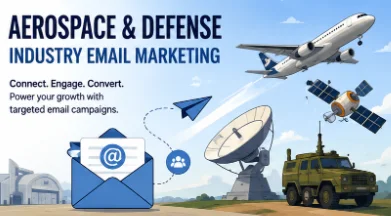
Table of Contents
What Is Aerospace and Defense Industry Email Marketing?
Aerospace and defense industry email marketing is the practice of sending targeted emails to organisations and professionals involved in the aerospace and defence sector. These campaigns are designed to reach key decision-makers, including government agencies, defence contractors, aircraft manufacturers, engineering companies, suppliers, and procurement teams.
Unlike traditional email marketing, this approach isn’t centred on quick sales. Instead, it focuses on building credibility and maintaining consistent communication throughout a complex buying journey. Since purchasing decisions often involve technical evaluations, compliance checks, and multiple approvals, businesses must provide valuable information that helps prospects make informed decisions.
Effective campaigns can include product announcements, technical white papers, industry updates, case studies, regulatory news, event invitations, product demonstrations, and educational content. Every email should answer a question, solve a problem, or provide insights that keep your company relevant in the minds of potential customers.
Because the aerospace and defense sector operates under strict regulations, businesses must also prioritise data protection, compliance, and accuracy. Professional communication, secure handling of customer information, and permission-based email practices are essential for building trust and protecting your brand’s reputation.
A successful strategy goes far beyond sending newsletters. It combines audience segmentation, personalised messaging, marketing automation, and performance analysis to deliver the right content to the right people at the right time. When executed properly, aerospace and defense industry email marketing can generate qualified leads, strengthen client relationships, and support long-term commercial success.
Why Aerospace and Defense Companies Need Email Marketing
Success in the aerospace and defense industry depends on more than having an outstanding product. Businesses also need to stay connected with potential buyers throughout a purchasing process that is often lengthy and highly competitive. Email marketing makes that possible.
Unlike industries where customers make quick purchasing decisions, aerospace and defence contracts require careful planning, technical assessments, budget approvals, and collaboration between multiple departments. Without regular communication, even promising opportunities can lose momentum.
Email marketing helps businesses remain visible by delivering valuable content on a consistent basis. Whether it’s introducing a new technology, sharing a customer success story, publishing a technical guide, or announcing an upcoming exhibition, every email reinforces your expertise and keeps your brand at the forefront of your audience’s mind.
Another major advantage is lead nurturing. Rather than expecting prospects to make an immediate decision, businesses can guide them through the buying journey with relevant and timely content. Automated email sequences allow companies to answer common questions, explain product capabilities, and provide educational resources that build confidence over time.
Email marketing also works exceptionally well alongside Account-Based Marketing (ABM). By grouping contacts according to their organisation, job role, or buying stage, companies can send personalised messages that resonate with each audience. An engineer may want technical specifications, while a procurement manager is more interested in pricing, compliance, or supplier capabilities.
Perhaps the biggest benefit is that every campaign can be measured. Metrics such as open rates, click-through rates, downloads, and conversions reveal what resonates with your audience. These insights help businesses refine future campaigns, improve engagement, and maximise their marketing investment.
When combined with content marketing, SEO, trade shows, webinars, and direct sales outreach, email marketing becomes a powerful engine for generating qualified leads and building lasting business relationships.
Benefits of Aerospace and Defense Industry Email Marketing
Email marketing offers far more than a simple way to share company news. For aerospace and defense businesses, it provides a reliable channel for building trust, educating prospects, and supporting long-term growth.
Strengthens Business Relationships
Trust is the foundation of every successful aerospace and defence partnership. Regularly sharing useful insights, industry developments, and educational resources helps establish credibility while keeping your business visible throughout long buying cycles.
Generates Better Leads
Offering valuable resources such as white papers, technical guides, case studies, and research reports encourages high-quality prospects to engage with your business. These contacts are often more qualified because they have already shown genuine interest in your products or services.
Supports Long Sales Cycles
Large contracts rarely happen after a single conversation. Email marketing allows businesses to nurture prospects over weeks or months through automated campaigns that deliver relevant information at every stage of the buying journey.
Builds Industry Authority
Publishing expert insights, technical content, compliance updates, and market trends positions your business as a trusted source of knowledge. Over time, this strengthens your reputation and makes your company a preferred partner.
Increases Customer Engagement
Personalised emails encourage readers to explore your website, download resources, register for webinars, or request product demonstrations. Every interaction creates another opportunity to move prospects closer to becoming customers.
Delivers Measurable Results
Unlike many traditional marketing methods, email marketing provides detailed performance data. Businesses can monitor open rates, click-through rates, conversions, and subscriber behaviour to understand what’s working and where improvements are needed.
Cost-Effective and Scalable
Once you’ve built a quality email list, you can communicate with hundreds—or even thousands—of prospects at a relatively low cost. This makes email marketing one of the most cost-effective digital marketing channels for aerospace and defense companies.
Improves Sales and Marketing Alignment
Marketing teams can educate and qualify leads before passing them to sales. At the same time, sales representatives gain valuable insights into prospect behaviour, helping them prioritise leads that are most likely to convert.
Challenges of Aerospace and Defense Industry Email Marketing
Although email marketing offers significant opportunities, it also comes with unique challenges that businesses must overcome to achieve consistent results.
Lengthy Buying Processes
Purchasing decisions often involve technical reviews, budget approvals, and multiple decision-makers. Businesses must keep prospects engaged without overwhelming them with excessive emails.
Strict Compliance Requirements
Handling sensitive information requires careful attention to privacy regulations and cybersecurity. Every campaign should follow permission-based marketing practices while protecting customer data.
Reaching Multiple Decision-Makers
One contract may involve engineers, procurement specialists, executives, and project managers. A single generic email is unlikely to appeal to everyone, making audience segmentation essential.
Creating Technical Yet Engaging Content
Finding the balance between technical accuracy and readability isn’t always easy. The best campaigns explain complex solutions in a way that’s informative without becoming overly complicated.
Maintaining Deliverability
Government organisations and large enterprises often use advanced email security systems. Following email best practices, maintaining a good sender reputation, and providing valuable content all help improve inbox placement.
Keeping Prospects Interested
Not every subscriber is ready to buy immediately. Sharing educational resources, case studies, market insights, and industry updates keeps your audience engaged until they’re ready to take the next step.
Measuring Long-Term Success
Since contracts may take months or years to close, success shouldn’t be measured by immediate sales alone. Tracking engagement, downloads, webinar registrations, and qualified leads provides a clearer picture of campaign performance and future opportunities.
How to Build a High-Quality Aerospace and Defense Email List
Every successful email campaign begins with one essential asset—a quality email list. While it may be tempting to focus on growing your subscriber numbers as quickly as possible, the real goal is to attract people who are genuinely interested in your products, services, or expertise. A smaller list of qualified contacts will almost always outperform a large database of inactive or irrelevant subscribers.
Define Your Ideal Audience
Before collecting email addresses, identify exactly who you want to reach. Your audience might include defence contractors, aerospace manufacturers, engineering firms, government agencies, procurement specialists, suppliers, or senior executives. Knowing your ideal customer helps you create content that speaks directly to their needs and challenges.
Offer Valuable Resources
People are more willing to share their contact details when they receive something useful in return. High-value resources such as technical white papers, industry reports, product catalogues, case studies, webinars, and engineering guides are excellent incentives. Not only do they encourage subscriptions, but they also position your business as a trusted source of industry knowledge.
Optimise Your Website
Your website should make subscribing quick and effortless. Add sign-up forms to key pages, including your homepage, blog, landing pages, and resource centre. Keep the form simple by requesting only essential information, such as a name, company, and email address. The easier the process, the more likely visitors are to subscribe.
Grow Your List Through Industry Events
Trade shows, conferences, exhibitions, and webinars remain valuable networking opportunities in the aerospace and defense sector. Encourage attendees to join your mailing list for exclusive updates, technical resources, and future event invitations. Always obtain clear permission before adding anyone to your database.
Use LinkedIn to Attract Subscribers
LinkedIn is one of the strongest platforms for reaching professionals in the aerospace and defense industry. Share useful content that directs users to landing pages where they can download a guide, register for a webinar, or subscribe to your newsletter. This approach attracts contacts who already have an interest in your expertise.
Segment Contacts Early
Every subscriber has different priorities. An engineer may want technical documentation, while a procurement manager is likely to focus on pricing, compliance, or supplier capabilities. Segmenting contacts from the beginning makes it easier to deliver relevant content that increases engagement.
Keep Your Database Clean
An outdated email list can reduce campaign performance and damage your sender reputation. Regularly remove duplicate records, invalid email addresses, and inactive subscribers. A clean database improves deliverability and provides more accurate reporting.
Build Your List the Right Way
Avoid buying email lists or sending unsolicited messages. Permission-based marketing builds trust, improves engagement, and helps your business comply with privacy regulations. It may take longer to grow your database, but the results are far more valuable in the long run.
A strong email list isn’t built overnight. It grows through consistency, valuable content, and genuine relationships. By focusing on quality rather than quantity, aerospace and defense companies create a solid foundation for successful email marketing.
Best Practices for Aerospace and Defense Industry Email Marketing
A successful email marketing strategy is about more than sending regular newsletters. Every campaign should deliver value, build credibility, and encourage meaningful engagement. Following proven best practices can help you improve results while strengthening relationships with prospects and existing customers.
Understand Your Audience
Before writing a single email, take time to understand who you’re speaking to. Government agencies, defence contractors, manufacturers, suppliers, and engineering firms all face different challenges. The better you understand your audience, the easier it becomes to create content they’ll actually want to read.
Segment Your Subscribers
Avoid sending identical emails to everyone on your list. Divide your audience into smaller groups based on job role, company type, buying stage, location, or previous interactions. Relevant emails consistently outperform generic campaigns.
Personalise Your Content
Personalisation goes beyond using a subscriber’s first name. Tailor your message to match their interests, industry, or previous activity. For example, engineers may appreciate technical specifications, while executives often prefer business outcomes and return on investment.
Educate Before You Sell
The most effective campaigns provide value first. Share industry insights, technical articles, regulatory updates, customer success stories, and educational resources that help your audience solve problems. Building trust today often leads to future business opportunities.
Write Better Subject Lines
Your subject line is your first impression. Keep it concise, relevant, and focused on the benefit readers will receive. Avoid misleading or overly promotional language, as it can reduce both trust and open rates.
Optimise for Mobile
Many professionals check their emails on smartphones before opening them on a desktop. Use responsive templates, short paragraphs, clear headings, and easy-to-tap buttons to create a smooth reading experience on every device.
Use Automation Strategically
Automation helps maintain regular communication without increasing your workload. Welcome emails, follow-up sequences, webinar reminders, and lead nurturing campaigns ensure subscribers receive the right information at the right time.
Include One Clear Call to Action
Every email should have a single purpose. Whether you want readers to download a white paper, book a demonstration, register for an event, or contact your sales team, make the next step obvious and easy to complete.
Test and Improve
Small changes often produce significant improvements. Test different subject lines, layouts, sending times, and calls to action to discover what resonates with your audience. Continuous optimisation leads to stronger long-term performance.
Measure Your Results
Track key metrics such as open rates, click-through rates, conversions, bounce rates, and unsubscribes. Reviewing campaign performance regularly helps you identify what’s working and where adjustments are needed.
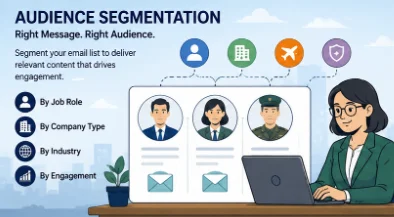
How to Segment Your Aerospace and Defense Email Audience
Not every subscriber has the same goals, responsibilities, or challenges. Effective audience segmentation allows you to deliver emails that feel relevant instead of generic, leading to higher engagement and stronger relationships.
Segment by Industry
Separate contacts into categories such as aerospace manufacturers, defence contractors, commercial aviation companies, engineering firms, suppliers, and government organisations. This allows you to send content that reflects the priorities of each sector.
Segment by Job Role
Different decision-makers look for different information.
- Engineers value technical specifications and product performance.
- Procurement teams focus on pricing, compliance, and supplier reliability.
- Executives are interested in business outcomes, efficiency, and return on investment.
- Project managers often want case studies, timelines, and implementation details.
Tailoring your message to each role makes every email more relevant.
Segment by Buying Stage
A prospect discovering your company for the first time doesn’t need the same information as someone preparing to purchase.
- Awareness: Educational articles, industry news, and introductory content.
- Consideration: Technical guides, webinars, product comparisons, and case studies.
- Decision: Product demonstrations, customer testimonials, pricing information, and consultations.
Providing the right content at the right stage helps move prospects through the sales funnel more effectively.
Segment by Engagement
Subscribers who regularly open your emails may be ready for more detailed product information, while inactive contacts may need fresh content or a re-engagement campaign to regain their interest.
Segment by Location
Regional regulations, events, and market conditions can vary considerably. Grouping subscribers by geographic location allows you to send more relevant updates and invitations.
Segment by Interests
Monitor which products, services, or resources each subscriber interacts with. Someone downloading information about aircraft systems probably isn’t interested in defence software. Behaviour-based segmentation keeps future emails aligned with individual interests.
Segment by Company Size
The needs of a small supplier are very different from those of a multinational defence contractor. Customising your messaging based on company size creates more meaningful communication.
Use Dynamic Segmentation
Modern email platforms can automatically update subscriber groups based on behaviour, such as downloading a white paper, attending a webinar, or requesting a product demonstration. This ensures your emails remain relevant without constant manual effort.
Thoughtful segmentation helps every subscriber receive content that matches their interests, making your campaigns more engaging and far more effective.
Creating High-Converting Email Campaigns for Aerospace and Defense Companies
The highest-performing email campaigns aren’t built around aggressive sales messages. Instead, they educate prospects, build confidence, and encourage readers to take the next logical step.
Start with a Clear Objective
Every campaign should have a defined purpose. You may want to generate leads, promote a new product, increase webinar registrations, encourage downloads, or book product demonstrations. A clear objective keeps your messaging focused.
Capture Attention Immediately
A compelling subject line is only the beginning. Your opening sentence should quickly explain why the email matters and encourage readers to continue.
Personalise Every Message
Use subscriber data to tailor emails based on company, industry, job role, or previous interactions. Relevant content naturally generates more engagement than generic messaging.
Deliver Real Value
Rather than focusing solely on your products, provide information your audience finds genuinely useful. Technical articles, industry research, regulatory updates, case studies, customer success stories, and expert insights all help establish credibility.
Keep the Design Clean
A simple, professional layout improves readability. Use short paragraphs, descriptive headings, clear spacing, and minimal distractions so readers can focus on the most important information.
Use One Strong Call to Action
Avoid overwhelming readers with multiple options. Whether you want them to download a guide, request a consultation, or register for an event, highlight one clear action that moves them closer to becoming a customer.
Build Trust
Include testimonials, successful project examples, certifications, industry awards, or client success stories where appropriate. Social proof reassures prospects that your company has the experience and credibility they’re looking for.
Test Before Sending
Always review your emails before launching a campaign. Check formatting, links, spelling, mobile responsiveness, and overall appearance. A final quality check helps avoid mistakes that could damage your professional image.
Analyse and Refine
No campaign is perfect the first time. Monitor performance after every send, identify opportunities for improvement, and apply those insights to future campaigns. Continuous optimisation is the key to long-term success.
Email Automation Strategies for Aerospace and Defense Businesses
Managing long sales cycles manually can quickly become overwhelming. Email automation solves this problem by delivering timely, relevant messages based on a subscriber’s behaviour and interests. Instead of sending every email individually, businesses can create automated workflows that nurture leads while saving valuable time.
Welcome New Subscribers
A welcome email is your opportunity to make a strong first impression. Introduce your company, explain what subscribers can expect, and provide useful resources such as technical guides, product brochures, or recent case studies. Starting the relationship with value encourages future engagement.
Build Lead Nurturing Campaigns
Most prospects won’t be ready to buy immediately. Automated nurturing campaigns allow you to stay connected by delivering educational content over time. Industry insights, product updates, customer success stories, and technical articles help build trust while guiding prospects towards a purchasing decision.
Automate Follow-Ups
Following up after key interactions keeps conversations moving. Automatically send emails after someone downloads a white paper, attends a webinar, requests product information, or submits a contact form. Prompt communication shows professionalism and increases the likelihood of further engagement.
Use Behaviour-Based Segmentation
Modern email platforms can automatically group subscribers based on their actions. Someone who frequently visits pages about aircraft components can receive related product updates, while another subscriber interested in defence technology receives more relevant content. This level of personalisation improves both engagement and conversions.
Re-Engage Inactive Contacts
Not every subscriber remains active forever. Automated re-engagement campaigns help reconnect with people who haven’t opened your emails for several months. Offer fresh resources, invite them to update their preferences, or simply ask if they still wish to receive your communications.
Promote Events Automatically
Trade shows, conferences, webinars, and product demonstrations play a major role in the aerospace and defense industry. Automation can manage the entire process, from invitations and registration confirmations to reminder emails and post-event follow-ups.
Prioritise Sales-Ready Leads
Many email marketing platforms include lead scoring, assigning points based on subscriber activity. Contacts who repeatedly engage with your content are often closer to making a purchasing decision. This allows your sales team to focus on the prospects most likely to convert.
Keep Improving Your Workflows
Automation isn’t a “set it and forget it” solution. Regularly review campaign performance, update email sequences, and test new ideas. Small improvements can make a significant difference over time.
How to Measure the Success of Your Email Marketing Campaigns
Running campaigns without measuring results is like flying without instruments—you won’t know whether you’re heading in the right direction. Tracking the right metrics helps you understand what works, what doesn’t, and where improvements can be made.
Email Open Rate
Your open rate indicates how many recipients opened your email. Although it doesn’t tell the whole story, it’s a useful indicator of how effective your subject lines and sender name are at attracting attention.
Click-Through Rate (CTR)
CTR measures how many readers clicked a link within your email. A strong click-through rate suggests your content is relevant, engaging, and supported by an effective call to action.
Conversion Rate
Conversions are the ultimate measure of success. Depending on your campaign goals, a conversion could be downloading a white paper, requesting a product demonstration, registering for a webinar, completing a contact form, or speaking with your sales team.
Bounce Rate
Bounce rates show how many emails couldn’t be delivered. High bounce rates usually point to outdated or invalid email addresses. Keeping your database clean improves deliverability and protects your sender reputation.
Unsubscribe Rate
A few unsubscribes are normal. However, if the number suddenly increases, it may indicate you’re sending emails too frequently or that your content isn’t meeting subscriber expectations.
Long-Term Engagement
In aerospace and defense, sales cycles are often measured in months rather than days. Instead of focusing only on immediate results, monitor long-term engagement, including repeat opens, downloads, webinar attendance, and website visits.
Lead Generation
A successful campaign should generate qualified leads, not just clicks. Measure how many subscribers become marketing-qualified leads, request information, or begin meaningful conversations with your sales team.
Return on Investment (ROI)
Compare the revenue generated through email marketing with the cost of software, content creation, and campaign management. Understanding your ROI helps you invest confidently in the strategies that deliver the best results.
Test and Learn
A/B testing allows you to compare subject lines, email layouts, CTAs, images, and sending times. Even small changes can improve performance, making continuous testing an important part of every successful strategy.
Common Aerospace and Defense Email Marketing Mistakes to Avoid
Even experienced marketers make mistakes. Recognising common pitfalls can help you improve campaign performance and avoid unnecessary setbacks.
Sending Generic Emails
One-size-fits-all emails rarely perform well. Different audiences have different priorities, so segment your subscribers and tailor your messaging accordingly.
Selling Too Aggressively
Subscribers don’t want every email to feel like a sales pitch. Focus on educating, informing, and providing value before promoting your products or services.
Ignoring Personalisation
Using a subscriber’s name is only the beginning. Personalise emails based on their interests, company, role, or previous interactions to create more meaningful communication.
Weak Subject Lines
If your subject line fails to capture attention, your email may never be opened. Keep it concise, relevant, and focused on the benefit readers will receive.
Emailing Too Often
Sending frequent emails can overwhelm subscribers, while sending too few may cause them to forget about your brand. Find a consistent schedule that delivers value without becoming intrusive.
Forgetting Mobile Users
A large percentage of professionals read emails on mobile devices. Ensure your emails display correctly on all screen sizes with responsive layouts and easy-to-read formatting.
Neglecting Your Email List
Inactive subscribers and invalid addresses reduce campaign performance. Review your database regularly and remove contacts that no longer engage.
Skipping Analytics
Without reviewing campaign data, it’s impossible to know what’s working. Regular analysis helps you refine your strategy and improve future results.
Missing a Clear Call to Action
Every email should encourage readers to take one specific action. Whether it’s downloading a guide or booking a consultation, make the next step obvious.
Sending Without Testing
Broken links, formatting issues, and spelling mistakes can damage your professional image. Always test your emails before sending them to your audience.
Choosing the Right Email Marketing Platform
The software you choose plays a major role in the success of your email marketing strategy. A good platform should do far more than send newsletters—it should help you automate campaigns, manage subscribers, and measure performance.
Advanced Audience Segmentation
Choose a platform that allows you to organise subscribers by industry, job role, company size, location, buying stage, and engagement history. Better segmentation leads to more relevant communication.
Powerful Automation
Automation features should include welcome emails, lead nurturing, follow-up sequences, event reminders, and re-engagement campaigns. These tools help you maintain consistent communication while reducing manual work.
CRM Integration
A platform that integrates with your CRM allows marketing and sales teams to share customer information seamlessly. This creates a complete view of every prospect and improves collaboration throughout the sales process.
Reporting and Analytics
Detailed analytics make it easier to evaluate campaign performance. Look for reporting features that track open rates, click-through rates, conversions, bounce rates, and subscriber engagement in real time.
Personalisation Tools
The best platforms support dynamic content, behavioural triggers, and personalised messaging. These features help you deliver emails that feel relevant rather than generic.
Strong Security
Because aerospace and defense organisations often deal with sensitive information, security should be a top priority. Look for platforms that offer encryption, secure data storage, user permissions, and compliance with relevant privacy regulations.
Scalability
As your business grows, your email marketing needs will evolve. Select a platform that can support larger subscriber lists, more advanced automation, and additional reporting without requiring a complete migration.
Ease of Use
A user-friendly interface helps your team build campaigns faster and reduces the learning curve. Drag-and-drop editors, ready-made templates, and clear reporting dashboards are valuable features.
Consider Overall Value
Price matters, but it shouldn’t be your only consideration. Compare features, support, integrations, automation capabilities, and reporting tools before making your final decision. Investing in the right platform often produces greater long-term returns than choosing the cheapest option.
The right email marketing platform provides the foundation for stronger campaigns, better customer relationships, and measurable business growth.
Future Trends in Aerospace and Defense Industry Email Marketing
Email marketing continues to evolve as technology advances, and the aerospace and defense industry is no exception. Businesses that embrace new tools and strategies will be better equipped to engage decision-makers, strengthen customer relationships, and generate qualified leads.
AI-Powered Personalisation
Artificial intelligence is changing the way businesses communicate with their audiences. Modern email platforms can analyse subscriber behaviour, recommend relevant content, optimise subject lines, and even determine the best time to send emails. This level of personalisation creates more meaningful experiences and improves engagement.
Smarter Marketing Automation
Automation is becoming increasingly intelligent. Instead of relying on fixed email sequences, businesses can now trigger emails based on customer actions, interests, and buying intent. This ensures prospects receive the right information exactly when they need it.
Account-Based Marketing (ABM)
Account-Based Marketing continues to grow in popularity within the aerospace and defense sector. Rather than targeting broad audiences, companies focus on key organisations and decision-makers with highly personalised campaigns. This targeted approach often leads to stronger relationships and better conversion rates.
Interactive Email Content
Interactive emails are becoming more common because they encourage recipients to engage without leaving their inbox. Features such as surveys, polls, event registrations, image galleries, and clickable product showcases create a more engaging experience and can increase click-through rates.
Stronger Focus on Data Privacy
As privacy regulations become stricter, businesses must continue to prioritise data protection and transparency. Secure email platforms, permission-based marketing, and responsible data management will remain essential for maintaining customer trust.
Better CRM Integration
Email marketing platforms are becoming more closely connected with CRM systems. This allows marketing and sales teams to access real-time customer insights, automate lead handovers, and personalise communication throughout the customer journey.
Predictive Analytics
Predictive analytics helps businesses identify which prospects are most likely to convert by analysing previous behaviour and engagement patterns. These insights allow marketing teams to focus their efforts on high-potential opportunities while delivering more relevant content.
Mobile-First Email Design
More professionals read emails on smartphones than ever before. Future campaigns will continue to prioritise responsive designs, concise messaging, fast-loading content, and mobile-friendly calls to action to provide a seamless experience across all devices.
Omnichannel Marketing
Email marketing is no longer a standalone strategy. It works best when combined with SEO, content marketing, LinkedIn, webinars, paid advertising, and direct sales outreach. A consistent message across multiple channels creates a stronger customer experience and supports the entire buying journey.
Businesses that adapt to these trends will be well positioned to stay competitive, build stronger relationships, and maximise the impact of their email marketing efforts.
Frequently Asked Questions (FAQs)
What is aerospace and defense industry email marketing?
It is the practice of using targeted email campaigns to communicate with aerospace manufacturers, defence contractors, government agencies, suppliers, and other industry professionals. The goal is to generate qualified leads, build trust, and support long B2B sales cycles.
Why is email marketing important for aerospace and defense companies?
Email marketing keeps businesses connected with prospects throughout lengthy purchasing processes. It allows companies to share valuable resources, promote new technologies, announce industry events, and maintain consistent communication with decision-makers.
How often should aerospace and defense companies send emails?
There’s no single rule, but sending one to four emails each month works well for many businesses. The focus should always be on delivering valuable content rather than simply increasing the number of emails.
What type of content performs best?
Educational content usually delivers the strongest results. Popular formats include:
- Technical white papers
- Industry news and insights
- Case studies
- Product updates
- Webinar invitations
- Engineering resources
- Regulatory updates
- Customer success stories
How can I improve my email open rates?
Create clear subject lines, personalise your emails, maintain a clean subscriber list, send emails at suitable times, and consistently provide useful content that your audience wants to read.
Which metrics should I monitor?
The most important email marketing metrics include:
- Open rate
- Click-through rate (CTR)
- Conversion rate
- Bounce rate
- Unsubscribe rate
- Lead generation
- Return on investment (ROI)
Tracking these metrics helps you measure success and improve future campaigns.
Is email automation worth using?
Absolutely. Automation saves time while ensuring prospects receive relevant emails throughout the buying journey. It can handle welcome emails, lead nurturing, follow-ups, event reminders, and re-engagement campaigns automatically.
How do I build a quality email list?
Focus on attracting subscribers through valuable content such as white papers, webinars, technical guides, and case studies. Use website sign-up forms, LinkedIn, industry events, and landing pages while always following permission-based marketing practices.
What’s the biggest mistake businesses make?
One of the most common mistakes is sending the same email to every subscriber. Segmenting your audience and personalising your content leads to higher engagement and better results.
Which email marketing platform is best?
The right platform depends on your business goals and budget. Look for features such as automation, audience segmentation, CRM integration, analytics, security, and scalability to ensure the platform can support your long-term growth.
Conclusion
Email marketing has become an essential tool for aerospace and defense companies looking to build lasting relationships and generate high-quality business opportunities. In an industry where purchasing decisions are rarely made overnight, staying connected with prospects through relevant and valuable communication can make a significant difference.
Success isn’t about sending more emails—it’s about sending smarter ones. By understanding your audience, segmenting your contacts, personalising your messaging, and using automation effectively, you can create campaigns that educate, build trust, and move prospects closer to a purchasing decision.
Just as important is measuring your results. Monitoring engagement, testing new ideas, and refining your strategy over time ensures your campaigns continue to improve and deliver a strong return on investment.
As technology evolves, innovations such as artificial intelligence, predictive analytics, and advanced automation will continue to shape the future of email marketing. Businesses that embrace these changes while maintaining high standards of security, compliance, and customer experience will be in the strongest position to succeed.
Whether you’re an aerospace manufacturer, defence contractor, engineering company, or specialised supplier, a well-planned email marketing strategy can help you strengthen customer relationships, increase brand visibility, generate qualified leads, and support sustainable long-term growth.
The key is simple: deliver the right message to the right audience at the right time. Do that consistently, and email marketing can become one of the most valuable assets in your overall marketing strategy.
To learn more about marketing tool visit AmiinMarketer.com.