
Stay up to date with the latest email marketing news from trusted industry leaders and leading experts. Explore emerging trends, innovative campaign strategies, major platform updates, and real-world success stories that are shaping the future of email marketing. From breakthrough technologies to best practices that drive stronger engagement, discover the insights you need to create smarter, more effective campaigns and stay ahead in an ever-evolving digital landscape.
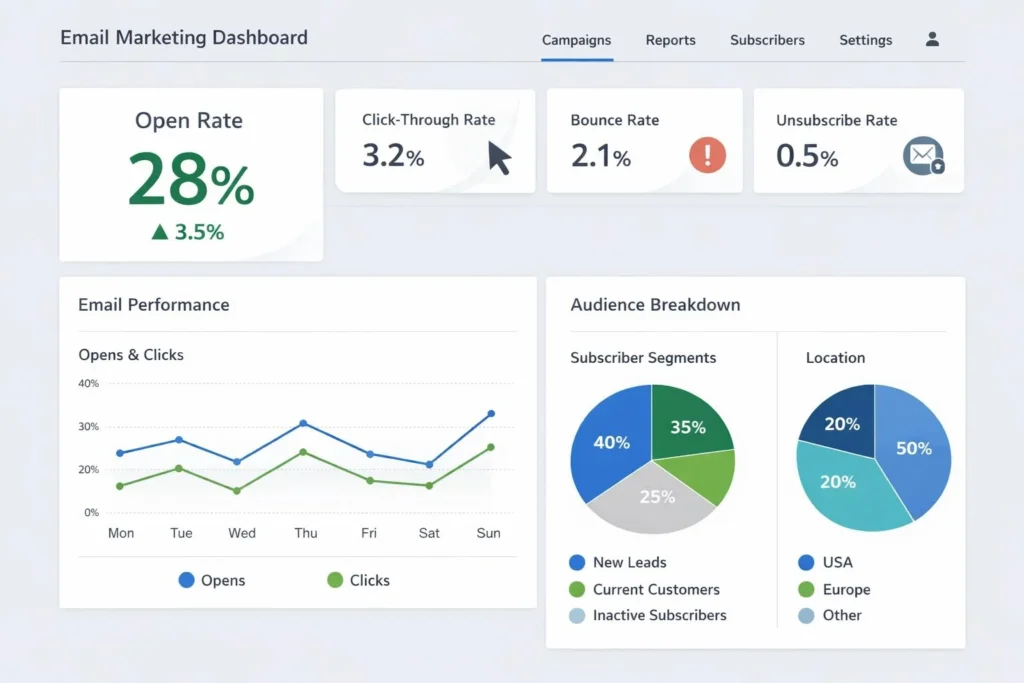
Table of Contents
Latest Email Marketing News
Email marketing never stands still. One month, marketers are refining subject lines and automation workflows; the next, they’re adjusting to sweeping changes introduced by inbox providers, privacy regulations, or AI-powered software. In an industry where even a small platform update can influence deliverability or engagement, staying informed isn’t optional—it’s part of building campaigns that continue to perform.
Over the past year, much of the conversation has centered on new sender requirements introduced by major email providers such as Gmail and Yahoo. These changes have raised the bar for businesses sending promotional emails, placing greater emphasis on domain authentication through SPF, DKIM, and DMARC. Companies that neglect these technical foundations risk seeing perfectly crafted campaigns filtered into spam folders rather than landing where they belong—in subscribers’ inboxes.
Artificial intelligence has also become one of the biggest stories shaping the future of email marketing. What once felt experimental is quickly becoming standard practice. Modern email platforms now use AI to draft compelling subject lines, generate persuasive copy, recommend the ideal sending time, personalize content for individual subscribers, and even automate complex customer journeys with minimal manual effort. Instead of replacing marketers, these tools are giving them more time to focus on creativity, strategy, and customer experience.
Privacy is another topic dominating industry headlines. As third-party cookies continue to disappear and data protection laws become increasingly strict, businesses are rethinking how they collect and use customer information. Rather than relying on external data sources, successful brands are investing in first-party data—information shared directly by customers through newsletter sign-ups, purchases, surveys, and other permission-based interactions. The result is a stronger foundation for personalization, better compliance, and relationships built on trust instead of assumptions.
Analytics are evolving just as quickly. Open rates, once considered the gold standard of email performance, no longer tell the whole story, particularly after privacy updates from companies like Apple. Today’s marketers are digging deeper, focusing on click-through rates, conversions, customer lifetime value, revenue attribution, and real-time behavioral insights. These metrics paint a far more accurate picture of how campaigns contribute to business growth.
The pace of change shows no signs of slowing. New technologies emerge, inbox providers refine their filtering systems, and consumer expectations continue to rise. Businesses that stay current with email marketing news are better equipped to respond before changes become problems, adopt new opportunities ahead of competitors, and build campaigns that remain effective in an increasingly competitive inbox.
Whether you’re running email campaigns for a growing startup, a global brand, or your own small business, keeping a close eye on industry developments isn’t just good practice—it’s a competitive advantage. The more informed your strategy, the easier it becomes to improve deliverability, strengthen subscriber relationships, and consistently achieve better marketing results.
Top Email Marketing Trends to Watch
The email marketing landscape is evolving at an astonishing pace. What worked a year ago may already feel outdated, and strategies that seemed experimental are rapidly becoming industry standards. For businesses that want to remain competitive, following the latest email marketing news isn’t just about staying informed—it’s about spotting opportunities before everyone else does.
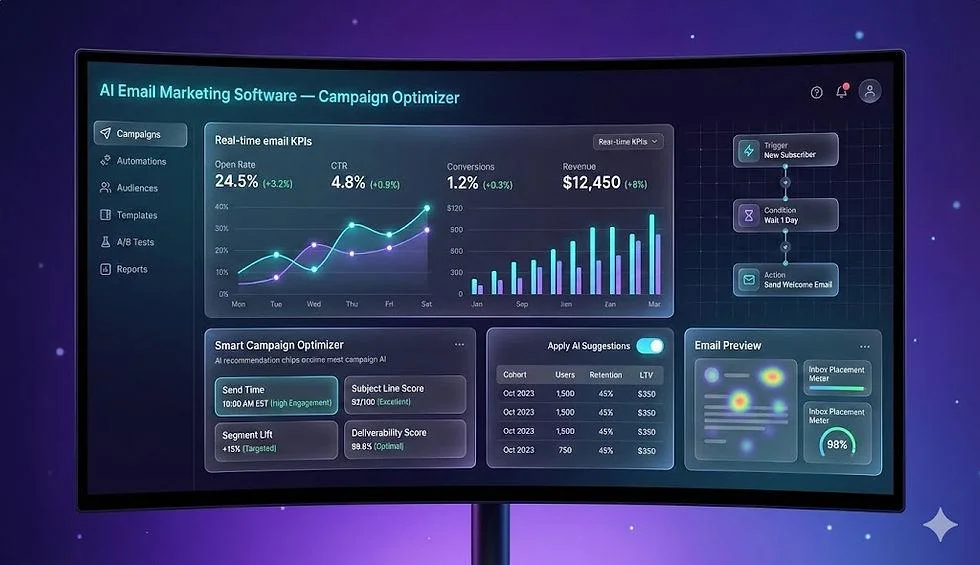
Artificial intelligence continues to dominate the conversation, and for good reason. Today’s AI tools do far more than generate a catchy subject line. They can write personalized email copy, analyze subscriber behavior, recommend optimal send times, predict future engagement, and automate sophisticated customer journeys from start to finish. Rather than replacing marketers, AI is transforming how they work, eliminating repetitive tasks while allowing more time for strategic thinking and creative storytelling.
Personalization has also entered a new era. Gone are the days when simply inserting a subscriber’s first name into an email felt impressive. Modern consumers expect messages that reflect their interests, browsing habits, purchase history, and previous interactions with a brand. Businesses are responding by using behavioral data to create dynamic content, personalized product recommendations, exclusive offers, and highly relevant messaging that feels tailored instead of mass-produced.
Interactive email experiences are becoming increasingly common as marketers look for new ways to capture attention in crowded inboxes. Instead of asking subscribers to click away immediately, brands are embedding engaging elements directly into their emails. Polls, quizzes, countdown timers, image sliders, product galleries, and interactive call-to-action buttons encourage recipients to engage without ever leaving their inbox, creating a smoother and more memorable user experience.
Privacy remains another defining trend shaping the future of email marketing. Consumers have become far more aware of how their personal information is collected and used, while governments continue introducing stricter regulations around data protection. As a result, businesses are placing greater emphasis on transparent communication, permission-based marketing, and responsible data management. Building trust has become just as important as generating clicks.
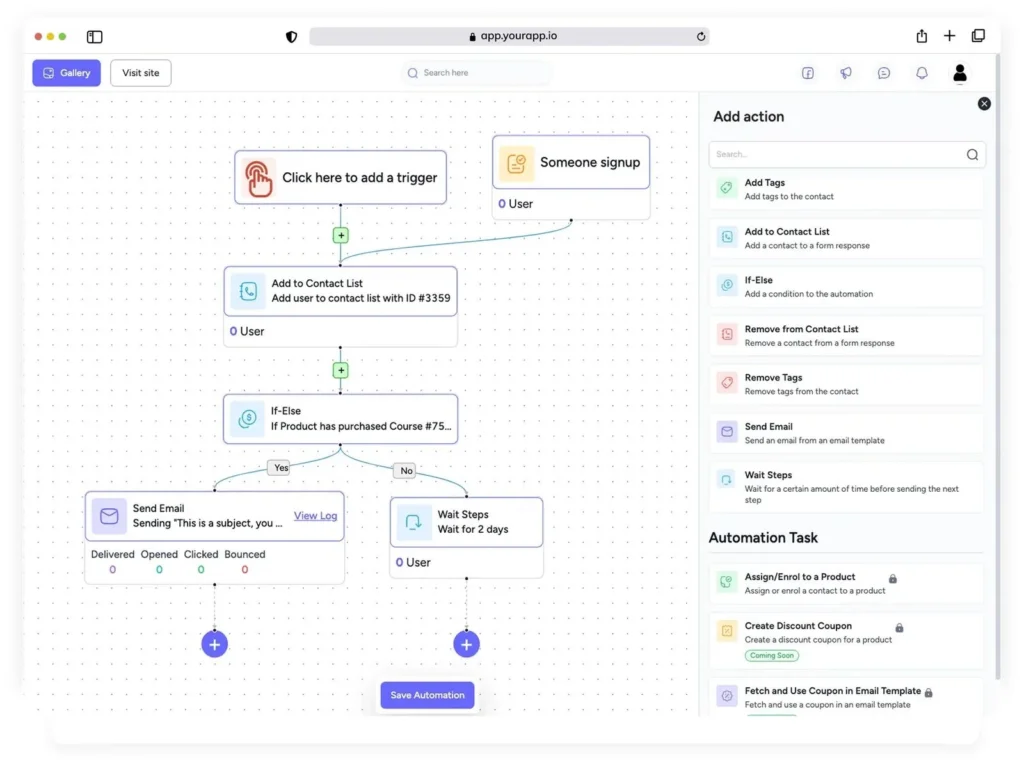
Automation is no longer limited to a welcome email or an occasional birthday message. Today’s marketing platforms enable businesses to build intelligent workflows that react instantly to customer behavior. A shopper abandons their cart? An automated reminder arrives. A customer completes a purchase? A follow-up sequence with helpful resources and complementary recommendations is triggered automatically. Subscribers receive the right message at the right moment, often without any manual intervention.
Another trend that continues to gain momentum is mobile-first design. With the majority of marketing emails now opened on smartphones and tablets, optimizing for smaller screens is no longer optional. Successful campaigns prioritize clean layouts, concise copy, responsive templates, thumb-friendly buttons, and fast-loading images. Every element is designed to deliver a seamless reading experience regardless of the device being used.
Data-driven decision-making is also becoming a defining characteristic of successful email marketing teams. Rather than relying on assumptions, marketers are increasingly using predictive analytics, customer segmentation, and real-time performance reporting to refine every aspect of their campaigns. Continuous testing, experimentation, and optimization have become standard practice, allowing businesses to improve results with every send.
The brands seeing the strongest long-term growth aren’t necessarily the ones adopting every new trend overnight. They’re the ones that carefully evaluate emerging technologies, test new ideas, and adapt their strategies as customer expectations evolve. Staying current with reliable email marketing news provides the insight needed to make smarter decisions, embrace meaningful innovation, and build campaigns that remain effective long after today’s trends become tomorrow’s standards.
Google, Yahoo, and Apple Email Updates
Few developments have reshaped email marketing more than the ongoing changes introduced by Google, Yahoo, and Apple. These technology giants influence billions of inboxes worldwide, so even a seemingly minor policy adjustment can have a significant impact on email deliverability, subscriber engagement, and campaign performance. For marketers, understanding these updates isn’t simply helpful—it’s essential.
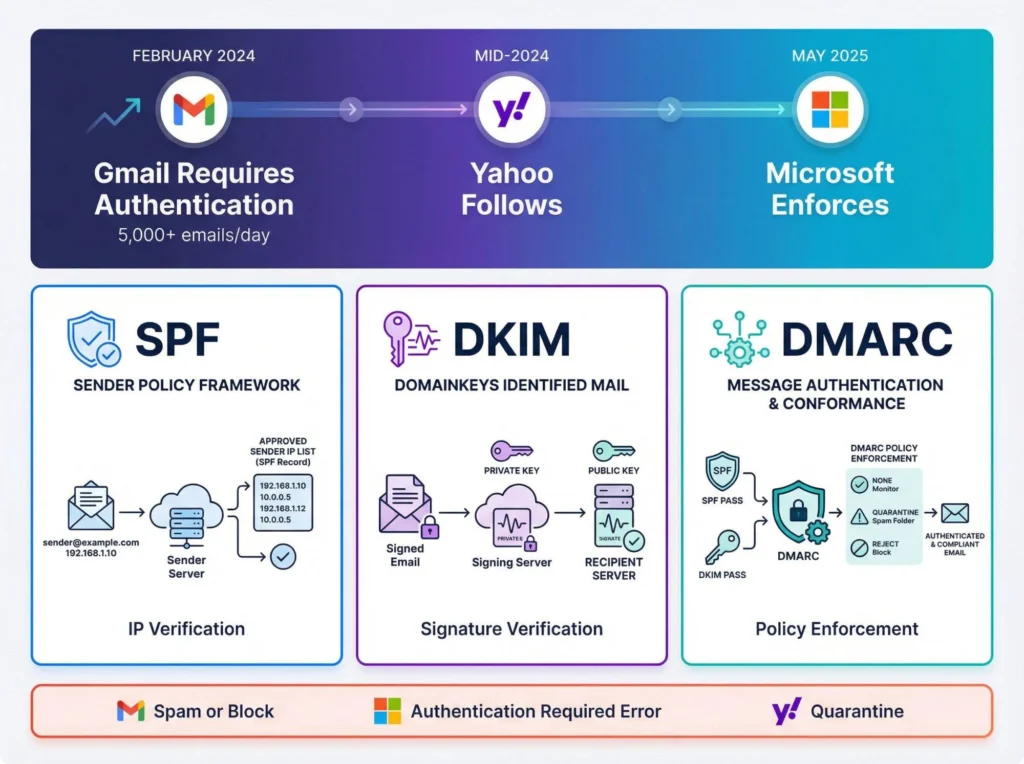
One of the most influential changes has come from Google and Yahoo, both of which have tightened their standards for bulk email senders. The goal is straightforward: reduce spam, improve inbox security, and create a better experience for users. As a result, businesses sending high volumes of email are now expected to authenticate their domains using SPF, DKIM, and DMARC. These protocols verify that emails genuinely originate from the domain they claim to represent, making it far more difficult for cybercriminals to spoof legitimate brands.
Authentication, however, is only one piece of the puzzle.
Both providers are also placing greater emphasis on responsible sending practices. Bulk senders are expected to keep spam complaint rates low, remove inactive subscribers regularly, and provide a clear one-click unsubscribe option. Making it easy for recipients to leave a mailing list may sound counterintuitive, but it actually strengthens sender reputation. When users can unsubscribe effortlessly, they’re far less likely to mark messages as spam—a signal that mailbox providers take seriously.
Apple has influenced the industry in a different way. Its Mail Privacy Protection (MPP) feature fundamentally changed how marketers measure email engagement by limiting the accuracy of open-rate tracking. Since Apple can preload email content regardless of whether a recipient actually reads the message, traditional open-rate metrics have become less reliable than they once were.
That shift has encouraged marketers to rethink how success is measured.
Rather than celebrating high open rates alone, businesses are focusing on indicators that reveal genuine customer intent. Click-through rates, website visits, completed purchases, lead generation, and overall revenue have become far more meaningful benchmarks because they reflect real user actions instead of estimated email opens.
Domain reputation is also receiving greater scrutiny than ever before. Email providers increasingly rely on sophisticated algorithms to evaluate a sender’s trustworthiness before deciding whether a message deserves a place in the inbox. Authentication records matter, but so do engagement levels, bounce rates, complaint history, sending consistency, and overall list quality. Brands that consistently deliver valuable content to engaged subscribers are rewarded with stronger inbox placement, while those relying on outdated practices often see declining performance.
Accessibility has become another priority across the email ecosystem. Technology companies are encouraging marketers to design emails that everyone can read and interact with comfortably, regardless of device or ability. Responsive layouts, descriptive alt text for images, sufficient color contrast, readable font sizes, and clear content hierarchy not only support accessibility standards but also create a smoother experience for every subscriber.
Security remains an ongoing focus as well. Phishing attacks and email impersonation continue to grow more sophisticated, prompting mailbox providers to strengthen authentication requirements and improve spam detection systems. Businesses that proactively secure their domains and follow recommended sending practices are better positioned to protect both their brand reputation and their customers.
These platform updates highlight a broader shift in email marketing. Success is no longer determined solely by compelling copy or attractive design. Technical compliance, subscriber trust, privacy, and user experience now play equally important roles in whether a campaign reaches its intended audience.
For marketers willing to adapt, these changes present an opportunity rather than an obstacle. By following Google’s and Yahoo’s sender requirements, adjusting performance measurement in response to Apple’s privacy updates, and maintaining a healthy sending reputation, businesses can continue achieving strong deliverability while building greater trust with every email they send.
Email Deliverability News and Best Practices
Creating an outstanding email is only half the battle. If it never reaches the inbox, even the most persuasive subject line, carefully crafted copy, or irresistible offer becomes invisible. That’s why email deliverability remains one of the most important—and most frequently discussed—topics in the email marketing industry.
Over the past few years, inbox providers have become significantly more sophisticated. Spam filters no longer rely on a handful of obvious warning signs. Instead, they evaluate hundreds of signals before deciding whether an email deserves a place in the primary inbox, a promotions tab, or the spam folder. This means marketers must think beyond content alone and adopt a holistic approach to maintaining a healthy sender reputation.
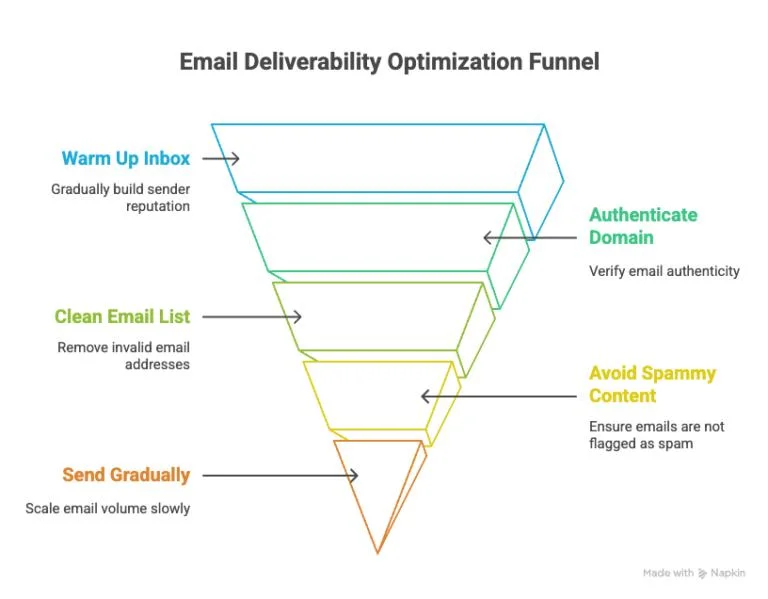
At the heart of strong deliverability lies proper email authentication.
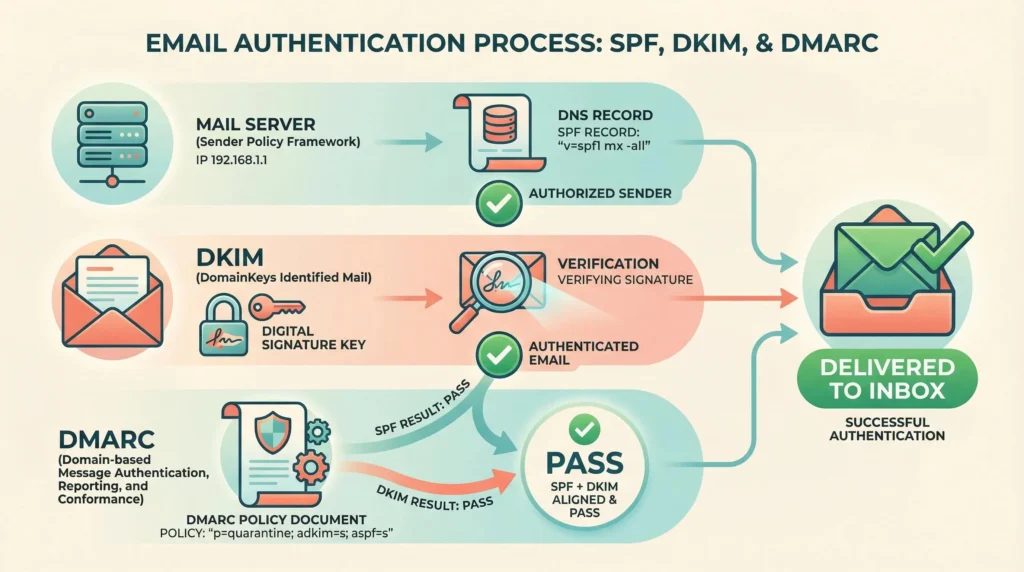
Protocols such as SPF (Sender Policy Framework), DKIM (DomainKeys Identified Mail), and DMARC (Domain-based Message Authentication, Reporting, and Conformance) work together to verify your identity and protect your domain from spoofing or unauthorized use. Major providers like Gmail and Yahoo increasingly treat these authentication standards as essential rather than optional, particularly for businesses sending marketing campaigns at scale. Without them, even legitimate emails may struggle to reach subscribers.
Authentication, however, won’t compensate for poor list management.
A clean, engaged email list remains one of the strongest indicators of a trustworthy sender. Subscribers who rarely open emails, invalid addresses, duplicate contacts, and dormant accounts gradually weaken campaign performance. Regularly removing inactive recipients not only improves engagement metrics but also signals to inbox providers that your audience genuinely values your content.
Permission-based marketing plays an equally important role. Building your list organically may take longer than purchasing thousands of email addresses, but the long-term results are dramatically better. People who actively choose to hear from your brand are far more likely to engage, click, and convert. More importantly, they’re less likely to report your emails as spam—a metric that mailbox providers monitor closely.
Content quality should never be overlooked.
Spam filters have become increasingly effective at recognizing misleading subject lines, excessive promotional language, suspicious formatting, and inconsistent messaging. Rather than trying to outsmart filtering systems, successful marketers focus on creating emails that deliver genuine value. Clear subject lines, relevant content, balanced formatting, and realistic expectations consistently outperform sensational headlines designed only to generate clicks.
Consistency matters more than many businesses realize. Sending five campaigns in one week and then disappearing for a month creates unpredictable engagement patterns that can affect sender reputation. Establishing a regular sending schedule helps subscribers know what to expect while giving email providers confidence that your domain behaves like a legitimate sender instead of a potential spam source.
Monitoring performance is another habit that separates successful email marketers from struggling ones.
Deliverability isn’t something you set up once and forget. It requires ongoing attention. Metrics such as bounce rates, spam complaints, unsubscribe rates, click-through rates, delivery rates, and engagement trends provide valuable insights into the health of your email program. A sudden increase in complaints or a noticeable drop in engagement often signals a problem long before deliverability begins to decline significantly.
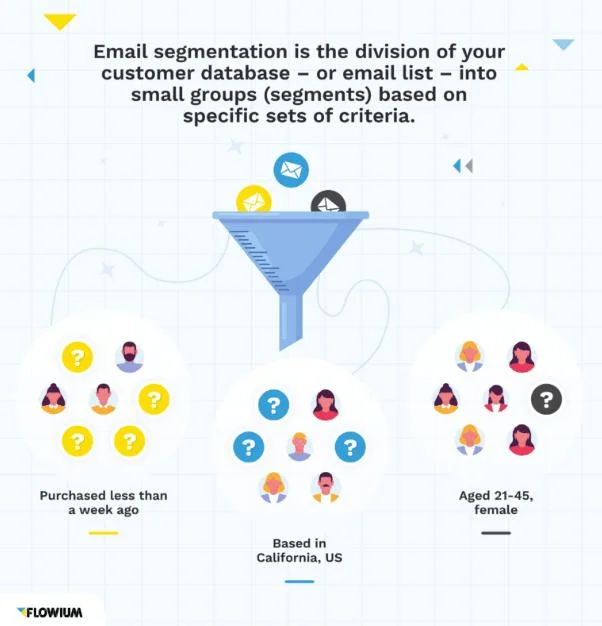
Segmentation can also have a surprisingly large impact on inbox placement. Instead of broadcasting every campaign to your entire database, divide subscribers into meaningful groups based on interests, purchase history, location, engagement level, or previous interactions. Highly relevant emails generate stronger engagement, and stronger engagement reinforces a positive sender reputation.
Testing should become part of every campaign—not an occasional exercise.
Before pressing send, review your emails across multiple devices, operating systems, and email clients. Check that links work correctly, images display as intended, personalization fields populate accurately, and calls to action remain easy to tap on mobile devices. Small technical issues may seem insignificant, but collectively they can reduce both user experience and campaign performance.
It’s also worth remembering that deliverability extends beyond technology. Trust is a major factor. Brands that consistently provide useful, relevant content build stronger relationships with subscribers over time. Those relationships translate into higher engagement, fewer complaints, and improved inbox placement—a cycle that reinforces itself with every successful campaign.
Ultimately, excellent deliverability isn’t achieved through shortcuts or secret tricks. It’s the result of consistently following best practices, respecting subscriber preferences, maintaining technical standards, and continually monitoring performance. Businesses that invest in these fundamentals enjoy more reliable inbox placement, stronger customer trust, and better returns from every email they send.
New Features from Leading Email Marketing Platforms
Email marketing platforms are evolving at an incredible pace. What was once little more than software for sending newsletters has transformed into an intelligent marketing ecosystem capable of automating customer journeys, analyzing subscriber behavior, and delivering highly personalized experiences at scale. With providers releasing new features almost every month, keeping up with platform updates has become just as important as following broader industry news.
Perhaps the most noticeable evolution is the rapid expansion of artificial intelligence.
AI is no longer a futuristic add-on reserved for enterprise organizations. It’s now built into many of the world’s leading email marketing platforms, helping businesses create campaigns faster and more effectively. Marketers can generate compelling subject lines in seconds, draft complete email sequences from a simple prompt, rewrite existing copy, summarize long-form content, and even receive suggestions for improving tone, readability, and engagement before an email is ever sent.
Some platforms are taking AI even further by offering predictive recommendations. Instead of simply helping write content, they analyze historical campaign performance to determine the optimal time to send emails, identify subscribers most likely to convert, and forecast which audience segments may become inactive. These insights allow marketers to make smarter decisions based on data rather than intuition.
Automation has also undergone a remarkable transformation.
Not long ago, automated emails typically consisted of a welcome message or a birthday greeting. Today’s platforms can orchestrate sophisticated customer journeys that react instantly to user behavior. A subscriber who downloads an ebook may receive educational follow-up emails over several weeks. Someone who abandons a shopping cart can automatically receive reminders, discount offers, or product recommendations based on what they viewed. Loyal customers, meanwhile, might enter entirely different workflows designed to encourage repeat purchases and strengthen long-term relationships.
The result is communication that feels timely instead of intrusive.
Audience segmentation has become equally sophisticated. Rather than organizing subscribers into a handful of broad lists, marketers can now create highly targeted audiences using dozens—or even hundreds—of data points. Purchase history, browsing activity, geographic location, customer lifetime value, engagement frequency, preferred product categories, and custom tags can all be combined to deliver messages that genuinely reflect each subscriber’s interests.
As personalization becomes more advanced, so do email design tools.
Modern drag-and-drop builders have dramatically reduced the technical skills required to produce professional campaigns. Businesses can choose from extensive template libraries, reusable content blocks, responsive layouts, and brand management tools that ensure visual consistency across every email. Many editors now include live previews for desktop and mobile devices, making it easy to identify design issues before launching a campaign.
Some platforms have even introduced AI-assisted design features capable of suggesting layouts, generating images, adjusting formatting, and recommending improvements based on user engagement patterns. Tasks that once required graphic designers or HTML developers can now be completed in minutes by marketing teams of any size.
Reporting capabilities have also become significantly more intelligent.
Basic metrics such as opens and clicks are still available, but modern dashboards provide far deeper insights into campaign performance. Marketers can monitor conversion rates, revenue attribution, subscriber growth, customer retention, engagement trends, and purchasing behavior through interactive reports updated in real time. Instead of asking whether an email was opened, businesses are increasingly asking a more valuable question: Did it drive meaningful business results?
Predictive analytics are beginning to play a larger role as well. Machine learning algorithms can identify subscribers who are likely to unsubscribe, estimate future purchasing behavior, and highlight opportunities for re-engagement before customer interest begins to decline. These proactive insights help businesses solve problems before they affect revenue.
Integration is another area where email marketing platforms continue to improve.
Modern software rarely operates in isolation. Instead, it connects seamlessly with customer relationship management (CRM) systems, ecommerce platforms, payment processors, customer support software, analytics tools, social media platforms, and advertising networks. These integrations create a centralized view of each customer, allowing businesses to deliver consistent, personalized experiences across multiple channels rather than treating email as a standalone marketing activity.
Collaboration features are becoming increasingly valuable too, particularly for larger teams. Shared workspaces, approval workflows, content libraries, role-based permissions, and version control make it easier for marketers, designers, copywriters, and managers to work together without slowing campaign production.
Perhaps the biggest takeaway from these continuous platform updates is that email marketing software is becoming smarter, faster, and far more strategic. Success is no longer determined solely by how many emails you send. Instead, it’s about using technology to send the right message, to the right person, at precisely the right moment.
Businesses that embrace these innovations gain more than operational efficiency. They create better customer experiences, strengthen engagement, improve conversions, and free their teams to focus on creative strategy instead of repetitive manual tasks. As email marketing platforms continue to evolve, those willing to explore and adopt new capabilities will be in the strongest position to outperform their competitors.
Recent Email Marketing Statistics and Industry Research
Numbers tell stories—and in email marketing, they often reveal opportunities that intuition alone can miss. While trends and expert opinions provide valuable direction, industry research offers something even more powerful: measurable evidence of what’s actually working. Benchmark reports, annual studies, and performance surveys help marketers separate short-lived fads from strategies that consistently produce results.
Despite the rapid growth of social media, short-form video, and emerging digital channels, email continues to stand out as one of the most effective marketing investments available. Businesses across virtually every industry rely on it to nurture leads, strengthen customer relationships, promote products, and drive repeat sales. Unlike many advertising platforms where visibility depends on changing algorithms, email gives brands direct access to an audience that has voluntarily chosen to hear from them.
That direct relationship is one of email’s greatest strengths.
Industry research consistently shows that permission-based subscribers are more likely to engage with content, trust the brands they follow, and make repeat purchases over time. Rather than competing for fleeting attention in crowded social feeds, marketers can communicate in a space where personalization and relevance have a much greater impact.
Personalization continues to rank among the strongest predictors of campaign success.
Modern research repeatedly demonstrates that subscribers respond more positively to emails tailored to their interests, behaviors, and previous interactions. Personalized subject lines often attract more attention, while product recommendations based on browsing or purchase history encourage stronger click-through and conversion rates. Dynamic content, location-specific offers, and behavior-driven messaging all contribute to creating experiences that feel less like mass marketing and more like one-to-one communication.
Automation has produced similarly impressive results.
Organizations that invest in automated customer journeys frequently outperform those relying solely on manual campaigns. Welcome sequences introduce new subscribers to a brand without delay. Abandoned cart reminders recover revenue that might otherwise be lost. Post-purchase follow-ups encourage repeat business, while re-engagement campaigns help reconnect with subscribers before they become inactive.
The common thread is timing.
Messages triggered by customer behavior consistently outperform generic promotional blasts because they arrive when subscribers are already interested or ready to act. Relevance, more than frequency, continues to be one of the defining characteristics of successful email marketing.
Mobile usage remains another dominant factor shaping campaign performance.
For many businesses, smartphones have become the primary device through which subscribers read marketing emails. A beautifully designed desktop newsletter that performs poorly on mobile can dramatically reduce engagement before readers even reach the main message. Research continues to reinforce the importance of responsive layouts, concise copy, optimized images, and clear call-to-action buttons that are easy to tap on smaller screens.
Performance measurement is evolving alongside changes in privacy.
For years, open rates served as the primary indicator of campaign success. Today, that metric tells only part of the story. Privacy features introduced by providers such as Apple have reduced the reliability of open-rate tracking, encouraging marketers to place greater emphasis on metrics tied directly to business outcomes.
Click-through rates reveal how compelling an email truly is. Conversion rates measure whether subscribers completed the intended action. Revenue attribution connects campaigns to actual sales, while customer lifetime value highlights the long-term impact of email marketing beyond a single transaction.
Together, these metrics provide a much clearer picture of overall performance.
List health continues to emerge as another recurring theme across industry reports.
A large subscriber database may look impressive on paper, but size means little without engagement. Businesses that routinely remove inactive contacts, monitor bounce rates, verify new subscribers, and encourage organic list growth typically achieve stronger deliverability and higher engagement than those focused solely on growing numbers.
Frequency is another area where research challenges common assumptions.
Sending more emails doesn’t automatically produce better results. In many cases, excessive communication leads to subscriber fatigue, declining engagement, and higher unsubscribe rates. Successful marketers pay close attention to audience behavior, adjusting sending frequency according to engagement patterns rather than arbitrary schedules.
A/B testing also remains one of the most reliable ways to improve campaign performance.
Whether testing subject lines, sender names, email layouts, call-to-action buttons, personalization strategies, or send times, continuous experimentation allows marketers to make informed decisions backed by real subscriber behavior. Small improvements achieved consistently often generate substantial gains over months and years.
Perhaps the most valuable lesson emerging from industry research is that successful email marketing is rarely built on guesswork. The highest-performing organizations rely on data to guide creative decisions, refine customer experiences, and optimize every stage of the subscriber journey.
By regularly reviewing benchmark reports, analyzing campaign metrics, and staying informed about new research, businesses can identify strengths, uncover hidden opportunities, and adapt their strategies with confidence. In an industry that evolves as quickly as email marketing, informed decisions will always outperform assumptions.
Privacy and Compliance Updates for Email Marketers
Privacy is no longer a box to tick at the end of an email campaign. It’s become one of the defining principles of modern digital marketing. As governments introduce stricter regulations, technology companies strengthen user protections, and consumers become increasingly aware of how their personal information is collected and used, businesses are being challenged to rethink their approach to email marketing from the ground up.
The companies that embrace this shift aren’t simply avoiding legal trouble—they’re building stronger, more trustworthy relationships with their audiences.
At the center of every compliant email marketing strategy is one simple concept: permission.
Subscribers should always make a clear and informed decision to receive marketing emails. Gone are the days when pre-checked boxes or automatically added contacts could be considered acceptable practice. Today’s best-performing email lists are built through explicit consent, where individuals knowingly choose to hear from a brand and understand exactly what they’ll receive.
Many organizations are taking this a step further by adopting double opt-in. After signing up, subscribers receive a confirmation email asking them to verify their subscription before being added to the mailing list. Although this process may slightly reduce the number of new subscribers, it significantly improves list quality, reduces fake or mistyped email addresses, and ensures every contact genuinely wants future communications.
Data privacy legislation continues to reshape how businesses operate across the world.
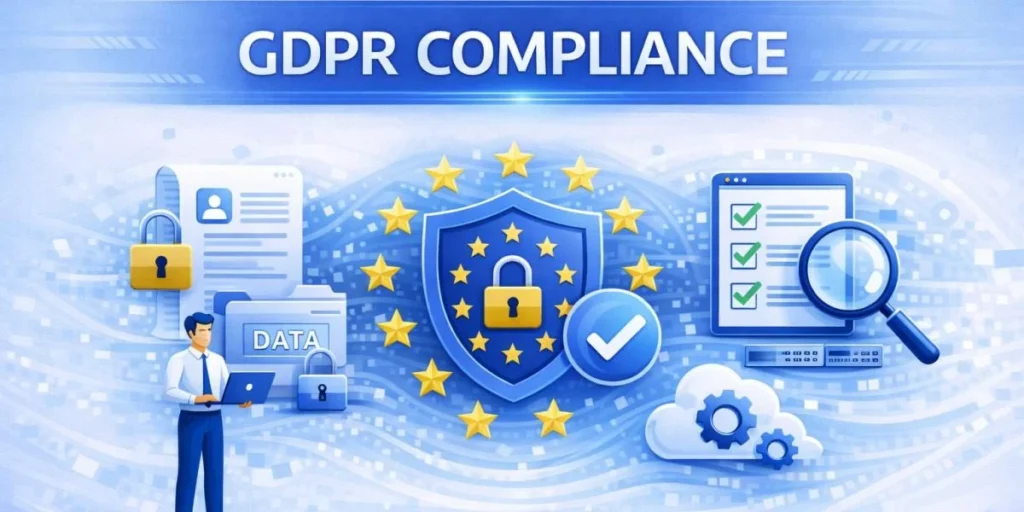
Regulations such as the General Data Protection Regulation (GDPR) in Europe and the California Consumer Privacy Act (CCPA) have established higher expectations for transparency, accountability, and responsible data handling. Organizations are expected to explain what information they collect, why it’s being collected, how long it will be stored, and whether it will be shared with third parties. Subscribers also have the right, in many cases, to access, correct, or request the deletion of their personal information.
Rather than viewing these requirements as obstacles, forward-thinking businesses see them as opportunities to strengthen customer confidence.
Transparency has become a competitive advantage.
Consumers are increasingly willing to share their information—but only with brands they trust. Clear privacy policies, honest communication, and straightforward consent forms demonstrate respect for customer data and help establish credibility long before the first marketing email arrives.
Another area receiving considerable attention is the unsubscribe experience.
Every promotional email should include an easy-to-find method for opting out of future communications. Recent updates from major inbox providers, including Google and Yahoo, have reinforced the importance of one-click unsubscribe, making it simpler than ever for recipients to leave a mailing list.
At first glance, encouraging unsubscribes may seem counterproductive. In reality, it’s exactly the opposite.
Subscribers who can opt out effortlessly are far less likely to mark emails as spam. Lower spam complaint rates protect sender reputation, improve inbox placement, and create a healthier email program overall. Sometimes losing an uninterested subscriber is far better than repeatedly sending messages that damage your deliverability.
Responsible data collection is equally important.
One of the biggest mistakes businesses make is gathering more information than they actually need. Every additional data field increases both compliance responsibilities and security risks. Instead, marketers are adopting a “data minimization” approach—collecting only the information necessary to deliver a better customer experience.
As trust grows over time, additional information can be requested gradually through preference centers, surveys, loyalty programs, or customer interactions rather than lengthy signup forms that discourage new subscribers.
Protecting customer information has become just as important as collecting it.
Strong passwords, multi-factor authentication, encrypted databases, limited employee access, and regular security audits all contribute to safeguarding subscriber data against unauthorized access or cyberattacks. Even the most creative marketing campaign can quickly lose credibility if customer information is compromised.
Compliance isn’t a one-time project, either.
Privacy laws continue to evolve, and businesses must review their processes regularly to remain aligned with changing regulations and industry standards. Routine audits of subscriber lists, consent records, automation workflows, email templates, and data storage procedures help identify potential issues before they become costly problems.
Employee education also plays an important role. Marketing teams, sales departments, customer support staff, and anyone handling customer data should understand the organization’s privacy responsibilities. A well-trained team is often the strongest defense against accidental compliance violations.
Ultimately, privacy and compliance are about far more than regulations. They’re about respect.
When businesses communicate honestly, protect personal information, honor subscriber preferences, and give people meaningful control over their data, they create relationships built on confidence rather than convenience. Those relationships lead to higher engagement, stronger brand loyalty, and a healthier email marketing program over the long term.
As the regulatory landscape continues to evolve, organizations that prioritize transparency, security, and permission-based marketing will be best positioned to earn customer trust while adapting smoothly to whatever changes come next.
Expert Insights on the Latest Email Marketing News
Keeping up with the latest email marketing news is valuable. Knowing how to interpret those developments—and deciding which ones deserve your attention—is where the real advantage lies.
Every year, new technologies, platform updates, and privacy regulations generate countless headlines. Some become industry-defining shifts, while others fade away almost as quickly as they appear. Experienced email marketers understand the difference. Rather than reacting to every trend, they focus on the changes that genuinely improve customer experience, strengthen deliverability, and produce measurable business results.
One message consistently echoes across the industry: quality will always outperform quantity.
For years, many businesses believed success came from sending more emails to more people. That mindset is gradually disappearing. Today’s highest-performing brands are less concerned with frequency and far more focused on relevance. Instead of flooding inboxes with generic promotions, they deliver carefully targeted content that reflects subscribers’ interests, purchasing habits, and stage in the customer journey.
A smaller number of meaningful emails often generates stronger engagement than a constant stream of messages that offer little value.
Deliverability remains another recurring priority among industry experts.
No matter how persuasive your copy may be, it serves no purpose if it never reaches the inbox. That’s why specialists continue to emphasize the importance of maintaining a strong sender reputation through proper authentication, consistent sending practices, and ongoing list maintenance.
Experts recommend viewing SPF, DKIM, and DMARC as essential infrastructure rather than optional technical settings. Combined with regular list cleaning, low spam complaint rates, and permission-based marketing, these authentication protocols create the foundation for long-term inbox success.
Artificial intelligence has naturally become one of the industry’s biggest discussion points.
Yet despite the excitement surrounding AI, experienced marketers tend to approach it with balance rather than blind enthusiasm.
AI is exceptionally good at accelerating repetitive work. It can generate subject lines, draft campaign ideas, suggest personalization opportunities, analyze performance data, and automate customer journeys within seconds. However, seasoned professionals consistently remind businesses that AI works best as a collaborator—not as a replacement for strategic thinking or authentic brand communication.
Technology can produce words.
People create relationships.
That distinction matters.
Subscribers respond to brands that sound genuine, understand their audience, and communicate with empathy. AI may help create a first draft, but human review remains essential for maintaining tone, accuracy, and emotional connection.
Another growing area of expert focus involves performance measurement.
For many years, marketers celebrated high open rates as the ultimate sign of campaign success. Today, most professionals recognize that this metric tells only part of the story, especially following privacy updates that have reduced the reliability of email open tracking.
Instead, experts encourage businesses to evaluate metrics tied directly to meaningful outcomes.
Click-through rates reveal genuine interest.
Conversion rates show whether subscribers completed the intended action.
Revenue attribution demonstrates financial impact.
Customer retention and lifetime value illustrate how email contributes to long-term business growth rather than isolated campaign performance.
Testing also remains one of the strongest recommendations from experienced practitioners.
The most successful email marketers rarely assume they already know what works best. They experiment constantly.
Subject lines.
Calls to action.
Images.
Personalization.
Send times.
Layout variations.
Audience segments.
Every element can influence engagement, and even small improvements become significant when multiplied across thousands—or millions—of subscribers.
A/B testing isn’t simply about chasing higher click rates. It’s about developing a deeper understanding of customer behavior. Every experiment produces insights that make future campaigns more effective.
Experts also encourage marketers to think beyond individual campaigns.
Email should never operate in isolation. Instead, it works best as part of a broader customer experience that includes websites, ecommerce platforms, customer support, social media, loyalty programs, and CRM systems. When these channels share data effectively, businesses can deliver highly personalized communications that feel seamless from one interaction to the next.
Adaptability is another recurring theme among industry leaders.
Email marketing evolves continuously. Authentication requirements change. Privacy laws expand. Consumer expectations shift. New technologies emerge with remarkable speed.
Organizations that resist change often find themselves solving preventable problems months later.
Those that monitor industry developments, test new features thoughtfully, and refine their strategies regularly tend to maintain stronger deliverability, healthier subscriber relationships, and more consistent campaign performance over time.
Perhaps the most valuable lesson experts share is surprisingly simple.
Never stop learning.
The marketers who consistently achieve exceptional results aren’t necessarily those with the largest budgets or the biggest teams. They’re the ones who remain curious, embrace experimentation, analyze data objectively, and adapt before change becomes unavoidable.
By combining expert insight with ongoing industry news, businesses can make smarter decisions, avoid costly mistakes, and build email marketing strategies capable of delivering sustainable success for years to come.

Upcoming Email Marketing Events and Conferences
Reading about industry trends is valuable, but there’s something uniquely powerful about hearing directly from the people shaping the future of email marketing. Conferences, webinars, virtual summits, and live workshops offer marketers the opportunity to move beyond headlines, explore emerging technologies in depth, and learn practical strategies that can be implemented immediately.
For many professionals, these events serve as an annual reset—a chance to step away from daily campaigns and look at the bigger picture.
The email marketing landscape changes quickly. Artificial intelligence continues to evolve, inbox providers regularly update their requirements, privacy laws become more complex, and customer expectations shift with remarkable speed. Industry events bring these conversations together in one place, allowing attendees to understand not only what is changing, but why those changes matter.
One of the biggest advantages of attending conferences is direct access to experienced practitioners.
Instead of relying solely on blog posts or online tutorials, participants hear firsthand accounts from marketers who have tested new strategies, overcome deliverability challenges, and scaled successful campaigns across different industries. Their case studies often reveal practical lessons that aren’t found in standard marketing guides.
Many conferences focus on topics that are currently transforming the industry, including:
- Artificial intelligence and machine learning in email marketing
- Advanced automation and customer journey mapping
- Personalization and behavioral segmentation
- Email deliverability and sender reputation
- Privacy regulations and compliance
- Customer retention and lifecycle marketing
- Analytics, attribution, and performance optimization
These sessions typically go beyond theory. Speakers often demonstrate real-world campaigns, explain the reasoning behind their decisions, and share measurable outcomes—both successes and failures. Learning from those experiences can help businesses avoid costly mistakes while accelerating their own growth.
Technology providers also play an important role.
Leading email marketing platforms regularly host product launches, educational webinars, certification programs, and customer conferences where they introduce new features and demonstrate best practices. These sessions offer an opportunity to learn directly from the teams building the software, making it easier to understand how new tools can improve campaign performance and streamline daily workflows.
As artificial intelligence becomes more deeply integrated into email marketing platforms, many vendor events now include hands-on demonstrations of AI-powered content generation, predictive analytics, automated segmentation, and customer journey optimization. Seeing these tools in action often provides far more clarity than reading about them afterward.
Virtual events have dramatically expanded access to industry knowledge.
Not every marketer has the time or budget to travel internationally for multi-day conferences. Fortunately, online events have made expert education more accessible than ever. Live-streamed presentations, interactive workshops, question-and-answer sessions, and on-demand recordings allow professionals around the world to learn from leading experts without leaving their offices.
This flexibility has also encouraged more frequent learning throughout the year instead of concentrating education into a handful of annual conferences.
Networking remains one of the most overlooked benefits of attending industry events.
Some of the most valuable conversations happen between scheduled sessions rather than on stage. Meeting fellow marketers creates opportunities to exchange ideas, discuss common challenges, compare strategies, and discover creative solutions that may never appear in published articles.
A simple conversation about deliverability, automation, or subscriber engagement can spark ideas that significantly improve future campaigns.
For consultants, agency owners, and in-house marketing teams alike, these professional relationships often become long-term sources of inspiration and collaboration.
To maximize the value of any event, preparation is essential.
Before attending, review the agenda carefully and identify sessions that align with your current business goals. If improving deliverability is a priority, focus on technical presentations covering authentication, inbox placement, and sender reputation. If your organization is exploring AI, prioritize demonstrations of automation, personalization, and predictive analytics.
Taking detailed notes is only the beginning.
The greatest return on investment comes from applying what you’ve learned. After each conference or webinar, review the most valuable insights, identify actionable ideas, and incorporate them into your marketing strategy while they’re still fresh. Even implementing one or two meaningful improvements can have a lasting impact on campaign performance.
The most successful marketers view industry events as ongoing education rather than occasional inspiration. They understand that continuous learning keeps their skills current, exposes them to fresh perspectives, and helps them anticipate industry changes before they affect their business.
In an environment where technology evolves almost daily, staying connected with the wider email marketing community isn’t simply beneficial—it’s a competitive advantage. Businesses that combine industry knowledge, practical experience, and continuous learning are far better equipped to adapt, innovate, and build campaigns that remain effective for years to come.

How Recent Email Marketing News Affects Your Strategy
Reading the latest email marketing news is informative. Applying those insights to your own campaigns is where the real value begins.
The email marketing landscape changes continuously. New privacy regulations reshape how businesses collect data, inbox providers tighten deliverability standards, artificial intelligence introduces new ways to automate campaigns, and customer expectations continue to rise. Every update has the potential to influence how your emails are delivered, opened, and acted upon.
Businesses that adapt early often gain an advantage long before those changes become industry standard.
One of the clearest examples is the growing emphasis on sender authentication.
Recent updates from Google and Yahoo have reinforced the importance of properly configured SPF, DKIM, and DMARC records. These technical standards aren’t simply recommendations anymore—they’re becoming essential requirements for organizations sending marketing emails at scale.
If your authentication isn’t configured correctly, even high-quality campaigns may struggle to reach subscribers’ inboxes.
That makes regular technical reviews an important part of any modern email marketing strategy.
At the same time, sender reputation deserves ongoing attention.
Deliverability is influenced by far more than authentication alone. Spam complaints, bounce rates, subscriber engagement, sending consistency, and overall list quality all contribute to how mailbox providers evaluate your domain.
Healthy email programs are built over time through consistent practices rather than quick fixes.
Artificial intelligence is another development reshaping strategic planning.
Today’s AI tools can dramatically reduce the time required to create campaigns. Subject lines can be generated within seconds. Email copy can be drafted automatically. Customer journeys can be optimized using predictive insights, while audience segmentation becomes increasingly intelligent through machine learning.
Yet technology works best when paired with human judgment.
AI excels at identifying patterns and accelerating repetitive tasks, but it cannot fully understand your customers’ emotions, brand personality, or business goals. Successful marketers use AI to enhance creativity—not replace it.
Personalization has also become a defining characteristic of successful campaigns.
Subscribers have grown accustomed to brands recognizing their interests and preferences. Generic newsletters sent to an entire database rarely generate the same engagement they once did.
Instead, organizations are investing in detailed audience segmentation based on customer behavior, purchase history, browsing activity, demographics, and engagement patterns. Personalized recommendations, dynamic content, and behavior-triggered automation create experiences that feel relevant rather than promotional.
Privacy developments should influence every stage of your strategy as well.
Consumers are becoming increasingly selective about how they share personal information. Regulations continue to evolve, while technology companies provide users with greater control over their data.
Rather than collecting every piece of information available, businesses are increasingly adopting a more thoughtful approach.
Collect what you genuinely need.
Explain why you’re collecting it.
Protect it responsibly.
Give subscribers meaningful control over their preferences.
This transparency strengthens trust while helping organizations remain compliant with changing privacy requirements.
Campaign measurement is undergoing a significant transformation too.
For years, marketers relied heavily on open rates to evaluate performance. While open rates still provide useful context, they no longer offer a complete picture, particularly after privacy updates introduced by providers such as Apple.
Modern email strategies focus on metrics that reflect real business outcomes.
Click-through rates reveal engagement.
Conversion rates measure action.
Revenue attribution demonstrates financial impact.
Customer retention illustrates long-term relationship strength.
Lifetime value shows how email contributes to sustained business growth.
Together, these metrics provide far more meaningful insight than opens alone.
Continuous testing has become another strategic necessity.
The most successful organizations rarely assume yesterday’s winning campaign will produce tomorrow’s best results. They test subject lines, calls to action, layouts, personalization strategies, images, offers, and send times on an ongoing basis.
Each experiment generates valuable customer insights.
Over time, those incremental improvements compound into significant performance gains.
Strategy itself should never remain static.
Customer behavior changes.
Technology evolves.
Competition increases.
Inbox providers refine their algorithms.
Businesses that review their email marketing strategy regularly are far better equipped to respond to these changes before performance begins to decline.
Quarterly audits can be particularly valuable. Reviewing automation workflows, segmentation rules, authentication settings, engagement metrics, campaign performance, and subscriber growth helps identify opportunities for optimization while preventing small issues from becoming larger problems.
Ultimately, recent email marketing news sends a consistent message: adaptability is now one of the most valuable marketing skills.
Organizations willing to embrace new technologies, strengthen technical foundations, prioritize customer trust, and refine their strategies through data-driven decision-making will continue to outperform competitors relying on outdated practices.
Email marketing has never been simply about sending messages.
It’s about delivering the right message, to the right person, at the right time, in a way that builds lasting relationships.
Businesses that understand this—and continuously evolve alongside the industry—will be the ones that achieve sustainable success in the years ahead.

Actionable Tips Based on the Latest Email Marketing Updates
Keeping up with email marketing news is only the first step. The real advantage comes from turning industry insights into practical improvements that strengthen every campaign you send. Even small adjustments—made consistently—can improve deliverability, increase engagement, and generate better long-term results.
If you’re wondering where to begin, focus on the fundamentals before chasing the latest trends.
Authenticate Your Domain Properly
Strong email deliverability starts with trust.
Configure your domain using SPF, DKIM, and DMARC so mailbox providers can verify that your emails are legitimate. These authentication protocols protect your domain from spoofing, improve inbox placement, and demonstrate that your organization follows modern sending standards.
If you haven’t reviewed your authentication settings recently, make it a priority. As inbox providers continue tightening their requirements, technical compliance is becoming increasingly important.
Keep Your Email List Healthy
A large subscriber database isn’t necessarily a valuable one.
Inactive contacts, invalid email addresses, duplicate records, and disengaged subscribers gradually weaken campaign performance. They reduce engagement rates, increase bounce rates, and can negatively affect your sender reputation over time.
Instead of measuring success by the size of your mailing list, focus on the quality of your audience.
Regularly remove inactive subscribers, verify new sign-ups, and monitor list growth to ensure you’re communicating with people who genuinely want to hear from your business.
Segment Before You Send
Not every subscriber should receive the same message.
Modern email marketing thrives on relevance. Divide your audience into meaningful segments based on customer behavior, purchase history, geographic location, engagement levels, interests, or lifecycle stage.
When subscribers receive content that matches their needs, they’re far more likely to open emails, click links, and complete purchases.
Better targeting leads to better relationships—and better results.
Use Artificial Intelligence Strategically
AI has become one of the most valuable tools available to email marketers, but it’s most effective when used thoughtfully.
Allow AI to generate subject lines, draft initial copy, recommend send times, summarize campaign reports, or suggest audience segments. These capabilities save time and accelerate production.
However, don’t skip the human review.
Every email should reflect your brand’s personality, values, and tone of voice. AI can provide an excellent starting point, but authenticity still comes from people.
Design Every Email for Mobile Devices
Your subscribers are increasingly reading emails on smartphones.
That reality should influence every design decision you make.
Use responsive templates that automatically adjust to different screen sizes. Keep paragraphs concise, choose readable font sizes, create buttons that are easy to tap, and compress images so emails load quickly even on slower mobile connections.
Before launching a campaign, preview it across multiple devices and email clients.
An email that performs perfectly on desktop but poorly on mobile can dramatically reduce engagement.
Measure What Actually Matters
Open rates still provide useful context, but they shouldn’t be your primary definition of success.
Privacy updates have reduced the accuracy of open-rate tracking, making deeper performance metrics increasingly valuable.
Pay close attention to:
- Click-through rates
- Conversion rates
- Revenue generated
- Bounce rates
- Spam complaints
- Unsubscribe rates
- Customer retention
- Customer lifetime value
These measurements reveal how email marketing contributes to genuine business growth rather than simply attracting attention.
Test, Learn, and Improve Continuously
Successful email marketers rarely rely on assumptions.
Instead, they experiment.
Test different subject lines.
Compare calls to action.
Evaluate alternative layouts.
Experiment with personalization strategies.
Adjust send times.
Analyze every result.
Not every test will produce dramatic improvements, but consistent optimization creates measurable gains over time. The businesses that improve steadily often outperform those waiting for a single breakthrough idea.
Put Privacy First
Trust is becoming one of the most valuable assets in digital marketing.
Always obtain clear subscriber consent before sending promotional emails. Include an obvious unsubscribe option, maintain transparent privacy policies, and collect only the customer information you genuinely need.
Subscribers are far more willing to engage with businesses that demonstrate respect for their personal data.
Compliance isn’t simply about avoiding penalties—it’s about building confidence.
Review Your Automation Workflows
Automation should never be treated as a “set it and forget it” system.
Customer behavior evolves.
Product offerings change.
Business goals shift.
Review your automated sequences regularly to ensure every message remains relevant, accurate, and aligned with your current marketing strategy.
Refreshing welcome series, abandoned cart emails, post-purchase follow-ups, and re-engagement campaigns can often produce significant performance improvements without creating entirely new campaigns.
Stay Curious
Perhaps the most valuable habit any email marketer can develop is continuous learning.
The industry evolves too quickly for strategies to remain effective forever.
Subscribe to trusted email marketing newsletters. Read industry research. Attend webinars and conferences. Explore new platform features. Monitor updates from Gmail, Yahoo, Apple, and leading email service providers.
Every new insight is an opportunity to refine your strategy before competitors do.
Small Improvements Create Big Results
There is no single tactic that guarantees email marketing success.
Instead, exceptional performance is built through dozens of small, consistent improvements—better authentication, healthier subscriber lists, stronger personalization, smarter automation, more meaningful analytics, thoughtful testing, and a genuine commitment to delivering value.
Businesses that embrace continuous optimization rather than occasional overhauls are the ones most likely to improve deliverability, strengthen customer relationships, increase conversions, and generate sustainable long-term growth through email marketing.
Frequently Asked Questions About Email Marketing News
What is email marketing news?
Email marketing news refers to the latest developments affecting the email marketing industry. This includes updates from major inbox providers like Gmail, Yahoo, and Apple, changes to privacy regulations, new features released by email marketing platforms, emerging technologies such as artificial intelligence, industry research, and evolving best practices for deliverability and customer engagement.
Staying informed helps businesses anticipate changes instead of reacting to them after campaign performance has already been affected.
Why should businesses follow email marketing news?
The email marketing landscape evolves constantly.
Inbox providers update their spam filtering systems. Software companies release new automation and AI capabilities. Governments introduce privacy regulations, and customer expectations continue to shift.
Following industry news allows marketers to adapt early, protect their sender reputation, improve deliverability, and take advantage of new opportunities before competitors do. Businesses that stay informed are generally better equipped to create campaigns that remain effective over the long term.
How often should I check for email marketing updates?
For most businesses, reviewing industry news once or twice a week is enough to stay current without becoming overwhelmed.
If email marketing plays a major role in your revenue strategy, consider subscribing to trusted newsletters, following official platform blogs, or attending webinars that provide updates as they happen. Monitoring reliable sources regularly helps ensure you don’t miss important changes that could influence your campaigns.
What are the biggest email marketing trends right now?
Several trends are reshaping the industry at the same time.
Artificial intelligence is streamlining content creation, automation, and audience segmentation. Hyper-personalization is making campaigns more relevant to individual subscribers. Privacy-focused marketing continues to influence how businesses collect and use customer data, while stronger authentication requirements are improving inbox security.
Other important developments include predictive analytics, advanced customer journey automation, interactive email experiences, and mobile-first email design.
How do Google’s and Yahoo’s sender requirements affect marketers?
Google and Yahoo have introduced stricter expectations for organizations sending large volumes of email.
Businesses are encouraged—or in many cases required—to authenticate their domains using SPF, DKIM, and DMARC while maintaining low spam complaint rates and providing a one-click unsubscribe option.
Meeting these standards improves sender reputation and significantly increases the likelihood that marketing emails reach subscribers’ inboxes rather than being filtered as spam.
What impact does Apple’s Mail Privacy Protection have on email marketing?
Apple’s Mail Privacy Protection (MPP) has changed how marketers measure engagement by reducing the reliability of traditional open-rate tracking.
Because email opens can no longer be interpreted with the same level of confidence, businesses are increasingly focusing on metrics that demonstrate genuine customer behavior, including click-through rates, website visits, conversions, revenue generated, and customer retention.
This shift encourages marketers to evaluate campaigns based on meaningful outcomes rather than surface-level engagement.
What are the most reliable sources for email marketing news?
The most trustworthy information usually comes directly from the organizations driving industry change.
Official blogs published by major email marketing platforms, announcements from Gmail, Yahoo, and Apple, respected digital marketing publications, benchmark reports, webinars, and industry conferences all provide valuable insights.
Relying on multiple reputable sources helps marketers gain a balanced understanding of important developments instead of depending on a single perspective.
How can I improve my email deliverability?
Deliverability depends on a combination of technical setup and responsible marketing practices.
Start by authenticating your domain with SPF, DKIM, and DMARC. Maintain a clean subscriber list, remove inactive contacts regularly, send relevant content to engaged audiences, and monitor metrics such as bounce rates, spam complaints, and unsubscribe rates.
Consistent sending habits, permission-based marketing, and ongoing performance analysis all contribute to building a strong sender reputation over time.
Which email marketing metrics deserve the most attention?
While open rates still provide useful context, they should no longer be viewed as the primary measure of campaign success.
Modern marketers place greater emphasis on click-through rates, conversion rates, revenue attribution, customer lifetime value, unsubscribe rates, bounce rates, spam complaints, and subscriber retention.
Together, these metrics provide a far more accurate picture of how email marketing contributes to overall business growth.
How can businesses prepare for future email marketing changes?
Adaptability is one of the most valuable qualities an email marketer can develop.
Follow trusted industry news, monitor platform updates, test new features, review your automation workflows regularly, and stay informed about evolving privacy regulations and deliverability requirements.
Businesses that embrace continuous learning and make gradual improvements to their strategy are far better positioned to succeed than those waiting until major changes force them to react.
Is artificial intelligence replacing email marketers?
No.
Artificial intelligence is transforming how email campaigns are planned and executed, but it works best as a tool that supports marketers rather than replaces them.
AI can accelerate content creation, optimize send times, recommend audience segments, and automate repetitive tasks. Human marketers, however, remain essential for developing strategy, understanding customer needs, maintaining brand voice, and making thoughtful decisions that technology alone cannot replicate.
The strongest campaigns combine AI-powered efficiency with human creativity and experience.
What’s the biggest mistake businesses make with email marketing?
One of the most common mistakes is focusing on volume instead of value.
Sending frequent promotional emails to disengaged subscribers often damages deliverability and weakens customer relationships. Successful businesses prioritize relevance, personalization, permission-based marketing, and consistent optimization instead.
Building trust with subscribers almost always produces better long-term results than simply sending more emails.
Looking for the right marketing tools? Explore expert reviews, comparisons, and guides at AmiinMarketer.com.