
Introduction
HubSpot vs Mailchimp is one of the most common comparisons for businesses searching for the right marketing platform to attract customers, improve engagement, and grow their audience. Although both tools offer powerful email marketing features, they are built with different goals in mind.
HubSpot is designed as a complete customer relationship management (CRM) platform that combines marketing, sales, customer service, automation, and analytics in one ecosystem. It helps businesses manage the entire customer journey, from capturing leads to building long-term relationships.
Mailchimp, on the other hand, focuses mainly on email marketing and audience engagement. It provides an easy way to create professional campaigns, organize subscribers, and communicate with customers without requiring advanced technical skills.
Choosing between HubSpot vs Mailchimp depends on what your business needs most. If you are looking for a complete marketing system with advanced automation and CRM capabilities, HubSpot may be the stronger option. However, if you need a simple, affordable, and beginner-friendly email marketing solution, Mailchimp can be a better fit.
In this comparison, we will explore their features, pricing, automation, integrations, ease of use, customer support, and overall value to help you decide which platform matches your business goals.
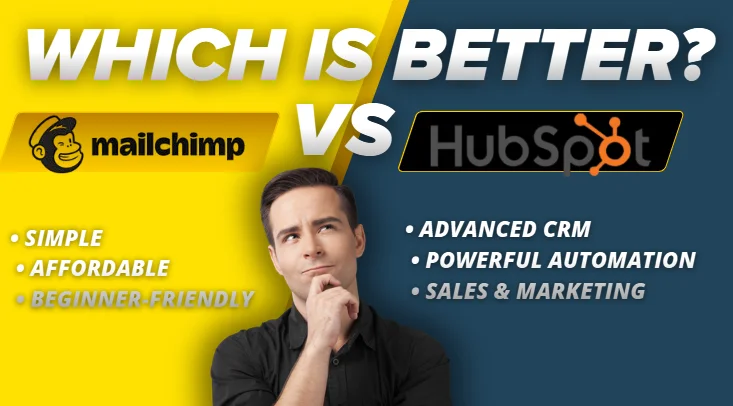
Table of Contents
HubSpot vs Mailchimp: Quick Comparison Table
Before looking at each platform in detail, it is useful to see how HubSpot and Mailchimp compare across the most important categories. While both platforms help businesses connect with customers through email marketing, their approaches are quite different.
HubSpot offers a broader business solution with CRM, sales tools, advanced automation, and detailed reporting. Mailchimp keeps things simpler by focusing on email campaigns, audience management, and easy-to-use marketing features.
| Feature | HubSpot | Mailchimp |
|---|---|---|
| Best For | Growing businesses, sales teams, and companies needing a complete CRM | Small businesses, startups, creators, and beginners |
| Ease of Use | User-friendly but requires time to learn advanced features | Extremely beginner-friendly with a simple interface |
| Email Marketing | Advanced personalization, segmentation, and customer-based campaigns | Simple campaign creation with templates and email tools |
| Marketing Automation | Powerful workflows with advanced customization | Easy automation for common marketing tasks |
| CRM | Built-in CRM with detailed customer management | Basic audience and contact management |
| Templates & Builder | Flexible drag-and-drop editor with customization options | Large library of ready-made email templates |
| Integrations | Extensive ecosystem for marketing, sales, and business tools | Many integrations focused on marketing and eCommerce |
| Analytics & Reporting | Advanced dashboards and detailed performance insights | Simple and easy-to-understand campaign reports |
| Free Plan | Available with limited features | Available with basic email marketing features |
| Pricing | Higher cost for advanced business features | More affordable for small businesses |
| Customer Support | Extensive resources with premium support options | Helpful resources with support depending on plan |
This HubSpot vs Mailchimp comparison shows that both platforms have their own strengths. HubSpot is built for businesses that want a complete marketing and customer management system, while Mailchimp is better suited for users who need a straightforward email marketing platform.
The right choice depends on your business size, marketing goals, and the level of control you need over customer relationships. The sections below will explore each category in more detail.
What Is HubSpot?
In the HubSpot vs Mailchimp comparison, HubSpot stands out as a complete inbound marketing and CRM platform designed to help businesses manage every stage of the customer journey. Instead of focusing only on email campaigns, HubSpot combines marketing, sales, customer service, automation, and reporting tools into one connected system.
The platform allows businesses to capture leads, organize customer information, create personalized marketing campaigns, track sales activities, and analyze performance from a single dashboard. Its built-in CRM is one of its biggest advantages because it helps companies understand customer behavior and create more targeted experiences.
HubSpot is especially useful for growing businesses that need more than basic email marketing. Companies that manage multiple customer touchpoints, run sales teams, or require advanced automation can benefit from its wider range of tools.
However, the platform may feel more complex for beginners who only want to send newsletters or create simple email campaigns. With its large number of features, HubSpot requires more time to learn compared to simpler email marketing tools.
What Is Mailchimp?
In the HubSpot vs Mailchimp comparison, Mailchimp is recognized as one of the most popular email marketing platforms for businesses, creators, and marketers who want a simple way to connect with their audience.
Mailchimp helps users create email campaigns, design newsletters, manage subscriber lists, automate basic marketing tasks, and measure campaign performance. Its easy-to-use interface allows beginners to create professional-looking emails without needing advanced marketing experience.
Unlike HubSpot, Mailchimp is not designed to be a complete CRM and business management system. Instead, it focuses on making email marketing faster and more accessible. Users can organize contacts, create customer segments, send automated messages, and track engagement through clear reports.
Mailchimp is a strong choice for small businesses and individuals who mainly need reliable email marketing tools without the complexity of a full marketing platform. Its affordable pricing and simple workflow make it especially attractive for users who want to start building relationships with their audience quickly.
HubSpot vs Mailchimp: Ease of Use
When comparing HubSpot vs Mailchimp in terms of ease of use, both platforms provide user-friendly experiences, but they are designed for different types of users. The main difference comes from the number of features each platform offers and how much control users need over their marketing activities.
Mailchimp is generally easier for beginners because its main purpose is email marketing. The platform provides a clean dashboard, simple navigation, and a drag-and-drop email builder that allows users to create campaigns quickly. Even users with little marketing experience can design newsletters, organize contacts, and send emails without spending much time learning the system.
HubSpot offers a more advanced experience because it combines multiple business tools in one platform. Users can manage marketing campaigns, sales pipelines, customer data, automation workflows, and analytics from the same account. Although the interface is well-designed, beginners may need additional time to understand how all the features work together.
Overall, Mailchimp is the better choice for users who want a simple email marketing solution with a short learning curve. HubSpot is more suitable for businesses that are willing to invest time in learning a powerful platform that can support long-term growth.
HubSpot vs Mailchimp: Features
When analyzing HubSpot vs Mailchimp features, the biggest difference is the scope of what each platform offers. Both tools provide email marketing capabilities, but HubSpot extends far beyond email campaigns by offering a complete business growth system.
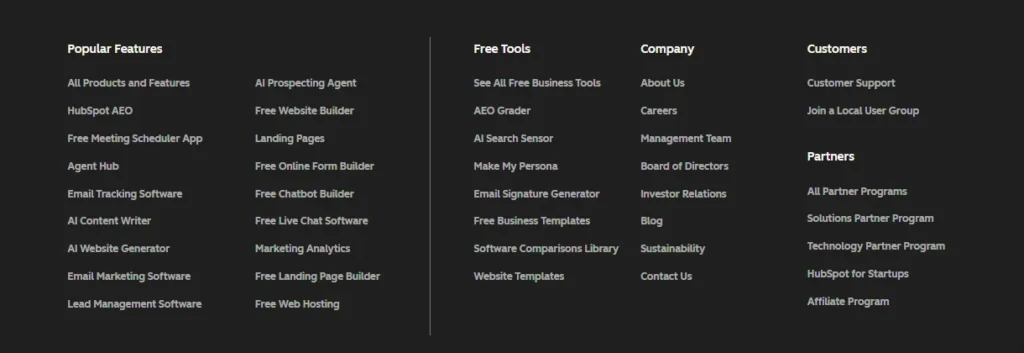
HubSpot includes a wide range of features such as a built-in CRM, marketing automation, lead management, landing pages, sales pipelines, customer service tools, and advanced reporting. These features allow businesses to create personalized customer experiences while keeping marketing and sales activities connected.
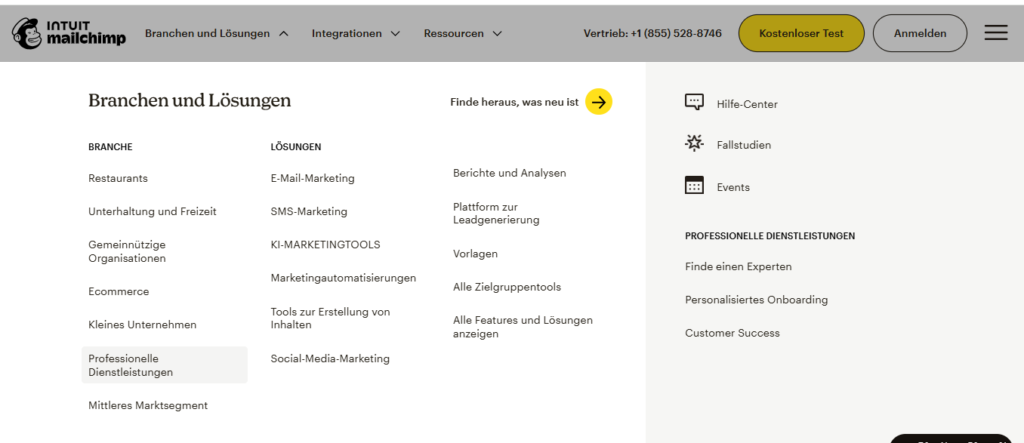
Mailchimp focuses more specifically on email marketing and audience engagement. It provides essential tools such as customizable email templates, audience segmentation, automated campaigns, A/B testing, signup forms, and performance tracking. These features are enough for many small businesses that mainly want to communicate with subscribers and promote their products or services.
The difference becomes clear when looking at business needs. HubSpot is designed for companies that require a complete marketing ecosystem, while Mailchimp focuses on delivering effective email marketing without unnecessary complexity.
Overall, HubSpot offers a larger collection of advanced features, but Mailchimp provides the essential tools most small businesses need to run successful email campaigns.
HubSpot vs Mailchimp: Email Marketing
When comparing HubSpot vs Mailchimp for email marketing, both platforms provide strong solutions for creating campaigns and engaging audiences. However, their approach to email marketing is different.
Mailchimp has built its reputation around making email marketing simple and accessible. It provides a variety of professional templates, an easy drag-and-drop editor, audience segmentation, campaign scheduling, and performance reports. These tools allow businesses to create attractive emails and reach subscribers without requiring advanced marketing knowledge.
HubSpot takes email marketing to a higher level by connecting campaigns with its CRM system. Businesses can use customer data to create highly personalized emails based on user behavior, interests, and previous interactions. For example, companies can send targeted messages to specific customer groups, automate follow-up emails, and track how leads move through the sales process.
While Mailchimp works well for businesses that need straightforward email campaigns, HubSpot is better suited for organizations that want deeper personalization and a complete view of customer relationships.
In short, Mailchimp makes email marketing easier, while HubSpot makes it more powerful and data-driven.
HubSpot vs Mailchimp: Marketing Automation
When evaluating HubSpot vs Mailchimp for marketing automation, both platforms help businesses reduce manual tasks and improve customer communication. However, the level of automation available on each platform is significantly different.
HubSpot provides advanced automation tools that allow businesses to create detailed workflows based on customer actions. Users can automate lead nurturing, follow-up messages, customer segmentation, sales notifications, and personalized marketing journeys. Because automation is connected with the CRM, businesses can create campaigns that respond to real customer behavior.
For example, a company can automatically send different messages depending on whether a customer downloads a resource, visits a webpage, fills out a form, or interacts with previous emails. This level of customization helps businesses create more meaningful customer experiences.
Mailchimp also offers automation features, including welcome emails, abandoned cart reminders, birthday messages, customer journeys, and scheduled campaigns. These tools are useful for small businesses that want to automate common marketing activities without building complex workflows.
However, Mailchimp’s automation capabilities are generally more limited compared to HubSpot. It works well for simple campaigns, but businesses with advanced marketing strategies may need more flexibility.
Overall, HubSpot is the stronger choice for companies that require powerful automation and personalized customer journeys, while Mailchimp is a practical option for users who need easy and effective email automation.
HubSpot vs Mailchimp: CRM & Contact Management
When comparing HubSpot vs Mailchimp for CRM and contact management, the difference between the two platforms becomes much more noticeable. HubSpot is built around customer relationship management, while Mailchimp mainly focuses on organizing email audiences and managing subscriber interactions.
HubSpot includes a powerful built-in CRM that allows businesses to store detailed customer information, track conversations, manage sales opportunities, and monitor every stage of the customer journey. Teams can view contact history, record customer activities, and use this information to create more personalized marketing campaigns.
One of HubSpot’s biggest advantages is the connection between CRM data and marketing tools. Businesses can use customer insights to improve lead nurturing, create targeted campaigns, and understand how customers interact with their brand. This makes it easier for marketing and sales teams to work together.
Mailchimp provides contact management through its audience system. Users can organize subscribers, create segments, add tags, and track basic engagement information. These features work well for email marketing purposes, especially for small businesses that mainly need to manage newsletters and promotional campaigns.
However, Mailchimp does not offer the same level of CRM functionality as HubSpot. Businesses that need detailed customer records, sales tracking, and advanced relationship management may find its tools limited.
Overall, HubSpot is the better choice for companies that need a complete CRM solution, while Mailchimp is ideal for users who only need simple audience management for email marketing.
HubSpot vs Mailchimp: Integrations
When comparing HubSpot vs Mailchimp for integrations, both platforms provide connections with third-party tools, but they are designed to support different business requirements.
HubSpot offers a large ecosystem of integrations that connect with marketing, sales, customer service, analytics, productivity, and eCommerce platforms. These integrations help businesses create a connected system where customer data can move smoothly between different tools.
For example, businesses can connect HubSpot with sales software, payment platforms, website tools, customer support systems, and reporting applications. This creates a more complete view of customer activity and improves overall workflow efficiency.
Mailchimp also supports many popular integrations, especially for businesses focused on email marketing and online sales. Users can connect Mailchimp with website builders, online stores, social media platforms, and other marketing tools to improve campaign management.
The main difference is the level of integration depth. HubSpot integrations are designed to support complete business operations, while Mailchimp integrations are mainly focused on improving email campaigns and audience management.
Overall, HubSpot is the stronger choice for businesses that need a connected marketing and sales ecosystem. Mailchimp is better suited for users who want simple integrations that support email marketing activities.
HubSpot vs Mailchimp: Pricing
When comparing HubSpot vs Mailchimp pricing, the biggest difference is the value each platform provides at different price levels. Mailchimp is generally more affordable for small businesses, while HubSpot focuses on providing a complete business platform with advanced features.
Mailchimp offers a free plan that includes basic email marketing tools, allowing users to create campaigns and manage audiences without paying upfront. Its paid plans add more features, including advanced segmentation, automation options, reporting tools, and higher contact limits.
This pricing structure makes Mailchimp attractive for startups, creators, and small businesses that want professional email marketing without a large investment.
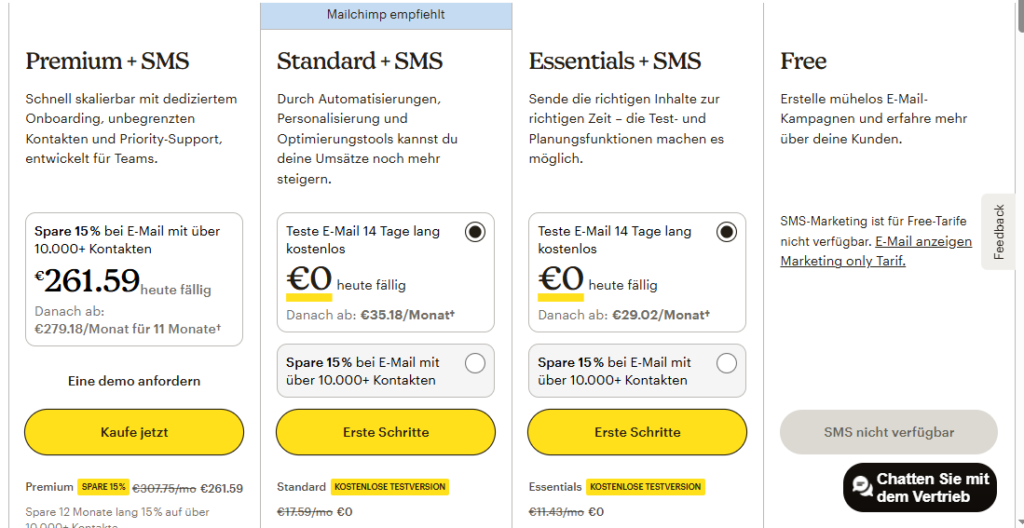
HubSpot also provides free tools, including its CRM and some basic marketing features. However, many of its advanced capabilities, such as powerful automation, detailed reporting, advanced marketing tools, and sales features, are included in higher-priced plans.
Although HubSpot can become more expensive, it provides more value for businesses that need a complete system to manage leads, customers, marketing campaigns, and sales activities in one place.
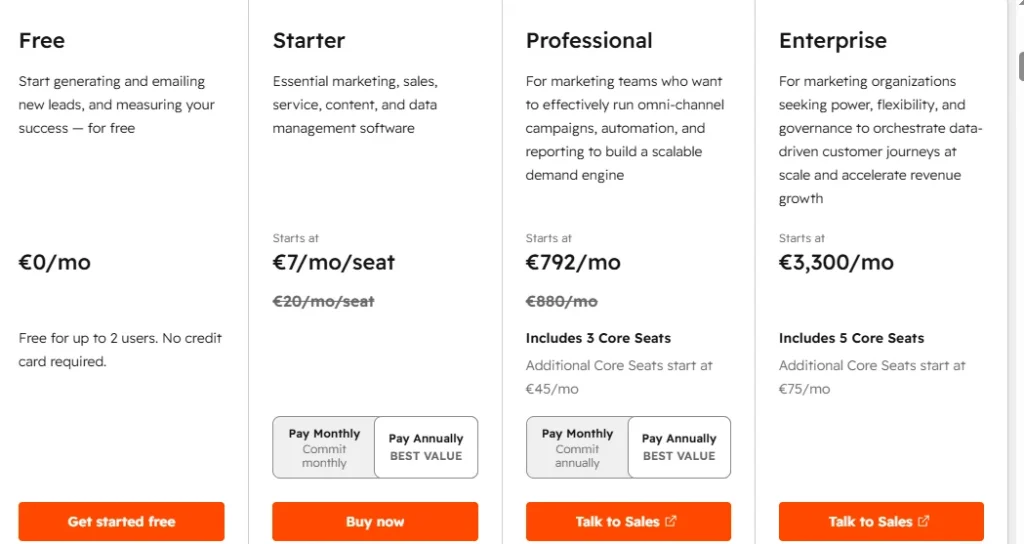
The best choice depends on your budget and goals. Mailchimp offers better affordability for simple email marketing needs, while HubSpot provides greater long-term value for businesses looking for advanced tools and scalability.
HubSpot vs Mailchimp: Customer Support
When comparing HubSpot vs Mailchimp for customer support, both platforms provide helpful resources, but their support options vary depending on the plan and level of service required.
HubSpot offers a strong support system with an extensive knowledge base, community forums, educational resources, email support, live chat, and phone support on selected plans. The platform also provides HubSpot Academy, which includes detailed training materials to help users understand marketing, sales, CRM, and automation features.
This educational approach is one of HubSpot’s biggest strengths because users can learn not only how to use the platform but also how to improve their overall marketing strategy.
Mailchimp also provides a variety of support resources, including guides, tutorials, help articles, email support, and chat support on certain plans. Its resources are useful for beginners who need help creating campaigns, managing audiences, or understanding basic marketing features.
However, users on lower-priced Mailchimp plans may have fewer direct support options compared to HubSpot. Businesses that require personalized assistance may find HubSpot’s support structure more suitable.
Overall, HubSpot has an advantage for businesses that need extensive training and professional support, while Mailchimp provides enough assistance for users who mainly need help managing email marketing campaigns.
Final Verdict
After comparing HubSpot vs Mailchimp, the right platform depends on your business goals, marketing strategy, and the level of features you need. Both tools are powerful, but they are designed for different types of users.
HubSpot is the better choice for businesses that want a complete marketing and customer management platform. Its combination of CRM, automation, sales tools, reporting, and personalization features makes it ideal for companies that want to manage the entire customer journey from one place.
Growing businesses, marketing teams, and organizations with complex customer relationships will benefit most from HubSpot’s advanced capabilities. Although it requires more time and investment, the platform provides the flexibility needed for long-term growth.
Mailchimp is a better option for small businesses, beginners, and creators who want a simple way to create professional email campaigns. Its easy-to-use interface, affordable pricing, and essential marketing tools make it a practical solution for users who do not need a complete CRM system.
Ultimately, the decision between HubSpot vs Mailchimp comes down to your priorities. Choose HubSpot if you need advanced automation, CRM features, and a scalable marketing platform. Choose Mailchimp if your main goal is creating effective email campaigns with a simple and affordable tool.
Conclusion
Choosing between HubSpot vs Mailchimp requires understanding what your business actually needs from a marketing platform. While both tools can help businesses communicate with customers and improve engagement, they serve different purposes.
HubSpot is designed for businesses that want an all-in-one solution with CRM, automation, sales management, and advanced analytics. It provides powerful tools for companies that need deeper customer insights and a complete system for managing growth.
Mailchimp focuses on making email marketing simple, accessible, and affordable. It is an excellent choice for small businesses, startups, and creators who want to build relationships with their audience through effective email campaigns without dealing with unnecessary complexity.
Before making your final decision, consider your budget, business size, marketing goals, and future growth plans. If you need a complete customer management platform, HubSpot is likely the better investment. If you want a reliable email marketing tool that is easy to use, Mailchimp remains a strong choice.
Both platforms have unique advantages, and the best option is the one that matches your current needs while supporting where your business is heading.
Looking for the right marketing tools? Explore expert reviews, comparisons, and guides at AmiinMarketer.com.